
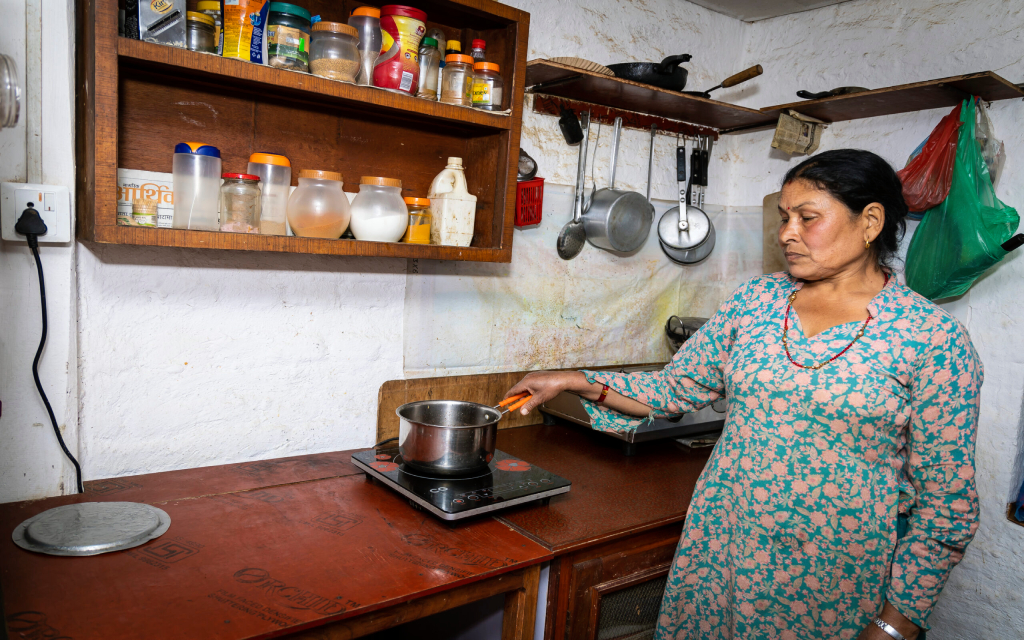
Newfound Avenue to Increase Electricity Consumption in Nepal In the recent past, eCooking in the residential sector has taken great strides towards market-based adoption. Several favorable national policies, mass awareness and capacity building campaigns for eCooking organized by civil societies, development organizations, continuous research works supported by various development organizations and surplus production of the electricity can be attributed to the promotion of eCooking in Nepal. Recent growth in generation of electricity is encouraging in Nepal. Nepal is gradually transitioning from energy deficit country to energy importing country. The electricity generation over the past decade has been demonstrating significant growth to an extent where there is surplus energy to be exported especially in the wet season. In FY 2022/23, the Nepal Electricity Authority (NEA) increased its export substantially compared to last FY. In 2022/23, NEA was able to export 1,346 GWh compared to 493 GWh in last FY. Over a period of decade, the availability of electricity has increased substantially as shown in Figure 1.
Contributed by: Niraj Shrestha, Practical Action Consulting Barsha Parajuli, Clean Energy Nepal Nepal has faced challenge to export excess electricity to India as NEA needs to wait for approval from the Indian counterpart. In such circumstances, risk of spilling excess electricity and associated financial loss is imposed on NEA. Overall, the current electricity demand and supply scenario clearly indicated that there is a need of alternative plan to ensure that excess generation of electricity is consumed as much as possible within the country. Conflicts around globe has indicated that dependence on imported fossil fuels such as LPG is detrimental to the national economy from the point of energy security and sustainable energy development. The current circumstance clearly calls for energy services that can rely on locally generated energy source to reduce the impact on national economy by reducing the trade deficit contributed by import of LPG and petroleum products while increasing the demand for electricity within the country. At this moment, eCooking within the commercial and enterprise sector and eMobility are potential two energy services that has the potential to contribute to escalating the daily demand for electricity. Increasing the consumption of electricity is in the best interest of the nation from economic, and environmental standpoint. eCooking Potential in Commercial sector The commercial and/or enterprise sector is associated with economic activities. The choice of fuel for cooking at most enterprise and commercial sector is mostly LPG. However, biomass, coal and electricity are also part of the energy mix for cooking at commercial level. The energy sector synopsis report (2022) indicates that the energy consumption by commercial sector have increased to 7% in 2021 from a low share of 1.3% in 2009. This makes it obvious that energy demand in the commercial sector is rising at a high rate. On the other hand, if looked at energy demand by type in commercial sector alone, 53% of energy comes from wood, 25% from LPG, 7% from coal and charcoal in 2021 respectively. These fuels are primarily used for thermal energy – one of which is cooking and water boiling. With more than 80% of energy coming from solid biomass fuels, it is evident that there is a strong need and an opportunity for cleaner fuel usage. The “Energy Consumption and Supply Situation in Federal System for Koshi and Madhesh Province” and that for Bagmati Province by WECS have provided the energy consumption details from primary survey. Although these reports may not be exact representation of the country, it does provide representative evidence regarding the energy consumption patterns in the commercial sector of the country for cooking. Table 1 below shows the energy consumption status and choice of fuels for cooking in the commercial sector in three provinces (Koshi, Madhesh Pradhesh and Bagmati) of Nepal. The commercial sector of the country is grouped into trade and retail, accommodation and food, financial service, social service, and other services in the energy sector analysis reports. Understandably, being associated with hospitality, accommodation and food service sub-sectors are mainly responsible for higher consumption of energy in cooking. This sub-sector comprises restaurants, hotels, and similar service sectors.
-
- https://www.onlinekhabar.com/2023/10/1384663
- Commercial sector comprises of trade and retails (shops, manufacturing units, etc), accommodation and food (hotels and restaurants), financial service (banks, cooperatives, etc), social service (schools and hospitals) and other services (police station, IT, etc).
| Province | Energy Consumption in Cooking (TJ) | Fuel Source | ||
|---|---|---|---|---|
| Firewood | LPG | Electricity | ||
| Koshi | 1,504 | 59% | 41% | 0.5% |
| Madhesh Pradesh | 324 | 2% | 93% | 5% |
| Bagmati Pradesh6 | 3,858 | 3% | 89% | 0.4% |
| Province | Fuel Source for Commercial Sector (Accommodation and Food Sub-Sector) in TJ | ||||||
|---|---|---|---|---|---|---|---|
| Wood | Coal | LPG | Electricity | ||||
| Koshi | |||||||
| 445 | – | 320 | 145 | ||||
| Madhesh Pradesh | |||||||
| 0.07 | 0.48 | 128.12 | 83.61 | ||||
Source: (WECS, 2019)
Furthermore, the consumer category for NEA is dominated by domestic customers. Approx. 92 percent consumer for the NEA belongs to the domestic category followed by other category (temple, transportation, water supply, irrigation, commercial, etc) and industrial category. As justified by the electricity sales revenue from different sectors, the domestic sector contributes to approx. 38 percent of the total revenue of the NEA which is matched only by industrial sector. As of now, the commercial sector’s contribution on the NEA revenue stream in minimum. Any effort that contributes to increase in the revenue stream is likely to be welcomed by the NEA who is solely responsible for generation, transmission, and distribution of electricity in Nepal.Transportation Sector Status in Nepal
The crisis arising due to climate change and pollution is posing urgent challenges globally. Though Nepal’s contribution to global climate change is negligible with low per capita emission (0.1 percent of total global GHG emissions, 2019 ), the GHG emissions are rising at an annual rate of 2.3%. Petroleum products, the largest imported commodity (17.4% of the total import bill) and fossil fuel-based motor vehicles (motor vehicle and their spare parts together come up as second most imported commodity after petroleum product and accounting for 6.5% of total imports) are the major contributors.
The energy consumption by the transport sector has been on rise due to the changing demography and economy. According to Water and Energy Commission Secretariat (WECS)
- The remaining percentage comprise of fuels like charcoal and coal.
- Water and Energy Commission Secretariat. (2019). Energy Consumption and Supply Situation in Federal System of Nepal (Province No. 1 and Province No. 2) Final Report-Province 1 CMS-CES JV i Executive Summary Global Energy Outlook and Current National Energy Overview.
- WECS. (2022b). Energy Sector Synopsis Report 2021/2022.
- https://kathmandupost.com/money/2023/04/30/nepal-undermining-hydropower-as-it-seeks-to-ease-fuel-imports-experts-say#:~:text=According%20to%20the%20Department%20of,in%20the%20last%20fiscal%20year.
Contributed by:
Niraj Shrestha, Practical Action Consulting
Barsha Parajuli, Clean Energy Nepal
2023, the transport sector alone in Nepal demands 67.1 PJ of energy i.e. 10.3% of national total (i.e. 3rd in terms of energy consumption). Petroleum products is the primary source of energy and electricity usage by this sector is just 0.02%. Diesel fuel holds the largest share in this sector (60.34%), primarily used by freight and heavy passenger vehicles, while petrol is mainly consumed by small private vehicles (31.6%). Additionally, aviation fuel accounts for 8.04% of this sector. The vehicle registration status (as of 2018) shows that 78.6 % of the total registered vehicles are motorcycles, 7.4% cars/jeeps/vans, 4.8% tractors and trucks, 1.7% pickups, 1.5% buses, and others remaining. These trends of preference for private over public transport (3% public vehicles, 14% private vehicles and 78% motorcycle) is alarming as it is unsustainable and pose the risk of ultimate contribution for higher emissions.
Recently, while Nepal is witnessing gradual increase in its electricity generation and the nation is transitioning from energy deficit country to energy surplus, there is a huge potential to increment in per capita electricity consumption (Government of Nepal plans to increase annual per capita electricity consumption to 400 kilowatts per hour) through adoption of EVs. Government of Nepal (GoN) has also been prioritizing the transport sector in its periodic and annual plans. Further, Nepal has also set a vision to achieve net zero GHG emission by 2045, transport sector being the major target sector and its NDC actions are aimed at lowering carbon emissions by transitioning to zero emission transportation for intercity, intra-city and freight travel across public and private modes.
What Next with eCooking for Commercial Sector in Nepal?
NEA is also trying to address the major bottleneck that is hindering them to ensure quality and reliable supply, upgrading transmission and distribution infrastructure. NEA is massively focusing on upgrading transmission, distribution systems, and other infrastructure in its corporate development plan to ensure quality and reliable supply of electricity to the end users. NEA is also expediting transmission and distribution system by addition of sub-station, upgrading the transformers, and improving the service delivery mechanism. Upgradation in transmission and distribution is something that cannot happen overnight but intentions from NEA indicate that the transmission and distribution system upgradation is seen as a major priority for NEA. Recently, NEA announced to set up 8 high-capacity sub-station to improve transmission and distribution system within Kathmandu valley. Upgrading their transmission and distribution infrastructure with major city like Kathmandu demonstrate their intent to improve their supply system. Moreover, NEA is likely to get support from international development agencies like ADB and the World Bank to upgrade the transmission and distribution system.
- WECS. (2022b). Energy Sector Synopsis Report 2021/2022.
- DoTM. (2019). Total number of vehicles registered till fiscal year 2018/19. Department of Transport Management (DoTM), Kathmandu.
- https://kathmandupost.com/money/2023/02/23/nepalis-turning-to-electric-vehicles-evs-in-tactical-shift-imports-jump-61-percent
- https://myrepublica.nagariknetwork.com/news/nea-to-construct-eight-high-capacity-substations-in-kathmandu-valley-to-meet-electricity-demand-till-2050/
Contributed by:
Niraj Shrestha, Practical Action Consulting
Barsha Parajuli, Clean Energy Nepal
From the development perspective, initiatives have started in Nepal regarding exploring potential to promote eCooking in enterprise and commercial sector. Development agencies like Modern Energy Cooking Service (MECS) program supported by FCDO and the World Bank has started to support development agencies in Nepal to explore potential and feasibility to promote eCooking in commercial sector. Recently Practical Action Consulting (PAC) Pvt. Ltd has been involved in two research to assess potential to introduce eCooking in commercial sector. These two research are on the verge of completion and the findings from this research will probably shed light on energy use pattern in commercial sector, financial viability of transitioning to eCooking, barriers and challenges to promote eCooking in commercial sector. The research was conducted in Kathmandu valley and in the tourist area within Kaski, Chitwan, Mustang and Dhading district. The findings from these research could prove to be stepping stone to garner powerful interest among the stakeholders and policy makers that can drive them to contemplate about integrating eCooking in the commercial and enterprise sector.
What Next with Electric Vehicle (EV) or eMobility in Nepal?
Regarding Electric Vehicle (EV), Nepal intends to transition to EVs and for that numerous charging stations will be needed to meet the demand that will arise. Realizing this, NEA (51 charging stations across 7 provinces of Nepal) along with many car companies including TATA (+150 fast and slow charging stations), BYD (14 Charging stations), Hyundai(43 charging stations), MG (17 charging stations) have set up charging stations all over Nepal. Despite the setup of all these charging stations, the ratio of EVs to charging station is still low. Installation of new charging stations with all types of dedicated chargers capable of charging different types (brands) of EVs backed up with a proper planning will be needed. Further it is crucial to ensure consistent and stable electric supply for the existing charging stations to prevent any potential damage to the EVs. Additionally, it is important to ensure smooth and convenient charging experience for users.
Besides, Nepali transport sector primarily depends on vehicle imports so the import tax and import duties plays a significant role in defining the cost of the vehicle in the local market. The tax rate depends on the transport types and their engine capacity (cc). The customs subsidies on the import of EVs have shown positive impacts on the adoption of EVs. Last April, government announced a complete ban on the import of fossil based vehicles including motorcycles with a capacity of over 250cc. This shortage of fossil fuel powered vehicles coupled with easy bank finance services and ever soaring prices of petroleum products, sales of EVs has boosted. However, this ban was again lifted in December.16
The government through the budget of the current fiscal year had announced plans to convert both the private and public petroleum-based vehicles into electric vehicles in the Kathmandu
- Unlocking the potential for enterprise level electric cooking in Nepal funded by MECS and Identifying eh electric cooking in the small and medium scale enterprise and businesses funded by the World Bank-Nepal
- https://english.onlinekhabar.com/charging-stations-in-nepal.html
- https://kathmandupost.com/money/2023/02/23/nepalis-turning-to-electric-vehicles-evs-in-tactical-shift-imports-jump-61-percent
Contributed by:
Niraj Shrestha, Practical Action Consulting
Barsha Parajuli, Clean Energy Nepal
Valley. This will potentially have positive impacts towards the decarbonizing the transport sector of Nepal and just energy transitions.
The changing import tax, import duties and policies again discourages the adoption of cleaner modes. Consistent and stable electric supply, consistent enabling policies, sufficient charging infrastructures, smooth and convenient charging experience for users, subsidies on tariffs and the import of EVs, easy bank finance services will play crucial roles in the adoption of EVs, that poses the potential of future means of transport.