
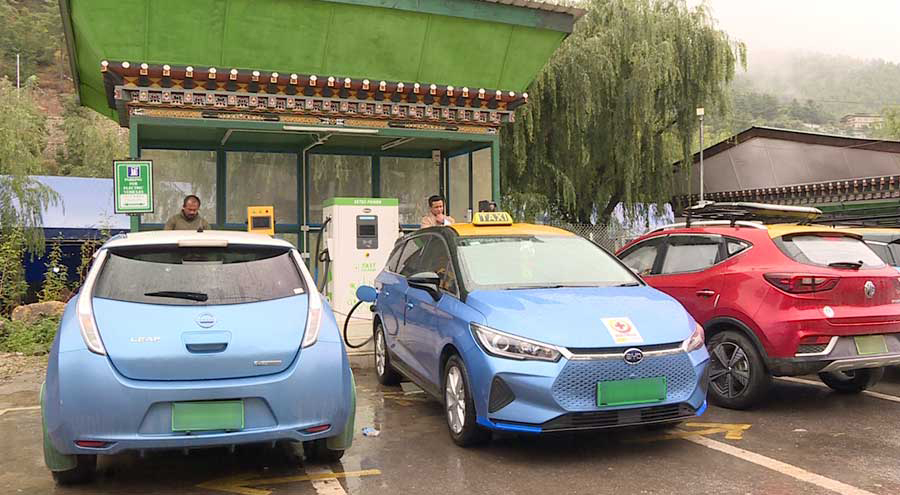
In terms of electric vehicle (EV) adoption within a country, Bhutan is rapidly transitioning its transport sector by promoting and incentivizing ownership of electric vehicles. From a mere 16 EVs in 2019, the number has grown to 401 electric vehicles in 2023 (See Figure 1). This represents a significant step towards sustainable transport, in line with global initiatives to reduce carbon emissions and mitigate the effects of climate change. Significant portions of these EVs are allocated to various sectors, emphasizing a diversified strategy for electrifying the nation’s transportation system.
Figure 1: Growth of electric vehicles in Bhutan
The above growth in EVs is spread across government as well as private sector (Table 1). This government sector plays a vital role in promoting the transition to electric mobility, with 52 electric vehicles designated for official use. This suggests a government initiative to lead by example and establish a sustainable transportation practice standard. The adoption of EVs by the government demonstrates a commitment to reducing the carbon footprint of its fleet operations, contributing to the larger objective of achieving environmental sustainability.
Table 1. Electric vehicles in Bhutan by ownership
| EV Type | OWNERSHIP | ||||||
|---|---|---|---|---|---|---|---|
| Government | Private | Taxi | TOTAL | ||||
| 2019 | |||||||
| 0 | 16 | 0 | 16 | ||||
| 2020 | |||||||
| 4 | 28 | 1 | 33 | ||||
| 2021 | |||||||
| 11 | 80 | 8 | 99 | ||||
| 2022 | |||||||
| 26 | 148 | 79 | 253 | ||||
| 2023* | |||||||
| 52 | 186 | 163 | 401 | ||||
There are 186 electric vehicles in the private sector, constituting a sizeable presence. This indicates a growing interest in and adoption of electric vehicles among individuals and non-government organizations. Although private ownership of electric vehicles demonstrates shared concern and responsibility for a cleaner environment, the an openness to adopting healthier alternatives may primarily be attributed to the tax incentive provided.
One of the priorities of the government has been to promote cleaner and more efficient public transport options. Through a subsidy program in conjunction with the UNDP, the taxi industry has grown to 163 EVs in 2023. The transition of taxis to electric power considerably reduces urban air pollution and promotes sustainable urban mobility. Initiatives are now underway to modernize public transport by replacing diesel buses with electric buses. The city of Thimphu recently added an electric bus to the transportation system bolstering the comprehensive approach to achieving sustainable public transportation. The introduction of an electric bus represents a concerted effort to,
This country’s composition of electric vehicles represents a multidimensional approach to sustainable transportation. The government, private sector, taxi industry, diplomatic entities, and the incorporation of electric vehicles demonstrate a collective commitment to reducing carbon emissions and fostering a greener, more sustainable transportation future. Table 2 summarizes the composition of EVs in the country.
Table 2: Composition of EVs in the country as of October 2023
| Types of EVs | Nos. | Percentage |
|---|---|---|
| Government | 52 | 12.96% |
| Private | 186 | 46.38% |
| Taxis | 163 | 40.64% |
| Total | 401 |