
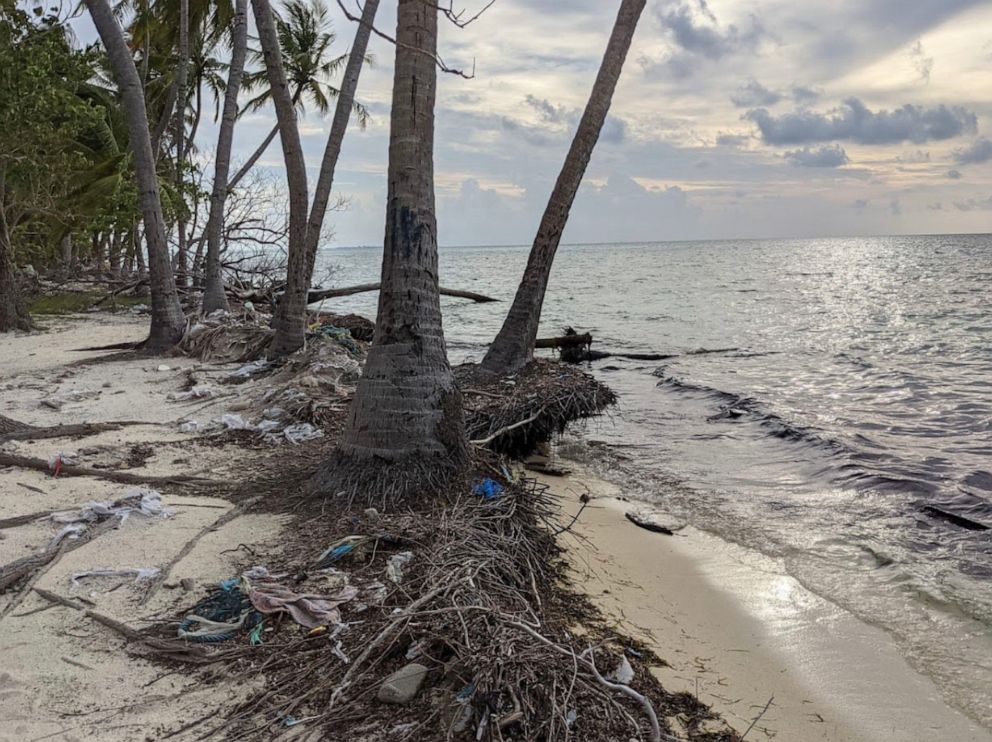
In the vast expanses of the world’s oceans, Small Island Developing States (SIDS) are recognized as vulnerable frontiers, often designated as ‘climate change hotspots.’ Among these nations, the challenges posed by climate change are symbolized by the Maldives, facing immediate and severe impacts.
Caution is sounded by the Intergovernmental Panel on Climate Change (IPCC), predicting that SIDS will bear the brunt of climate change, with projections indicating that rising sea levels could submerge several island nations. A stark reminder of this crisis was witnessed in October 2009 when an underwater cabinet meeting was hosted by the then Maldivian President, Mohamed Nasheed—an emotional plea to garner global attention.
Nearly a decade-and-a-half later, efforts persist among SIDS to draw international focus to their existential crisis. The Maldives, recognized as the lowest-lying country globally, finds its future hanging in the balance. Tourism and fisheries, contributing significantly to the Maldives’ GDP and employment, find themselves on the frontline of these climate-related risks.
A looming threat to the Maldives is outlined by the United Nations Environment Programme (UNEP) due to the projected sea-level rise. The nation’s very existence is intricately linked to its climate-sensitive sectors, with tourism and fisheries infrastructure particularly vulnerable due to their proximity to the coast.
The economic risks are manifold. Coastal infrastructure damage results in a loss of GDP and jobs, incurs high reconstruction costs, and jeopardizes food security. The Maldives, exceptionally susceptible to climate change impacts due to its heavy dependence on food imports and the vulnerability of critical sectors like tuna fishing, faces these challenges.
As the Maldives grapples with these economic risks, a challenge is posed to major foreign-funded infrastructure projects by climate change. The potential loss to these projects not only imperils the country’s ability to repay its debt but also casts a shadow over future investments.
Despite these challenges, the Maldives has not remained passive. The tourism industry, a cornerstone of the nation’s economy, has seen the adoption of both soft and hard measures to adapt. Similarly, policies have been implemented in the fisheries sector to ensure sustainability. The Maldives has joined international bodies to ensure fisheries are maintained at sustainable levels.
Adaptation measures also extend to agriculture, with the promotion of organic farming, rain-fed agriculture, climate-resistant crops, and sustainable practices. However, effective adaptation is hindered by the lack of concrete policy instruments, climate-resilient building codes, and funding.
To address these gaps, a crucial need is identified for an integrated national and international approach. Collaboration between countries and institutions to enhance financial and technical capacity can bolster the Maldives’ resilience. A glimmer of hope is provided by the recent ‘landmark resolution’ by the United Nations, calling on the International Court of Justice (ICJ) to issue a legal advisory on climate change.
In conclusion, the plight of the Maldives serves as a stark reminder of the urgent need for global action on climate change. An integrated approach, combining national and international support with best practices, is deemed essential to adapt and mitigate the impacts effectively. The potential involvement of the ICJ adds a new dimension to environmental diplomacy, offering hope for SIDS seeking international cooperation in their battle against climate change.