
The energy sector is the most critical driver of the global economy engine that supplies power to all sectors. Ensuring access to clean, affordable, and reliable energy for all, is a pre-requisite for progress on many SDGs linked with health, education, environment, and sustainable cities. Based on both economic and environmental trends, a major energy transition phase has been observed in which many countries have tried to opt for most sustainable energy future. While the trend is largely advocated by moving away from fossil fuel and adoption of renewable energy resources, there are still some questions over the scale and timeline of such a transition, especially considering the fact that the world is now facing a major threat due to restriction posed by a global pandemic, i.e., Covid-19.
The energy sector of Pakistan, known for its slow pace of change, is undergoing a dynamic transition. The imperatives of climate change, energy poverty and energy security to underpin development and industrial strategy have made the widespread adoption of renewables and related technologies an essential solution. Policy drivers, technology developments and international co-operation have moved these technologies from niche to mainstream, especially in the past decade.
Major changes in the energy sector took place after the power policy, 2015. The installed power generation capacity of Pakistan until august 2021 has reached 34,296 megawatts (MW), dominated by the RLNG/Gas/Oil based power plants (45%), followed by large hydro power plants(29%). Before 2017, only 31 megawatt coal power plant was operational, since March 2017, new coal power plants have been added with cumulative installed capacity of 4,520 megawatts (13% share of installed generation capacity of national grid). Renewable energy sector is dominated by, wind power followed by solar PV plants. Large scale new additions in wind and solar have not been witnessed since last year, on contrary distributed solar systems have got great traction and over 30 megawatts net metering licenses have been issued since the pandemic. Until date, renewable share stands at 12% of total installed power generation capacity (including nuclear and small hydro less than 25 MW).
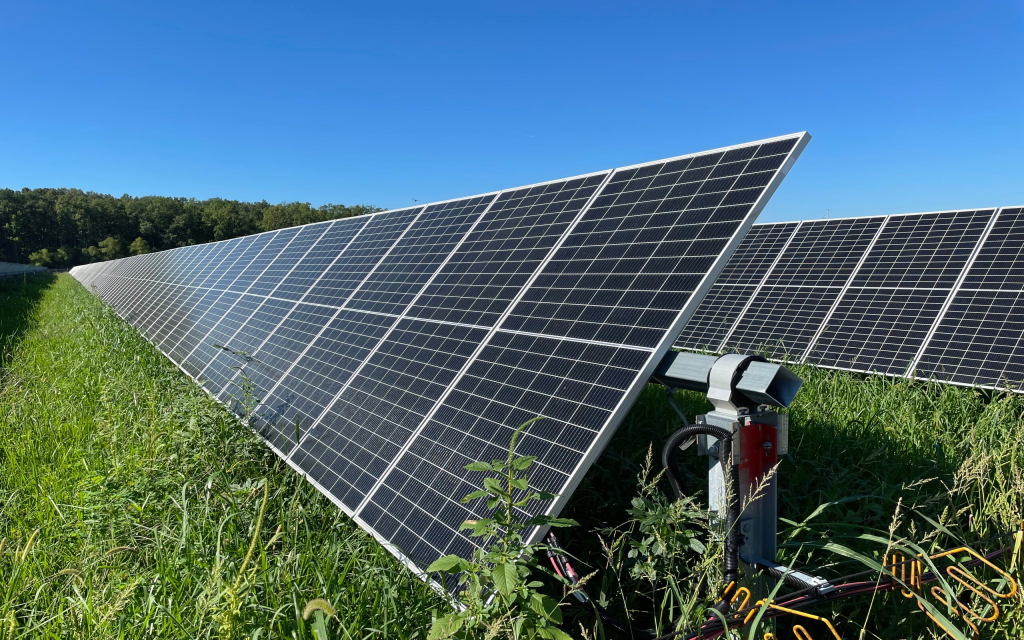
Based on the trend and new policies, investments as well as the interest in renewables in Pakistan has slightly increased in the past. In 2018, the total non-hydro renewable share in total generation was only 4 percent, which is slowly expected to increase. As pointed out in IRENA renewable energy readiness for Pakistan, there is a considerable wind potential in the corridors of Baluchistan and Sindh. The potential of solar is even more than that of wind. A 400 MW project of Quaid-e-Azam solar plant is under way with expansions planned. Other than that, an additional 550 MW of solar projects are under completion in the country. As of biomass, bagasse is currently the only source that is being used at a commercial scale in sugar industries, bagasse plants of around 432 MW are operational in the country.
Despite being currently able to generate electricity in a surplus, major inefficiencies, losses, and theft in the distribution system has made the system very fragile. In recent years, Pakistan has observed some of the worst power blackouts due to poor transmission systems, lack of connectivity and poor reliability. Unlike most developed countries, Pakistan has a very limited fiscal space available and the policies are generally driven by economic priorities. The circular debt of Pakistan has now risen above PKR 2.35 trillion and is being contributed by surplus capacity payments. Consequently, between 2007 and 2020, the power crisis has cost Pakistan approximately $82 billion in loss GDP (Gross Domestic Product).
The power sector suffers from institutional and structural disconnections and fragmentation in the priority of issues, ignoring the holistic view and focus only on the power sector. For instance, the development of coal power plants has observed a two-dimensional debate among various stakeholders in Pakistan where some admire its critical role to enhance energy security and economic advantages while others advocate the adverse environmental impacts of these coal power plants. The government’s objective is to reduce the reliance on fossil fuels imports, increase renewable energy share, diversify the fuel resources, and increase fuel supply security. The planned massive capacity additions on coal-fired power generation projects contradict with all these objectives.
Along with these multifaceted energy crises, the country is ranked among the top ten most affected and the most vulnerable countries to climate change from 2000 to 2019, according to the latest ‘Long Term Climate Risk Index’ report. Historically, an overall share of Pakistan in global carbon emissions (CO2) has remained less than one percent. The energy sector is the main contributor to GHG emissions. Pakistan intends to reduce its expected GHG emissions by up to 20 percent of (equivalent to 1603 MtCO2) by 2030, which amounts to US$ 40B at 2016 prices The climate adaptation costs are projected to be US$ 7–14B/annum, while mitigation costs for Pakistan are ranging between US$ 8 – 17B by 2050 (GoP and UNFCC 2011)
Support Policies & Incentives
The Alternate and Renewable Energy (ARE) policy 2019 is the recent policy, formulated to create a conducive environment for renewable energy growth in the power sector. The policy envisages having 20 percent of the total generation capacity from renewable energy technologies by 2025 and 30 percent by 2030. Further, the policy also aims to increasing the share of hydro power in the power generation mix to 30 percent by 2030. So, as per the plans, Pakistan will be able to generate around 60 percent of its total energy from renewables. Moreover, the policy aims to lower the average price basket of tariff by allowing a competitive bidding for new projects whereas all taxes and duties are waived for the import of machinery required for renewable energy projects.
National Electricity Policy 2020, was formulated to eliminate the inconsistencies in the power sector. The policy aims to bring an optimal development of electricity generation, transmission, and distribution while ending expensive power plants running on imported fuels. The six guiding principles of this policy include, bringing efficiency, competition, economic viability, transparency, and most importantly the environmental stability.
Competitive Trading Bilateral Contract Market (CTBCM) Model by NEPRA was approved in 2020. This model aims transition from a one-buyer electricity market to a multi-buyer model. A multi-buyer model will assist the government to transition towards a competitive market for increasing operation efficiency and decreasing the price of electricity to the consumers.
National Electric Power Regulatory Authority (NEPRA) announced distributed generation and net metering regulations on September 1, 2015. As per these regulations, any customer of the national grid (having three-phase connection) can avail net-metering facility for small-scale (1kW to 1MW) Renewable Energy installations. The power distribution companies (DISCOs) in Pakistan are directed to purchase excess units of electricity produced by the consumers, and net them off against the units consumed from the grid. Recently the cabinet has approved that consumers having RE installations would not require generation license from NEPRA for net metering, the distribution companies can directly provide net metering licenses and connections. NEPRA has asked the DISCOs to formulate the SOPs for the new net metering connections under 25KW of RE installations.
Financial incentives have played an important role in adoption of renewable technologies in Pakistan, both grid connected and off grid systems. Green financing scheme is offered by State Bank of Pakistan at 6% to consumers for 1KW up to 10Megawatt renewable energy systems.
Challenges
Data unavailability for wind and solar PV power projects is the biggest challenge faced by the investors or financing institutions. However, limited feasibility studies have been carried out for project implementations. Around 40+ wind masts are installed in Pakistan for data generation. Although the World Bank studies have identified the 18 theoretical as well as technical potential sites for solar and wind, but the ground realities quickly change with the passage of time and externalities. Another reason behind the impeding growth of renewables is the absence of developed power transmission infrastructure to dispatch the generation from renewable power plants resulting in curtailment issues.
Way Forward
The way forward for Pakistan will demand rapid transition towards decarbonization, decentralization and digitalization of energy production, supply and consumption. This must include:
- prioritized actions for renewables, such as least-cost generation plan, RE trackers and zoning, developing mini and micro grids
- technology transfer programs and skill development through soliciting investments in local RE equipment to reduce the costs
- efficient buildings and green infrastructures for responsible investments,
- clean cooking solutions
- regional cooperation to be able to meet the national and international targets of Pakistan
- creating jobs and employment
Lack of planning and policy mismatch between different departments requires a structured stakeholder involvement and the provinces must come up with power planning development studies for evidence-based policymaking and overcoming the barriers of renewable energy growth in the country. An integrated energy plan considering investments in generation, transmission and distribution, and energy efficiency should set up priorities for technology and scale of renewable energy projects. This would help to ensure a more sound and effective competitive bidding for these projects. It would assist policy makers at all levels to evaluate costs of both demand and supply under a given set of economical, technological, and environmental constraints.