
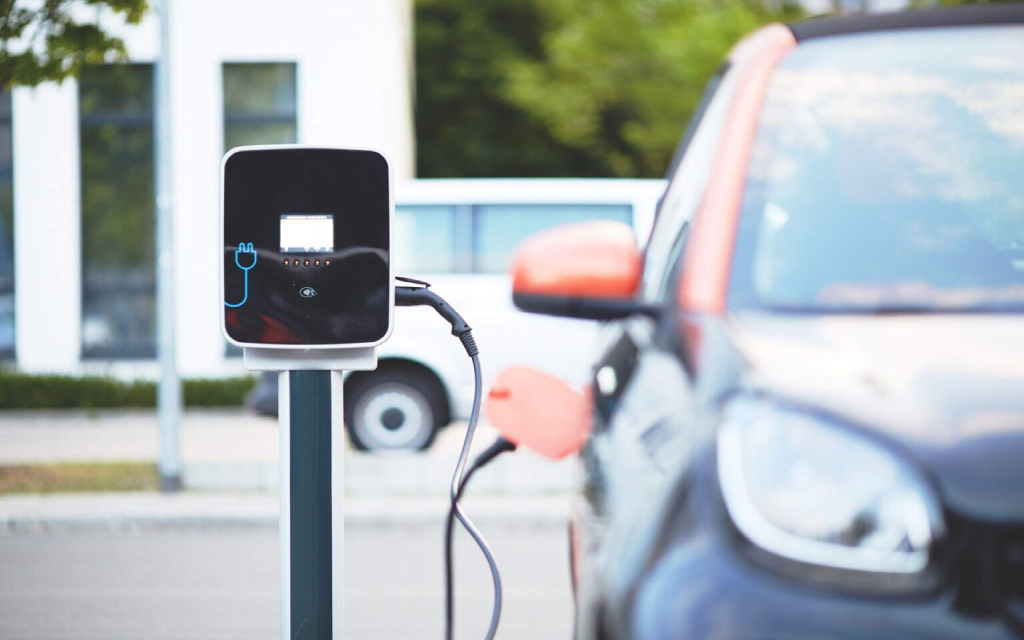
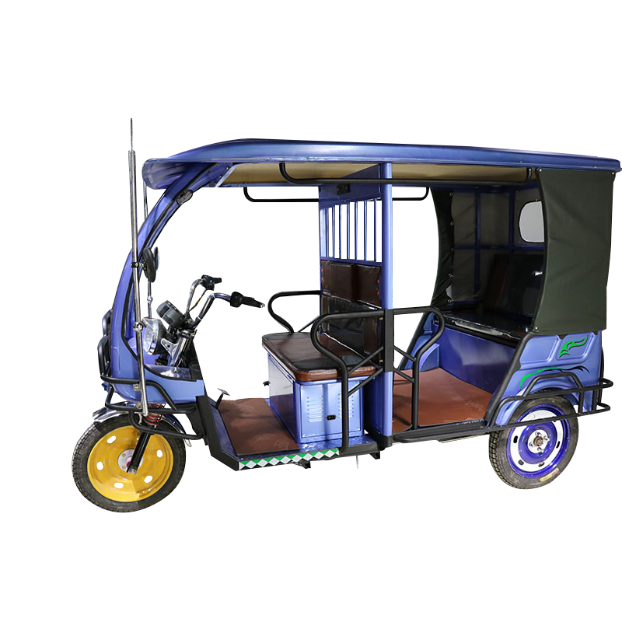
Transportation sector is one of the largest sources of emission (14%) that consumes 27% of energy in Bangladesh. In Bangladesh environmental pollution especially, air pollution is increasing amidst rapid urbanization and industrialization. Air pollution is one of the culprits that intensifies toxic particulates & GHGs in the atmosphere. Bangladesh has been named the world’s most polluted country for PM2.5 exposure while Dhaka has emerged as the second most polluted city in the 2019 World Air Quality Report. Combustible engines’ carbon emission is excessive and one of the culprits of global warming. However, in Bangladesh a silent revolution in energy transition is taking place through Electric Mobility, mostly in the form of electric three-wheelers (e-3Ws).

The global electric vehicle market promises significant growth as concerns for sustainable growth rise around the world. Globally, the mandate for Zero Emission Vehicle dictates that the vehicle should make up 10% of total sales by 2025. According to the International Renewable Energy Agency (IRENA) Electric two- and three-wheeled vehicles could outnumber four-wheeled vehicles, with as many as 900 million on the roads by 2030. As per the International Energy Agency (IEA), electric vehicles will make 40% of all passenger vehicles by 2040. The global auto market is witnessing a held-back demand from many consumers as the horizon clearly points towards the adoption of electric vehicles by 2025. Bangladesh’s growing population and an increasing purchasing power coupled with the government’s concern regarding environmental issues makes it a viable for                                                                                                                         
for booming Electric Mobility.
Micro-mobility, consisting of, but not limited to two- and three-wheelers, is the fastest growing form of transport in emerging markets due to its small size and relative affordability (UNEP, 2021). These e-3Ws have created jobs for 1,500,000 people and carry nearly 10,000,000 people every day.   This growing market has drawn the attention of the Bangladesh government as well and a draft Automobile Industry Development Policy has been drafted  in 2020. Core concerns for the Bangladesh government are sustainable energy consumption, environmental impact and stakeholder benefits to sustain the market. A Local automobile company Bangladesh Auto Industries Ltd (BAIL) is eyeing on setting up EV manufacturing facility in the country.   BAIL envisions to annually deliver 2,00,000 units to EV in the local and international market
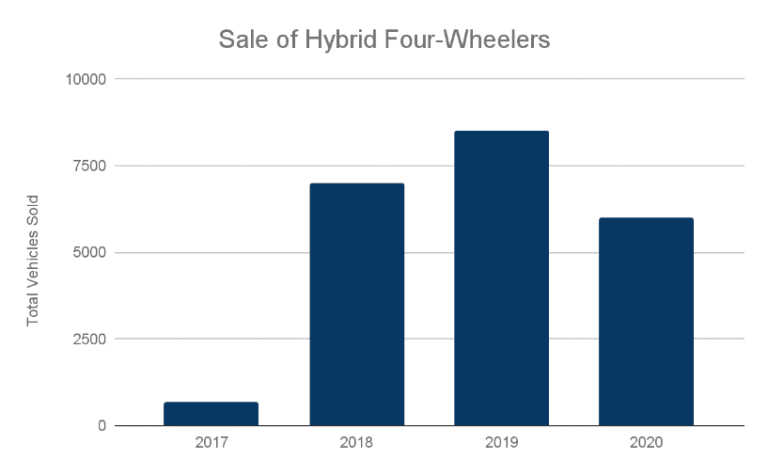
Along with the flourishing of e-3Ws,  over the last few years the demand for hybrid vehicles has also gone up. In terms of volume, the figure had been rising sharply up until the COVID-19 pandemic in 2020.

Credit: LightCastle Partner, Bangladesh

Considering the socio-economic context of the country, these e-3Ws are an ideal mode of transportation due to their inexpensive nature and faster means of transportation considering paddled Rickshaws. Moreover, sharing rides is one of the distinctive features that make this transport more popular as it reduces fare. Also, as a consequence of COVID-19, low income generating people who are lost jobs are inclined to run e-3Ws for earning, resulting in an increase in e-3Ws.

In the context of Bangladesh, Electric Mobility holds the answer to solving the power overcapacity conundrum, which can be mitigated through the adoption of electric and hybrid vehicles. According to the Bangladesh Power Development Board, only 40% of the power generation capacity is currently being utilized in Bangladesh. As per the records, over the last several years power utilization has remained below 50% of the generation capacity and  in the last decade the government has paid a massive US$ 7,000 million as capacity payment penalty to the power producers for simply keeping their plants idle. Introducing EVs and hybrid vehicles in the country can optimize the power generation scenario resulting in more revenue for the government and reduced operational cost for vehicle owners, which is basically a win-win for all.

Even though the source to powering the EVs are conventional fossil fuel-based energy mostly and so far, the country implemented only 14 EV charging stations with a total capacity of 278 kW, powered by solar.  Still, Transition to EVs reduces net carbon emissions and lowers air pollution as compared to fossil fuel powered Internal Combustion Engine (ICE) based vehicles.

Poor charging infrastructure is one of the biggest bottlenecks for the growth of e-3Ws. It takes 8-10 hours to charge a e-3Ws and due to unstable grid electricity, in most of the cases only 30-40% of the battery capacity can be charged.  To facilitate the adoption of greener and cost-efficient EVs in Bangladesh, accessible and robust charging infrastructure is a prerequisite. Technological development and introduction of fast charging technology can be a groundbreaking solution for sustainable Electric Mobility. In this context and having net metering in practice, using the surplus energy of the Solar Irrigation pumps (SIP) for charging EVs can be a great combination. So far Bangladesh has installed 2,240 nos of SIPs with installed capacity of nearly 50MWp and in the current practice more than 70% of generation capacity of the SIPs are utilized.

The possibilities in the field of Electric Mobility in Bangladesh is immense. Developing industrially while taking care of the environment is essential, and electric vehicles provide that exact opportunity. In parallel to this increasing flux of Electric vehicles,  injecting more renewable energy sources in the energy mix would ensure cleaner means of transportation in future and net GHG reduction.

Leave a Reply

Your email address will not be published. Required fields are marked *

This field is required.

This field is required.