Taxonomies have become one of the latest policy measures that are being onboarded on the bandwagon of accelerating energy transitions across the world. Essentially, these are policy documents in the form of a framework that lay out a defining criterion for an economic activity or investment to be labelled as ‘sustainable’ or ‘green’.

The landmark taxonomy document which acted as a benchmark for various other countries and regions was the European Union’s Taxonomy for Sustainable Activities which was released in 2021. Lately, in 2023, the European Commission passed a legislation to implement the taxonomy report. Since the EU Taxonomy came out in the public domain, various other nations have followed suit including Indonesia, China, Singapore, Malaysia, amongst a few others. A similar taxonomy is in consultation stage in Australia and a common framework for Sustainable Finance Taxonomy was also drafted for the region of Latin America and Caribbean countries by the financial support of the European Union.

The Government of India has also taken initial steps in this regard. As per the Economic Survey of India of the year 2021-22, a Task Force on Sustainable Finance was created by the Department of Economic Affairs, Ministry of Finance, Government of India which was mandated to suggest a draft taxonomy for India, amongst other sustainability-related mandates. However, the draft taxonomy is yet to see the light of the day.

As India maneuvers to put in place a Sustainable Finance Taxonomy of its own, it is highly pertinent to analyse some of the existing taxonomies and put forth a vision that should guide a fair, effective and just taxonomy for India. This blog attempts to provide a very broad framework for doing so.

Relevance of a Taxonomy

The rationale for institutionalizing such a framework in the form of a taxonomy is multifold.

First, it places a system of safeguards, indicators and other relevant screening criteria that can be used to differentiate between a ‘green’ activity and other economic activities. While some activities like coal-based power generation are outrightly non-green, such a system also acts as a check on certain types of activities being passed on as ‘green’ which might still have a substantial carbon-footprint. Commonly known as ‘green-washing’ in the circle of climate enthusiasts, it is widely believed to be a phenomenon which hurts a country’s efforts on sustainability.

Second, this provides a platform for harmonizing the various ways in which different countries define sustainability and preparing a ‘common but context-conscious’ framework through which can be used as a lens to monitor green economic activities and green investments.

Third, a taxonomy can be used as a market-based tool to provide a positive market signal to domestic as well as global investors that seek to expand their green portfolio, by providing a clear framework of defining a sustainable economic activity.

How will a taxonomy work?

A taxonomy is essentially a policy tool which enables investors, governments and other players to assess whether an investment into any type of an economic activity is sustainable or not. For this, a taxonomy has to define what it means by sustainability. This would include a clear set of objectives that an economic activity must accomplish, in order to be labelled as taxonomy-aligned activity, and in turn, the investment can be labelled as a green investment.

The existing taxonomies usually cover environmental objectives of climate change mitigation and climate change adaptation for defining sustainability. However, in a significant development, European Union also released a draft social taxonomy separately, which talked about social objectives as well. It might be worth to embrace a more open and holistic definition of sustainability, one that takes into account social, cultural, environmental, ecological and other relevant aspects of sustainability. Therefore, a taxonomy should clearly lay out the objectives which any economic activity aspires to accomplish.

The next element which is crucial in a taxonomy is providing the knowhow of indicators or parameters that can be used to assess any economic activity. For climate change mitigation, lifecycle emissions of any activity can be directly used as a parameter to adjudge whether an activity is sustainable or not. For example, in the EU taxonomy, any clean power generation technology including solar, or wind power, is only labelled as ‘sustainable’ as per its Taxonomy if the projected lifecycle emissions of that power generation facility are less than 100gCO2e/kWh. This technical minimum of emissions per unit of electricity generated were scientifically computed by experts in the EU.

Similarly, in Indian context, for various economic activities across a range of sectors including agriculture, manufacturing, power generation, transport, services, amongst others, a technical minimum of lifecycle emissions can be computed, in order to place a defining framework of sustainability for that economic activity. Vasudha Foundation is actively working with NITI Aayog to come out with updated lifecycle emissions from the power generation sector, across multiple technologies.

While laying out parameters and quantitative technical indicators for emissions could be relatively straightforward, it will be a highly complex task to determine the indicators and parameters for social, cultural, ecological and other such aspects which would require a blend of quantitative and qualitative indicators. For instance, if an economic activity of electric vehicle manufacturing facility claims that it aims to meet social objectives of providing employment opportunities, in addition to the obvious objective of reducing transport sector emissions, the technical indicators for measuring whether the social objectives are effectively met will have to take into account not just the number of jobs, but also quality of jobs, levels of occupational hazard, opportunities for skill development, collective bargaining power of workers, and other such metrics.

Another critical element of the way in which a taxonomy works, is that the economic activity under assessment must clearly indicate which one of the objectives of sustainability does it primarily aims at achieving. When it does it, the taxonomy also assesses the activity on the ground that it must not be doing harm in case of other objectives. For instance, while a polluting industry may be adhering to social objectives of providing local employment opportunities, it cannot be labelled as ‘sustainable’ because it will be causing significant harm to the environmental objectives.

The following table provides a quick glance at some of the existing taxonomies that have been released:

NameObjectivesEconomic Activities CoveredLink
EU Sustainable Finance TaxonomyEnvironmental objectives -sustainable use and protection of water and marine resources, the transition to a circular economy, pollution prevention and control, and the protection and restoration of biodiversity and ecosystems,Energy, Manufacturing, Buildings, Disaster Risk Management, Water Supply and Sewarage, Transport, Services, Forestry, ICT & Professional ActivitiesClick
SDG Finance Taxonomy ChinaAll the SDGsManufacture of energy efficient equipment; Clean production industry; Clean energy industry; Industry of ecology and environment; Green upgrade of infrastructure; Green servicesClick
Principles-based Sustainable and Responsible Investment Taxonomy – Malaysia

Environmental Objectives – Climate change mitigation, Climate Change Adaptation, Protection of Healthy Ecosystems and Biodiversity, Promotion of Resource Resilience and Transition to Circular Economy;

Social Objectives – Enhanced Conduct towards Workers, Enhanced Conduct towards Consumers and End-users, Enhanced Conduct towards Affected Community and Wider Society

Non-exhaustive List – Consumer Goods and Manufacturing, Construction and Real Estate, Utilities and Infrastructure, Financial Services, Technology and Telecommunications, Education, Healthcare, Plantations and AgricultureClick
Singapore-Asia TaxonomyClimate change mitigation; Climate change adaptation; Protect healthy ecosystems and biodiversity; Promote resource resilience and circular economy; Pollution prevention and controlEnergy, Transport, Real estate and Construction, Industry, Forestry, Carbon capture and Storage, ICT, Waste, Water, AgricultureClick

Finally, a taxonomy must be used as a market-based tool only, and should not be imposed legally because such an imposition will be counter-productive, i.e. instead of attracting green investment, it might be scaring investors away. A safety clause may be inserted in the taxonomy that all economic activities that claim to be taxonomy-aligned, and hence ‘sustainable’ should follow all the prevailing regulations and laws of the land, including laws for environmental protection, social protection, labour rights, ecological regulations, amongst others. Furthermore, a taxonomy should not be seen as a replacement to domestic ESG regulations, but merely as a tool that further strengthens it and seeks to expedite inflow of climate finance in the country.

Way forward

India must endeavor to create a taxonomy which derives itself from the indigenous principles of justice, equality and prosperity. ‘Vasudeva Kutumbakam’ – the tagline for the recently concluded G-20 meet in New Delhi can also act as a source of deriving the principles of a taxonomy, especially in defining what ‘sustainability’ would mean.

Safeguarding national interests, promoting ecological and environmental justice, not accepting a western cannotation of sustainability and charting out an indigenous taxonomy of India, which represents the voices from the ground, and not from the Global North, is a good way to go about it. This implies that a highly deliberative process that takes opinions from a large section of population, especially the marginal and vulnerable groups, will go a far way in defining ‘sustainability’, and how can a sustainable economic activity be identified.

In doing so, India’s taxonomy could be a path-breaking development and another accord for the nation’s efforts on sustainability – a fair and ‘just taxonomy’, instead of just another taxonomy.

A truly Indian taxonomy will include best practices from existing taxonomies but should derive itself on Indian ideas of sustainability. This resonates well with the Indian philosophical idea of ‘Vasudeva Kutumbakam’ which goes like this:

अयं बन्धुरयं नेति गणना लघुचेतसाम् ।
उदारचरितानां तु वसुधैव कुटुम्बकम् ॥

English Translation
This one is a relative, friend and brother;
this other one is a outlander” is for the mean-minded.
For those who’re known as magnanimous,
the entire world constitutes but a family.
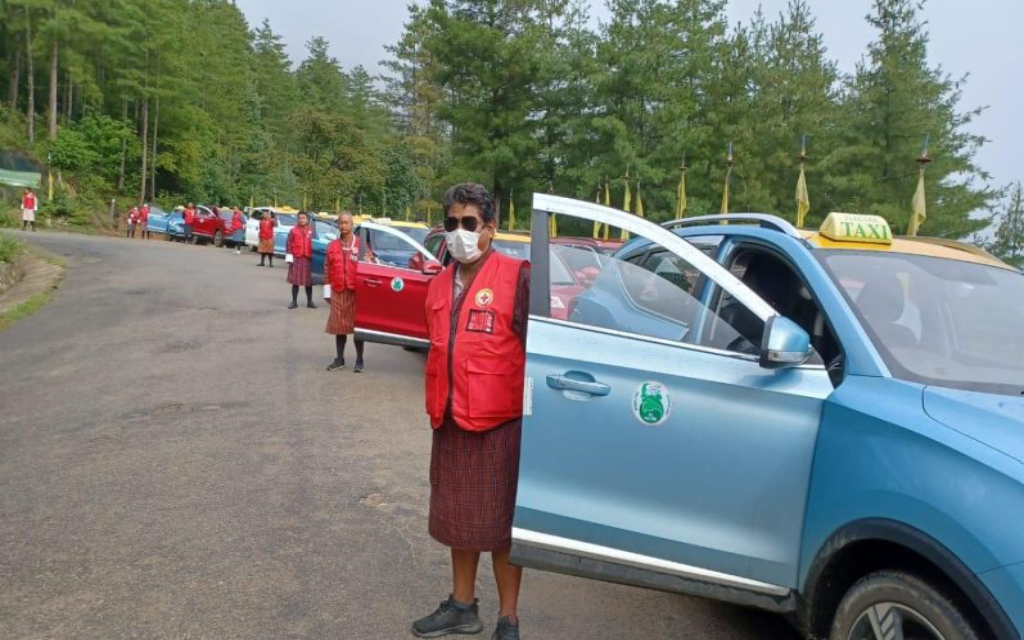

In terms of electric vehicle (EV) adoption within a country, Bhutan is rapidly transitioning its transport sector by promoting and incentivizing ownership of electric vehicles. From a mere 16 EVs in 2019, the number has grown to 401 electric vehicles in 2023 (See Figure 1). This represents a significant step towards sustainable transport, in line with global initiatives to reduce carbon emissions and mitigate the effects of climate change. Significant portions of these EVs are allocated to various sectors, emphasizing a diversified strategy for electrifying the nation’s transportation system.
Figure 1: Growth of electric vehicles in Bhutan

The above growth in EVs is spread across government as well as private sector (Table 1). This government sector plays a vital role in promoting the transition to electric mobility, with 52 electric vehicles designated for official use. This suggests a government initiative to lead by example and establish a sustainable transportation practice standard. The adoption of EVs by the government demonstrates a commitment to reducing the carbon footprint of its fleet operations, contributing to the larger objective of achieving environmental sustainability.

Table 1. Electric vehicles in Bhutan by ownership

EV TypeOWNERSHIP
GovernmentPrivateTaxiTOTAL
2019
016016
2020
428133
2021
1180899
2022
2614879253
2023*
52186163401

There are 186 electric vehicles in the private sector, constituting a sizeable presence. This indicates a growing interest in and adoption of electric vehicles among individuals and non-government organizations. Although private ownership of electric vehicles demonstrates shared concern and responsibility for a cleaner environment, the an openness to adopting healthier alternatives may primarily be attributed to the tax incentive provided.

One of the priorities of the government has been to promote cleaner and more efficient public transport options. Through a subsidy program in conjunction with the UNDP, the taxi industry has grown to 163 EVs in 2023. The transition of taxis to electric power considerably reduces urban air pollution and promotes sustainable urban mobility. Initiatives are now underway to modernize public transport by replacing diesel buses with electric buses. The city of Thimphu recently added an electric bus to the transportation system bolstering the comprehensive approach to achieving sustainable public transportation. The introduction of an electric bus represents a concerted effort to,

This country’s composition of electric vehicles represents a multidimensional approach to sustainable transportation. The government, private sector, taxi industry, diplomatic entities, and the incorporation of electric vehicles demonstrate a collective commitment to reducing carbon emissions and fostering a greener, more sustainable transportation future. Table 2 summarizes the composition of EVs in the country.

Table 2: Composition of EVs in the country as of October 2023

Types of EVsNos.Percentage
Government5212.96%
Private18646.38%
Taxis16340.64%
Total401 
Recent data received from the Ministry of Information and Communication, (MoIC) maps out the number and location of EV charging stations in the country as given in Table 3.
Ministry of Information and Communication

To create a low carbon pathway that will make domestic industries rich, prosperous and socially relevant in global markets, industrial sector decarbonization is essential. In Bangladesh, industry sector is the second largest contributor to GDP (approximately 29.54%), after the service sector contributing 53.4%. The major contributor within the industrial sector is the RMG segment which has seen an increase in labor-intensive and export-oriented manufacturing, transforming the economy. Other industrial sub-sectors include construction industries, jute, sugar, tea, leather, telecommunications, pharmaceuticals, cement, ceramics, shipbuilding, steel, fertilizer, food processing, paper newsprint, light engineering, and other categories.

The importance of developing low carbon and energy efficiency solutions is underlined by this important role played by the industry sector with regards to expected total emissions. Therefore, while industry continues to increase productivity and exports, a more strategic industrial policy is needed to reduce emissions from industrial activities. In each country, policies are playing a significant role in the implementation and realization of industrial decarbonization.
Decarbonization Policies can reduce emissions and increase green jobs through a variety of economic routes. These include input substitution (use of low-carbon energy or input materials), process changes (energy efficiency, novel process development, use of recycled materials, carbon capture), demand reduction (material efficiency, material substitution, circular economy, etc.), skillset trainings (training need identification, creating green jobs and skilling the existing and potential workforce).

The shift to a more sustainable low-carbon economy necessitates the expansion of industry sectors generating ecologically sound products, creating new employment and offering people new skills. According to International Labour Organization (ILO), Green jobs are decent jobs that contribute to preserve or restore the environment, be they in traditional sectors such as manufacturing and construction, or in new, emerging green sectors such as renewable energy and energy efficiency.

The ‘Green Jobs Initiative in Bangladesh’ was formally launched on December 4, 2008, by the Ministry of Labour and Employment and the International Labor Organization. Green employment is found in many areas of the economy, including energy supply and waste recycling, as well as agriculture, construction, and transportation. In Bangladesh the project is being implemented in collaboration with the tripartite constituents; the Government, Bangladesh Employers Federation, National Coordination Committee for Workers Education, and private partners such as Grameen Shakti and Waste Concern.

Among the established national policies of Bangladesh, ICF, with the support of Bangladesh Centre for Advanced Studies (BCAS), identified few policy gaps towards green jobs.
Environmental concerns and skills for green jobs are lightly considered in the draft version of National Skill Development Policy (NSDP), 2020. No skills response solutions are included in a larger framework of climate change and/or sustainability policy. No labor market information (LMI) service exists to collect data on re-training requirements for green jobs. No institutional authority or structure is in place to identify the present and future skill requirements for green jobs.

Major factors accounting for green skill shortages are inadequate institutional support, supply driven TVET system leading to skill mismatch, no green component in the current TVET reform, shortage of green jobs trainers, and inadequate job placement mechanism. Green skills, to adapt products, services, and processes to climate change, environmental requirements and regulations, will be needed by ‘all sectors and at all levels of the workforce.

The national policies and training primarily focus on employment generation and good working conditions, hence there is a dearth of green jobs and skills-related competence standards such as curricula, training, and programs. No criteria for designing new competence “green” standards have been developed yet, owing to a lack of a national green skills development policy. Existing education and training system including general schooling does not follow a strategy of “mainstreaming” sustainability and environment protection issues within the education and training system.

To overcome these policy gaps and challenges, a country-specific and sector-wise future of green jobs report will help in understanding the roles required for reaching the climate change mitigation and adaptation goals. Green skills development must be integrated into wider training and skills development policy, rather than being seen as additional to or separate from other forms of skills. Technical and Vocational Education and Training (TVET) institutions can engage in greening through a comprehensive framework that aims to improve awareness, expertise, and behavior that can contribute to a more productive workplace. Greening a TVET institution will make young people active members of the green economy, resulting in increased human well-being and social justice, while reducing environmental risks and ecological scarcity. This process needs to be a part of the National Youth Policy for aligning the youth towards low carbon transition.

Sri Lanka ratified the United Nations Framework Convention on Climate Change (UNFCCC) in November 1993 being among the first 50 countries to ratify it. As part of its obligations, Sri Lanka released its first national communication on climate change in 2000, and the subsequent national communication in 2011. After the submission of Intended Nationally Determined Contributions (INDCs) as per the Paris agreement in 2015, Sri Lanka officially submitted the updated Nationally Determined Contributions (NDCs) to the UNFCCC in 2016. Since then, Sri Lanka has been communicating through various means its intentions to become net zero country by 2050. Most recently, Sri Lanka released The Third National Communication of Climate Change dated October 2022, and it is seen that this report has placed a major emphasize on the need for structural and policy changes in order to increase the effectiveness of its climate action.

In Sri Lanka the subject of climate change is coming under the purview of ministry of environment, under which the Climate Change Secretariate (CCS) is placed, and the ministry is acting as the national focal point for the UNFCCC. While CCS plays the coordination role with other line ministries, Department of Meteorology (DoM), Disaster Management Centre (DMC), and National Building Research Orgnisation (NBRO) are the other ministries and agencies that plays significant roles in their respective areas. It is also important to note the role of the Sustainable Development Council (SDC); the nodal government institution with the responsibilities for coordination, facilitation, monitoring, evaluation and reporting on the implementation of 2030 Agenda for Sustainable Development in the country. Given this context, the report emphasizes on the need for a complex institutional mechanism in order to tackle the issue of climate change, as it is required to coordinate actions of several line ministries and agencies.

According to the third national communication, the national policies, programs, and institutional arrangements of climate change are being developed at a fast pace. The report while identifying the formulation of the National Climate Change Policy (NCCP) in 2012 as a major milestone of the national agenda, it highlights the need for updating it to deal with the emerging trends such as measurement reporting and verification of greenhouse gases(MRV), carbon trading and offsetting, data management, and climate finance, etc. The report further highlights the need for putting in place a coordinating mechanism for the preparation of National Communications through a multi-sectoral approach as well as a mechanism for data sharing between climate action institutions at national, provincial, and district levels.

One of the important aspect the report gives emphasis on is the need of a dedicated legal provision through a parliament act to deal with climate change issues, as the general provisions provided by the National Environment Act is in sufficient. Further, it highlights that the CCS should have legal mandate through a parliament act for long-term inter ministry and inter-institutional coordination with clear roles and functions for each stakeholder. This mandate will facilitate smooth implementation of climate change laws and policies, activities under sectoral processors, and activities at national, provincial and district levels. However, the report reveals that the Climate Change Commission Act for Sri Lanka is being drafted at present and looking forward to the act to have clear mandate and power vested on it which will strengthen effective ground level climate actions. It also looking forward the act to facilitate establishing a coordinating mechanism to implement the laws and policies of the act, while giving it the power to take actions against those who violate the provisions of the act.

References:
The Third National Communication of Climate Change in Sri Lanka https://unfccc.int/sites/default/files/resource/Third%20National%20Communication%20of%20Sri%20Lanka.pdf, p 65, 135
Sri Lanka Sustainable Development Act, No. 19 of 2017- https://sdc.gov.lk/en/about

Pakistan’s Electric Vehicle Landscape
Ayesha Majid & Mome Saleem

With a share of around 78.5 percent of the country’s total demand, the transport sector is a major consumer of petroleum products in Pakistan. Consequently, the sector accounts for 23 percent of the country’s total GHG emissions. Drastically cutting down the use of fossil-based fuels to meet the climate goals will, therefore, be impossible without decarbonizing transportation in the country.

Electrification of vehicles can play a crucial role in this regard as EVs have a lower energy requirement than Internal Combustion Engine (ICE) based vehicles thus reducing the demand for oil. Moreover, projections suggest that even a high market penetration rate will not lead to significant rise in the country’s power or fuel till 2030. Thus, electrification of vehicles will not create major challenge for electricity grid network in Pakistan in the near future. In fact, it is estimated to reduce the overall oil import bill if penetration is high. However, to truly decarbonize the sector, electrification needs to be aligned with production of clean energy. Leveraging the Alternative and Renewable Energy (ARE) Policy 2020, which aims to increase the share of ARE in total power supply to 20% by 2025 and 30% by 2030, thus presents a potential to transition towards renewable energy sources and simultaneously reduce the country’s overall carbon footprint.

Pakistan’s National Electric Vehicle Policy aims at capturing 50 percent of all the new sales of 02 & 03 wheelers (electric motorcycles, scooties, rickshaws, scooters, and loaders), and 30 percent of all new sales of cars and trucks by 2030. According to Engineering Development Board (EDB) of Pakistan, between 2021 and Oct 2023, around 25,736 two & three wheelers were produced whereas 1,663 four wheelers were produced. Currently, there are around 34 EDB-approved manufactures of 02 & 03 wheelers in Pakistan.

The EV policy is more ambitious vis a vis the 02 & 03 wheelers as compared to cars because:

  • The 02 & 03 wheelers form a major segment of the vehicle fleet, especially in cities, as there is a lack of integrated public transport, and the huge price differential as compared to cars makes them a cost-effective alternative. The average annual growth rate of 02 & 03 wheelers in Pakistan is around 8.3 percent, and it is projected to grow at a similar rate in future. Motorcycles alone consume around 40 percent of the total gasoline requirement. Thus, electrification of this segment has the potential to reduce the demand for fossil-based fuels and the resultant emissions.
    1. https://www.finance.gov.pk/survey/chapters_23/14_Energy.pdf
    2. https://www.pc.gov.pk/uploads/downloads/policy.pdf
    3. https://www.undp.org/sites/g/files/zskgke326/files/migration/pk/Scaling-Up-Electric-Mobility-in-Pakistan.pdf
    4. https://www.mocc.gov.pk/SiteImage/Policy/EV%20Policy%20Final.pdf
    5. https://nepra.org.pk/Policies/ARE_Policy_2019_-_Gazette_Notified.pdf
    6. https://www.mocc.gov.pk/SiteImage/Policy/EV%20Policy%20Final.pdf
  • Almost all the 02 & 03 wheelers are manufactured in Pakistan as opposed to the ICE-based cars which are dominated by international companies. The availability of parts is also quite reliable and cost-effective for 02 & 03 wheelers because of the scale of the existing local industry. To this end, the potential for replacement and conversion of existing fleet is also easier and less expensive as compared to cars. The use of swappable batteries to avoid long charging time is thus being explored as a low hanging fruit as it can be more easily adopted for 02 & 03 wheelers as compared to cars. Charging stations for swappable batteries are being set up in Lahore.

Factors for Long-term Success in the EV Sector
To accelerate the transition towards EVs in all the segments, especially the public transport facilities which have a lower footprint than individual vehicles, the following aspects need to be prioritized:

  1. Policy: There is still a lot of uncertainty regarding licensing, taxation, duties, operation of charging stations etc. It is important to have a consistent and proper regulatory framework which ensures stability to investors and other market players. The government should also focus on encouraging indeginous manufacturing and after sales services for all types of EVs instead relying on import-based models as that would simply add to trade deficit. The policies should also make it attractive for consumers to change their preference and opt for EVs instead of ICE based vehicles. In addition, electrocution of mass transit facilities should be prioritized.
  2. Infrastructure Development: It is imperative that the required infrastructure to facilitate adoption of electric vehicles is developed. This includes a robust network of charging stations and battery-swapping facilities for short and long routes. It also entails strengthening the electricity distribution network to ensure smooth and uninterrupted electricity supply o encourage potential EV owners hesitant to make the switch from conventional vehicles. Policy around installing charging infrastructure at homes, offices, etc. also need to be explored.
  3. Partnerships: To encourage development of indeginous EVs and charging infrastructure, the government will need to encourage entrepreneurship and public private partnerships in the sector. This would entail favorable terms for financing and taxing, transfer of knowledge and technology, and operations.
  4. Research & Development: To maximize the benefits of EVs, research and development facilities are required to explore indigenous development of technologies for EVs and the associated services in the short, medium and long term. The findings should be used to encourage enterprise development and expanding the export potential in the sector.

Newfound Avenue to Increase Electricity Consumption in Nepal In the recent past, eCooking in the residential sector has taken great strides towards market-based adoption. Several favorable national policies, mass awareness and capacity building campaigns for eCooking organized by civil societies, development organizations, continuous research works supported by various development organizations and surplus production of the electricity can be attributed to the promotion of eCooking in Nepal. Recent growth in generation of electricity is encouraging in Nepal. Nepal is gradually transitioning from energy deficit country to energy importing country. The electricity generation over the past decade has been demonstrating significant growth to an extent where there is surplus energy to be exported especially in the wet season. In FY 2022/23, the Nepal Electricity Authority (NEA) increased its export substantially compared to last FY. In 2022/23, NEA was able to export 1,346 GWh compared to 493 GWh in last FY. Over a period of decade, the availability of electricity has increased substantially as shown in Figure 1.

The extent of electricity generation is overwhelming with many hydro projects approaching its commissioning date. With plethora of hydro projects waiting in line for commissioning in the coming years, the electricity generation scenario is encouraging for Nepal to certainly fulfil the national demand. The concerned authority and stakeholders are anxious about risk of wasting the production during wet season. Even during festive season, especially during Tihar also known to be“ festival of light”, the electricity generation was comfortable in handling the peak demand. Moreover, during that time, NEA was able to export excess supply to India. At times,

    1. NEA_Annual_Report_2023
    2. https://english.onlinekhabar.com/nepal-likely-to-waste-up-to-900-mw-of-electricity-this-monsoon.html
    3. https://www.onlinekhabar.com/2023/11/1392390

Contributed by: Niraj Shrestha, Practical Action Consulting Barsha Parajuli, Clean Energy Nepal Nepal has faced challenge to export excess electricity to India as NEA needs to wait for approval from the Indian counterpart. In such circumstances, risk of spilling excess electricity and associated financial loss is imposed on NEA. Overall, the current electricity demand and supply scenario clearly indicated that there is a need of alternative plan to ensure that excess generation of electricity is consumed as much as possible within the country. Conflicts around globe has indicated that dependence on imported fossil fuels such as LPG is detrimental to the national economy from the point of energy security and sustainable energy development. The current circumstance clearly calls for energy services that can rely on locally generated energy source to reduce the impact on national economy by reducing the trade deficit contributed by import of LPG and petroleum products while increasing the demand for electricity within the country. At this moment, eCooking within the commercial and enterprise sector and eMobility are potential two energy services that has the potential to contribute to escalating the daily demand for electricity. Increasing the consumption of electricity is in the best interest of the nation from economic, and environmental standpoint. eCooking Potential in Commercial sector The commercial and/or enterprise sector is associated with economic activities. The choice of fuel for cooking at most enterprise and commercial sector is mostly LPG. However, biomass, coal and electricity are also part of the energy mix for cooking at commercial level. The energy sector synopsis report (2022) indicates that the energy consumption by commercial sector have increased to 7% in 2021 from a low share of 1.3% in 2009. This makes it obvious that energy demand in the commercial sector is rising at a high rate. On the other hand, if looked at energy demand by type in commercial sector alone, 53% of energy comes from wood, 25% from LPG, 7% from coal and charcoal in 2021 respectively. These fuels are primarily used for thermal energy – one of which is cooking and water boiling. With more than 80% of energy coming from solid biomass fuels, it is evident that there is a strong need and an opportunity for cleaner fuel usage. The “Energy Consumption and Supply Situation in Federal System for Koshi and Madhesh Province” and that for Bagmati Province by WECS have provided the energy consumption details from primary survey. Although these reports may not be exact representation of the country, it does provide representative evidence regarding the energy consumption patterns in the commercial sector of the country for cooking. Table 1 below shows the energy consumption status and choice of fuels for cooking in the commercial sector in three provinces (Koshi, Madhesh Pradhesh and Bagmati) of Nepal. The commercial sector of the country is grouped into trade and retail, accommodation and food, financial service, social service, and other services in the energy sector analysis reports. Understandably, being associated with hospitality, accommodation and food service sub-sectors are mainly responsible for higher consumption of energy in cooking. This sub-sector comprises restaurants, hotels, and similar service sectors.

Table 1: Energy consumption status and choice of fuel for cooking in the commercial sector
    1. https://www.onlinekhabar.com/2023/10/1384663
    2. Commercial sector comprises of trade and retails (shops, manufacturing units, etc), accommodation and food (hotels and restaurants), financial service (banks, cooperatives, etc), social service (schools and hospitals) and other services (police station, IT, etc).
Contributed by: Niraj Shrestha, Practical Action Consulting Barsha Parajuli, Clean Energy Nepal
Province Energy Consumption in Cooking (TJ) Fuel Source
Firewood LPG Electricity
Koshi 1,504 59% 41% 0.5%
Madhesh Pradesh 324 2% 93% 5%
Bagmati Pradesh6 3,858 3% 89% 0.4%
The energy consumed by the accommodation and food sub-sector in Koshi and Madhesh Province is shown in Table 2. This is the sector which needs to be targeted to increase the share of electricity while reduce the share of LPG for cooking. Table 2: Energy consumed by accommodation and food sub-sector by fuel type
Province Fuel Source for Commercial Sector (Accommodation and Food Sub-Sector) in TJ
Wood Coal LPG Electricity
Koshi
445 320 145
Madhesh Pradesh
0.07 0.48 128.12 83.61

Source: (WECS, 2019)

Furthermore, the consumer category for NEA is dominated by domestic customers. Approx. 92 percent consumer for the NEA belongs to the domestic category followed by other category (temple, transportation, water supply, irrigation, commercial, etc) and industrial category. As justified by the electricity sales revenue from different sectors, the domestic sector contributes to approx. 38 percent of the total revenue of the NEA which is matched only by industrial sector. As of now, the commercial sector’s contribution on the NEA revenue stream in minimum. Any effort that contributes to increase in the revenue stream is likely to be welcomed by the NEA who is solely responsible for generation, transmission, and distribution of electricity in Nepal.

Transportation Sector Status in Nepal
The crisis arising due to climate change and pollution is posing urgent challenges globally. Though Nepal’s contribution to global climate change is negligible with low per capita emission (0.1 percent of total global GHG emissions, 2019 ), the GHG emissions are rising at an annual rate of 2.3%. Petroleum products, the largest imported commodity (17.4% of the total import bill) and fossil fuel-based motor vehicles (motor vehicle and their spare parts together come up as second most imported commodity after petroleum product and accounting for 6.5% of total imports) are the major contributors.
The energy consumption by the transport sector has been on rise due to the changing demography and economy. According to Water and Energy Commission Secretariat (WECS)


  1. The remaining percentage comprise of fuels like charcoal and coal.
  2. Water and Energy Commission Secretariat. (2019). Energy Consumption and Supply Situation in Federal System of Nepal (Province No. 1 and Province No. 2) Final Report-Province 1 CMS-CES JV i Executive Summary Global Energy Outlook and Current National Energy Overview.
  3. WECS. (2022b). Energy Sector Synopsis Report 2021/2022.
  4. https://kathmandupost.com/money/2023/04/30/nepal-undermining-hydropower-as-it-seeks-to-ease-fuel-imports-experts-say#:~:text=According%20to%20the%20Department%20of,in%20the%20last%20fiscal%20year.

Contributed by:
Niraj Shrestha, Practical Action Consulting
Barsha Parajuli, Clean Energy Nepal
2023, the transport sector alone in Nepal demands 67.1 PJ of energy i.e. 10.3% of national total (i.e. 3rd in terms of energy consumption). Petroleum products is the primary source of energy and electricity usage by this sector is just 0.02%. Diesel fuel holds the largest share in this sector (60.34%), primarily used by freight and heavy passenger vehicles, while petrol is mainly consumed by small private vehicles (31.6%). Additionally, aviation fuel accounts for 8.04% of this sector. The vehicle registration status (as of 2018) shows that 78.6 % of the total registered vehicles are motorcycles, 7.4% cars/jeeps/vans, 4.8% tractors and trucks, 1.7% pickups, 1.5% buses, and others remaining. These trends of preference for private over public transport (3% public vehicles, 14% private vehicles and 78% motorcycle) is alarming as it is unsustainable and pose the risk of ultimate contribution for higher emissions.
Recently, while Nepal is witnessing gradual increase in its electricity generation and the nation is transitioning from energy deficit country to energy surplus, there is a huge potential to increment in per capita electricity consumption (Government of Nepal plans to increase annual per capita electricity consumption to 400 kilowatts per hour) through adoption of EVs. Government of Nepal (GoN) has also been prioritizing the transport sector in its periodic and annual plans. Further, Nepal has also set a vision to achieve net zero GHG emission by 2045, transport sector being the major target sector and its NDC actions are aimed at lowering carbon emissions by transitioning to zero emission transportation for intercity, intra-city and freight travel across public and private modes.
What Next with eCooking for Commercial Sector in Nepal?
NEA is also trying to address the major bottleneck that is hindering them to ensure quality and reliable supply, upgrading transmission and distribution infrastructure. NEA is massively focusing on upgrading transmission, distribution systems, and other infrastructure in its corporate development plan to ensure quality and reliable supply of electricity to the end users. NEA is also expediting transmission and distribution system by addition of sub-station, upgrading the transformers, and improving the service delivery mechanism. Upgradation in transmission and distribution is something that cannot happen overnight but intentions from NEA indicate that the transmission and distribution system upgradation is seen as a major priority for NEA. Recently, NEA announced to set up 8 high-capacity sub-station to improve transmission and distribution system within Kathmandu valley. Upgrading their transmission and distribution infrastructure with major city like Kathmandu demonstrate their intent to improve their supply system. Moreover, NEA is likely to get support from international development agencies like ADB and the World Bank to upgrade the transmission and distribution system.


    1. WECS. (2022b). Energy Sector Synopsis Report 2021/2022.
    2. DoTM. (2019). Total number of vehicles registered till fiscal year 2018/19. Department of Transport Management (DoTM), Kathmandu.
    3. https://kathmandupost.com/money/2023/02/23/nepalis-turning-to-electric-vehicles-evs-in-tactical-shift-imports-jump-61-percent
    4. https://myrepublica.nagariknetwork.com/news/nea-to-construct-eight-high-capacity-substations-in-kathmandu-valley-to-meet-electricity-demand-till-2050/

Contributed by:
Niraj Shrestha, Practical Action Consulting
Barsha Parajuli, Clean Energy Nepal
From the development perspective, initiatives have started in Nepal regarding exploring potential to promote eCooking in enterprise and commercial sector. Development agencies like Modern Energy Cooking Service (MECS) program supported by FCDO and the World Bank has started to support development agencies in Nepal to explore potential and feasibility to promote eCooking in commercial sector. Recently Practical Action Consulting (PAC) Pvt. Ltd has been involved in two research to assess potential to introduce eCooking in commercial sector. These two research are on the verge of completion and the findings from this research will probably shed light on energy use pattern in commercial sector, financial viability of transitioning to eCooking, barriers and challenges to promote eCooking in commercial sector. The research was conducted in Kathmandu valley and in the tourist area within Kaski, Chitwan, Mustang and Dhading district. The findings from these research could prove to be stepping stone to garner powerful interest among the stakeholders and policy makers that can drive them to contemplate about integrating eCooking in the commercial and enterprise sector.
What Next with Electric Vehicle (EV) or eMobility in Nepal?
Regarding Electric Vehicle (EV), Nepal intends to transition to EVs and for that numerous charging stations will be needed to meet the demand that will arise. Realizing this, NEA (51 charging stations across 7 provinces of Nepal) along with many car companies including TATA (+150 fast and slow charging stations), BYD (14 Charging stations), Hyundai(43 charging stations), MG (17 charging stations) have set up charging stations all over Nepal. Despite the setup of all these charging stations, the ratio of EVs to charging station is still low. Installation of new charging stations with all types of dedicated chargers capable of charging different types (brands) of EVs backed up with a proper planning will be needed. Further it is crucial to ensure consistent and stable electric supply for the existing charging stations to prevent any potential damage to the EVs. Additionally, it is important to ensure smooth and convenient charging experience for users.
Besides, Nepali transport sector primarily depends on vehicle imports so the import tax and import duties plays a significant role in defining the cost of the vehicle in the local market. The tax rate depends on the transport types and their engine capacity (cc). The customs subsidies on the import of EVs have shown positive impacts on the adoption of EVs. Last April, government announced a complete ban on the import of fossil based vehicles including motorcycles with a capacity of over 250cc. This shortage of fossil fuel powered vehicles coupled with easy bank finance services and ever soaring prices of petroleum products, sales of EVs has boosted. However, this ban was again lifted in December.16
The government through the budget of the current fiscal year had announced plans to convert both the private and public petroleum-based vehicles into electric vehicles in the Kathmandu


  1. Unlocking the potential for enterprise level electric cooking in Nepal funded by MECS and Identifying eh electric cooking in the small and medium scale enterprise and businesses funded by the World Bank-Nepal
  2. https://english.onlinekhabar.com/charging-stations-in-nepal.html
  3. https://kathmandupost.com/money/2023/02/23/nepalis-turning-to-electric-vehicles-evs-in-tactical-shift-imports-jump-61-percent

Contributed by:
Niraj Shrestha, Practical Action Consulting
Barsha Parajuli, Clean Energy Nepal
Valley. This will potentially have positive impacts towards the decarbonizing the transport sector of Nepal and just energy transitions.
The changing import tax, import duties and policies again discourages the adoption of cleaner modes. Consistent and stable electric supply, consistent enabling policies, sufficient charging infrastructures, smooth and convenient charging experience for users, subsidies on tariffs and the import of EVs, easy bank finance services will play crucial roles in the adoption of EVs, that poses the potential of future means of transport.

In acknowledgment of the global concern and the need for concerted efforts to combat climate change, the Royal Government of Bhutan, pledged to remain carbon neutral at COP15 of UN Framework Convention on Climate Change. This commitment was further reiterated at the time submitting its Nationally Determined Contribution (NDC) to the Paris Agreement in 2015. At that time, Bhutan’s greenhouse gas emissions (including forest emissions) was estimated at 3.8 million tons of CO2. Through its consistent efforts on sustainably forest management and environmental conservation, Bhutan has always maintained over 70% of its area under forest cover. Carbon sequestration by its forests in 2015 was estimated at 9.4 million tons of CO2 resulting in net negative emissions of 5.6 million tons of CO2. Of the total carbon emission of 3.8 million tons, more than 50% was attributed to Agriculture, Forestry and other Land use, around one-fifth (20.9%) from Industrial processes, nearly 20% from the Energy and the remaining 3 percent was attributed to waste and waste related products (See Figure 1 below)

Figure 1.1 Proportion of GHG emission by different sectors in percent, 2015.

The Kingdom of Bhutan’s second Nationally Determined Contribution of 5th June 2021 outlines the following sector wise mitigation measures for carbon emission reductions:

Agricultural, Forestry and Other Land Use: With 50% of the country’s GHG emissions attributed to this sector, the proposed mitigation measures are as follows:

  • Switching from synthetic to organic fertilizers

  • Improving agricultural practices

  • Increasing biomass through increased perennial crop production

  • Reduction of continuous rice flooding

  • Improving dairy cattle production through breed improvement and feeding management

  • Rolling out the solar PV systems on buildings

  • Replacement of LPG and firewood with electricity, etc.

Industries: Although the industrial sector contributes to over 20% of the country’s carbon emissions, appropriate mitigation measures need to implemented to prevent further increase in emissions. One of the main mitigation measures proposed for this sector is to replace fossil fuels with renewable sources of energy. Further, in order to stimulate economic growth, foster private sector development, and generate employment, fiscal incentives in the form of direct and indirect tax incentives were provided under the Fiscal Incentives Act of Bhutan 2017. Industries adopting modern environmentally friendly technologies are incentivized with tax rebates while tax exemptions are provided to entities promoting hydroelectricity, solar, wind, biogas and other renewable energy sources.

Energy Sector: Enhanced clean energy production continues to be an option for averting GHG emitting enterprises and businesses. Continued emphasis on production of renewable energy remains a major avenue for achievement of carbon neutral status. Bhutan generated 11,370.80 MU electricity in 2020. With four hydropower projects due for commissioning before 2030 i.e., Punatsangchuu-I (1200MW), Punatsangchhu-II (1020MW), Kholongchhu (600MW) and Nikachhu (118MW) hydroelectric projects (HEP, one can expect much of the energy to go into offsetting carbon emissions outside as well as inside the country.

With an aim to reduce the dependency of rural residents on firewood, the pursuit of alternative renewable energy program consisting of mini hydro, solar, wind and waste-to-energy technologies have been identified as priority programs. Further, in line with this policy, the Royal Government of Bhutan recently launched the 180kW grid-tied ground mounted Solar Photo-Voltaic Power Plant in Bumthang district. As it is, there is observed reduction in usage of firewood over the years owing to increased availability of clean hydroelectricity for both lighting and cooking purposes. As per the series Bhutan Living Standard Surveys (BLSS), the proportion of households using electricity for the cooking purpose has increased by almost three time in ten years from 2007 to 2017. Whereas the proportion of households using fuel wood has decreased by almost half in the same period (see Figure 2).

Figure 2: Proportion of Households using Electricity and Fuel wood for Cooking Purposes 2007, 2012 and 2017.

Note: Cases where total proportion exceeds 100 percent is explained by households having reported use of multiple sources of energy for cooking.

Transport sector, on the other hand is a major contributor of contributing emissions from burning of fossil fuels. As per the Annual Info-Comm and Transport Statistics Bulletin (12th Edition, 2021), the number of motor vehicles is increasing every year. During the period 2010 to 2020, the number of vehicles has more than doubled from 53,382 to 112,058 accounting for an average 8 percent increase per year (see Figure 3).

Figure 3: Total Number of Vehicles from 2010-2020

Source: Ministry of Information and Communication

Therefore, the following mitigation measures have been proposed to reduce the emissions from the transport sector

  • Mass transit though improvements in bus systems and the introduction of open-bus rapid transit (BRT) network (electric and diesel) and light rail transit.

  • Promotion of electric passenger vehicles (taxi, two wheelers, light vehicles, buses)

  • Low emission freight transport system for heavy and commercial trucks and freight trains

  • Improve fuel-efficiency in internal combustion engines through stringent vehicle and emission standards.

Accordingly, there was observed increase in the import of Electric Vehicle in the country. The recorded number of Electric vehicle has increased to 133 numbers in 2020 against the 94 in 2017 as per Annual Info-Comm and Transport Statistics Bulletin.

Waste management: Emissions from improper disposal and management of landfill sites has been identified as another potential area for carbon emission reduction. With rapid economic diversification and growth in population, the associated increase in generation of waste contributes to almost 4 percent of total national emissions. The Royal Government of Bhutan, under the National Waste Management Strategy 2019, and the Waste Management and Stray Dog Population Control Flagship Program has set the goal of revering the current trend of disposing over 80% to the landfill to less than 20% by the year 2030. Measures proposed under the Flagship program include:

  • Introduce colour-coded waste bins for all households.

  • Ensure end-to-end reduction of waste.

  • Private sector partnership in recycling and converting waste into profit.

In pursuit of its pledge to remain carbon neutral, Bhutan has consistently endeavored to put in place the policies and programmes necessary to maintaining the country on the path to carbon neutral economy. Progress made on implementing climate actions since the ratification of the Paris Agreement may be tracked in terms of the following:

Integration of climate change concerns into development planning

The 12th FYP has a National Key Result Area (NKRA) dedicated to addressing climate priorities of the country. The 6th NKRA “Climate Neutrality, Climate and Disaster Resilience” translates the priority areas for mitigation and adaptation identified in the NDC into programs for implementation across different sectors at the national and local levels. Among other climate and climate related projects, the following projects are being undertaken:

  1. The third NAPA project ‘Enhancing Sustainability and Climate Resilience of Forest and Agricultural Landscape and Community Livelihoods in Bhutan’ funded by the LDC Fund

  2. Bhutan for Life’ pertaining to managing the network of Protected Areas in Bhutan funded by Green Climate Fund (GCF).

  3. Supporting Climate Resilience and Transformational Change in the Agriculture Sector in Bhutan”, also funded by GCF seeks to addresses the adverse impacts of climate change on rural livelihood security and poverty, and the effects of sector-led development practices on the ecological integrity of biodiversity-rich forested landscapes.

  4. Local Climate Adaptative Living Facility (LoCAL)’ with funding from UNCDF and the EU focuses on mainstreaming climate adaptation into local development.

  5. Formulation of a National Adaptation Plan (NAP) and establishing and strengthening of the supporting elements for the NAP process funded by GCF under its NAP readiness support.

  6. Preparation of the Long Term Low GHG Emission and Climate Resilient Development Strategy (LTS)- aimed at formulating overall direction and guidance for Bhutan in the long-term efforts for remaining carbon neutral.

  7. Direct access modalities for climate finance: Accreditation of the Bhutan Trust Fund for Environmental Conservation (BTFEC) as National Implementing Entity to both the GCF and the Adaptation Fund. In addition, Bhutan is pursuing access for the private sector with three financial institutions (Bhutan Development Bank Ltd, Bank of Bhutan Ltd and the Bhutan National Bank Ltd) undergoing the accreditation process for access to the Private Sector Facility of the GCF.

Policy initiatives

The Constitution of the Kingdom of Bhutan sets the nation’s priorities for sustainability through preservation of the environment and sustainable use of natural resources. For this, the constitution mandates that the Kingdom of Bhutan will maintain a minimum of 60 percent of total land under forest cover for all time. Under this overarching mandate, there are ongoing effort to put in place climate friendly policies. Some of the prominent policies that the Royal Government has put in place since its ratification of the Paris agreement are listed below:

Climate change policy, 2020: The Climate Change Policy of the Kingdom of Bhutan was adopted in 2020. The policy envisions “a prosperous, resilient and carbon neutral Bhutan where the pursuit of gross national happiness for the present and future generations is secure under a changing climate.” The policy aims to i) provide strategic guidance in maintaining a carbon neutral economy, ii) foster coordinated and coherent stakeholder participation in climate actions, iii) address climate change related challenges and opportunities at all levels by integrating climate change into relevant policies through adequate means of implementation i.e., finance, technology, and capacity building.

The Kigali Amendments to the Montreal Protocol on Ozone Depleting Substances ratified: Bhutan ratified the Kigali Amendments to the Montreal Protocol on Ozone Depleting Substances in 2019. In addition to the system for licensing the import and export of HFCs that is already in place, the Regulations on Control of ODS 2008 are being amended.

Fiscal Incentives: Following the Economic Development Policy 2016, fiscal incentives were provided for environmentally friendly technologies and equipment; Waste management and recycling industries were provided income tax holidays and exemption of sales tax and custom duties on plant and machinery related to waste management and recycling industries

  1. Following the Economic Development Policy 2016, fiscal incentives were provided in the form of direct and indirect tax incentives under the Fiscal Incentives Act of Bhutan 2017 to stimulate economic growth, foster private sector development, and generate employment. Incentives included tax rebates to industries adopting modern environmentally friendly technologies, tax exemptions to hydroelectric projects, solar, wind, biogas and other renewable energy plants and machineries. Energy efficient and environment friendly equipment were also exempted from import duties for targeted sectors such as hotels. Waste management and recycling industries were provided income tax holidays and exemption of sales tax and custom duties on plant and machinery.

  2. The National Energy Efficiency & Conservation Policy covering the sectors of buildings, transport and industry were launched in 2019. The policy aims to facilitate improvements in productivity and energy efficiency while contributing to Bhutan’s efforts to remain carbon neutral. Further the Renewables Readiness Assessment (RRA) has been developed in cooperation with International Renewable Energy Agency with a view to complement the country’s efforts in enabling the wider penetration of various renewable energy technologies.

  3. The Sustainable Hydropower Development Policy (SHDP) 2021 enhances the previous hydropower policy by integrating climate resilience and mitigation among other updates. As current run-of-river hydropower schemes in Bhutan have become increasingly vulnerable to decreasing water flows in the dry season the SHDP emphasises adaptation measures such as reservoir/pumped storage schemes. In addition, the new policy mandates hydropower value chain through ventures in energy storage technologies such as hydrogen fuel, green ammonia, and other emerging technologies. These energy storage and diversification measures for adaptation also contribute directly to Bhutan’s carbon neutral efforts by providing clean energy for zero carbon transport and mobility.

Low Emission Development strategies, plans, and Roadmaps

To implement the priority programs in the NDC, several Low Emission Development Strategies (LEDS) and roadmaps have been developed to prioritise mitigation actions in key sectors of Agriculture, Human Settlement, Industry and Transport. The LEDS developed so far include a) Forest conservation and management under the National REDD+ Strategy, b) Low Emission Development Strategy for Food security, c) Low Emission Development Strategy for Human Settlement, d) Low Emission Development Strategy for Industries, e) Low Emission Development Strategy for Surface Transport, f) Waste Management, g) Sustainable Hydropower Development, h) Alternative Renewable Energy, i) Green Hydrogen Roadmap., j) Energy Efficiency Roadmap 2019. These LEDS will guide the concerned sectors to integrate low carbon measures into development priorities.

In addition, other climate related strategies and roadmaps have also been developed. They are:

  1. National Environment Strategy Strategy 2020, which is the updated version of the National Environment Strategy of 1998. The strategy integrates new and emerging national environmental challenges and the critical global challenge of climate change and outlines strategic measures to managing land, air, water, and biodiversity with climate change as a cross cutting issue.

  2. The Renewable Energy Master Plan (2017-2032) was adopted as a strategy for the long-term implementation of renewable energy technologies. This master plan identified 39,462 MW of technically feasible small hydropower, solar and wind projects across the country. These renewable energy technologies provide a basis for both clean energy generation for mitigation and as adaptation to changing water flows and the impacts on hydropower in Bhutan.

  3. The Bhutan Electric Vehicle (EV) Roadmap (2020-2025) promulgates gradual transition to zero emission by 2035, 2045 and 2050. Part of this strategy is already being implemented in the form of the project ‘The Bhutan Sustainable Low- emission Urban Transport System’ which targets taxis for EV mobility.

  4. The National Waste Management Strategy, which was adopted in 2019, seeks to address emission from landfill sites by reversing the current trend of disposing over 80% of solid waste to the landfill to 20% by the year 2030.

  5. The Renewable Natural Resources (RNR) Strategy 2040, covering the forests, agriculture, and livestock sectors, was adopted in 2021 and covers the AFOLU sector under the IPCC emissions source category. The RNR Strategy integrates resilience to climate change and low emission development supplementing the REDD+ Strategy, LEDS for Food Security 2021, and the National Strategy for Sustainable Socio-economic Development.

  6. Roadmaps currently being formulated that take into account priority areas integrating climate change concerns into economic development needs are i) 21st Century Economic Roadmap which is expected to chart the direction for Bhutan’s long-term economic development and ii) the Green Finance Roadmap that will address sustainable financing mechanisms to support the priorities identified in the 21st Century Economic Roadmap.

Enhanced Coordination mechanism

Climate Change Coordination Committee (C4) instituted: The national mechanism for coordination of climate change actions has been strengthened. The erstwhile Multisectoral Technical Committee on Climate Change was revitalized into Climate Change Coordination Committee (C4). Efforts are underway to set up a ‘one stop platform’ for coordination of multi-stakeholder dialogues and implementation of climate projects in the country.

Having the policies and plans for a Carbon Neutral Economy is one thing and translating the policies and plans into action are entirely another thing. As a least developed country (LDC) with stretched financial resources that has further suffered badly from the economic and financial impacts of COVID-19 pandemic, it is even more understandable that the country’s NDCs have been proposed as subject to adequate external funding. Hence, it is reasonable to expect the country to rely on bilateral and multilateral climate funding to meet its climate commitment.

References:

RGOB, 2021. Kingdom of Bhutan: Second Nationally Determined Contributions. Royal Government of Bhutan, 5th June 2021.

MoIC, RGOB 2021. Annual Info-Comm and Transport Statistical Bulletin (12th Edition, 2021), PPD, MoIC, RGoB

National Statistics Bureau, RGOB. Bhutan Living Standard Surveys 2007, 2012, 2017. National Statistics Bureau, RGoB

Carbon neutrality or net-zero carbon dioxide emissions entails balancing emissions of carbon dioxide with its removal or by eliminating emissions from society. While 2020 was a bleak year, owing to the Covid crisis, it ended with some hope for the planet when a group of developed countries – USA, Canada, Japan declared their resolve to achieve net zero emissions by 2050. China declared that it would be able to achieve the same by 2060. There is a growing pressure on India too to declare this as such but Indian Government has stated clearly that it cannot possibly do it alone, and without jettisoning the project of pulling millions living in poverty in the country.
The declarations of the developed country is being seen as a timely declaration coming along with Special Report on 1.5 degree Celsius. There are several cities, municipalities, and businesses world over which are declaring net zero targets in 2050.These numbers are climbing quickly, particularly because the U.N. Secretary General asked countries to come forward with net-zero targets. The U.N. High Level Climate Champions’ Race to Zero campaign also calls on regions, cities, businesses, investors and civil society to submit plans to reach net-zero emissions by 2050 in advance of the United Nations climate negotiations (COP 26) in Glasgow in November 2021. The Special Report on Global Warming of 1.5˚C, from “the Intergovernmental Panel on Climate Change (IPCC), finds that if the world reaches net-zero emissions by 2040, the chance of limiting warming to 1.5 degrees C is considerably higher. All in all, the world must try to reach net zero targets as soon as may be. The chances of limiting warming to 1.5 degrees C, however, depend significantly on how soon the highest emitters reach net-zero emissions

Differential Capacity to achieve the net zero target

This does not, however, suggest that all countries need to or can reach net-zero emissions at the same time. WRI (2019) argues that “Equity-related considerations — including responsibility for past emissions, equality in per-capita emissions and capacity to act — suggest earlier dates for wealthier, higher-emitting countries. Policy, technology and behaviour need to shift across the board”. In pathways to 1.5 degrees C, renewables are projected to supply 70-85% of electricity by 2050, which is one of the most important mechanisms through which the goal can be achieved.
India is in a dilemma. It cannot possibly commit to net zero by 2050 without abdicating its responsibility towards its citizens of providing affordable, clean energy, employment, proper infrastructure etc. India has done more than most countries with its level of development and its poverty profile and is trying very hard to reduce its GHG emissions as quickly as possible. This is reflective in India investing heavily in its renewable energy programme and has reiterated its 450 GW target of installled RE capacity by 2030. But is indecisive about announcing its net zero target by 2050. This is because net zero target would require a multi sector, multi-level action, something India sees unlikely to be able to do by 2050. Changes in patterns of energy production and consumption, industrial production and consumption, transport – would all require fundamental changes in which , and while India taking relevant steps, it’s not happening fast enough. India and other nations, through their INDCs has outlined its post-2020 climate actions to contribute toward the 2°C global warming limit. For most countries steps to reach net zero target through decarbonization cover greenhouse gas (GHG) emission reduction targets in energy, industry, agriculture, waste, land use and forestry, and transport—the sectoral focus varying from country to country. These have been laid down in their respective INDCS.

South Asia and Net Zero

Mitigation targets in the INDCs of various countries are reflective of their efforts and alignment with the 1.5 to 2 degree Celsius target. Where is South Asia at the moment in terms of alignment of its mitigation efforts (expressed in INDCs) to the 1.5 – 2 degree temperature limit? Except for Bhutan and Nepal, South Asian countries provided intended mitigation contribution in terms of percentage reduction in GHG emissions or emission intensity. Bangladesh, the Maldives, and Sri Lanka aim at GHG emission/ carbon intensity reduction ranging from 5% to 24% by 2030, from BAU, with components conditional on international assistance. India commits to reduce emission intensity by 33% to 35% by 2030 compared with 2005. While not providing a specific GHG emission reduction commitment, Bhutan stated intention to remain carbon neutral where GHG emissions will not exceed carbon sequestration by the forests. On the other hand, Nepal’s stated commitments were in terms of reduction in fossil fuel dependency, appropriate mix of renewable energy in energy mix, and maintained forest cover.

We will look at these for all South Asian countries in some detail through perusal of their INDCs to first enumerate their mitigation targets and then assess their alignment with the 1.5to 2 degree Celsius target. These INDCS are either based on conditional or unconditional international support. Afghanistan in its INDC has committed to 13.6% reduction in greenhouse gas (GHG) emissions by 2030 compared with Business-as-Usual (BAU), conditional on external support. These would require financial assistance from the developed countries for its achievement. Bhutan on the other hand seeks to remain carbon neutral where GHG emissions will not exceed carbon sequestration by forests (approximately 6 million tons of CO2).

India has both conditional and unconditional targets, which include  – Reduce emission intensity of its gross domestic product (GDP) by 33%–35% by 2030 compared with 2005 (no bind on any sector-specific mitigation obligation/action) • Achieve 40% cumulative electric power installed capacity from non – fossil fuel-based energy resources by 2030 (with transfer of technology and low-cost international finance) • Create an additional carbon sink of 2.5–3 billion tons of CO2 equivalent through additional forest and tree cover by 2030.  Nepal’s conditional INDCs include – • Achieve 80% electrification through renewable energy sources having appropriate energy mix by 2050. • Reduce dependency on fossil fuels by 50% by 2050 • Maintain 40% of total area of country forest cover • Sustainable Forest management to increase forest productivity and products. 

Srilanka’s conditional and unconditioanal targets include – Reduce GHG emissions by 20% (approximately 36,010.2 gigagram [Gg]) in energy sector by 2030 against the BAU scenario – 4% unconditionally (approximately 7,202.04 Gg) and 16% conditionally (approximately28,808.16 Gg). • Reduce GHG emissions by 10% from transport, waste, industries, and forest – 3% unconditionally and 7% conditionally against BAU scenarios

Pakistan’s conditional target is reduce emissions after reaching peak levels (subject to affordability, provision of international climate finance, transfer of technology and capacity building). The conditional and unconditional target of Bangladesh include : Reduce greenhouse gas (GHG) emissions by 5% (12 million metric tons of carbon dioxide equivalent [MtCO2e]) from BAU levels by 2030 in the power, transport, and industry sectors, based on existing resources • Reduce GHG emissions by 15% (36 MtCO2e) from BAU levels (by 2030 in the power, transport, and industry sectors (subject to appropriate international support on finance, investment, technology development and transfer, and capacity building). 

Net Zero for South Asia is a long route

These are the mitigation targets submitted as a part of the INDCs by the South Asian countries to the UNFCCC as a vision they seek and would achieve given financial and technological support they get. These are plans that the countries seek to pursue to contribute to the prevention of climate change. But most of these are not 1.5 – 2 degree Celsius aligned. Its only Nepal, Bhutan and India whose INDCs if pursued rigorously is 2-degree Celsius compatible. The rest are either not or have not submitted sufficient information to be able to infer combability.

The Climate Action Tracker (CAT) has assessed the fair sharing of the proposed contributions of selected countries on efforts to move global emissions downward through 2030. It provided ratings on intended nationally determined contributions (INDCs), pledges, and current policies, specifically on whether they are consistent with a country’s fair share effort to holding warming to below 2°C.The assessment included six developing member countries of ADB: Bhutan, India, the People’s Republic of China, Kazakhstan, the Philippines, and Nepal.
Bhutan’s pledge was rated “sufficient” for 2025, and it is the only country ever rated “Role Model.” This rating is based on emissions excluding land use, land-use change, and forestry (LULUCF) and takes into consideration that, as a developing country with currently very low emissions per capita, Bhutan’s emissions are expected to grow over this time period. Gradual reductions will be needed afterward.
India’s pledges were rated “medium.” The pledges are in line with effort sharing approaches that focus on equal cumulative per capita emissions. A “medium” rating indicates that commitments are not consistent with limiting warming below 2°C and greater effort or deeper reductions from other countries are required. Approaches that focus on historical responsibility and capability would require more stringent emission reductions. The “medium” rating indicates that India’s climate commitments are at the least ambitious end of what would be a fair contribution. This means it is not consistent with limiting warming to below 2°C unless other countries make much deeper reductions and comparably greater effort.
Nepal has not made any emissions reduction pledge, hence no rating was provided. Its own emissions make up less than 0.1% of global emissions. With its current policies, Nepal’s greenhouse gas emissions are expected to increase by 62% by 2030 compared with 2010 levels. Nepal’s projected emission levels in 2020, 2025, and 2030 are in the “sufficient” range. CAT analysis determined an upper end of the “medium” range for Nepal using effort-sharing approaches based on quality principles. To be in line with approaches that focus on responsibility and capability, Nepal would need to reduce its emissions from its current policy projected levels. Apart from the three countries most have not been assessed.Source: Climate Action Tracke

Potential for Decarbonisation through Renewable Power Generation in South Asia 

A lack in the INDCs of the South Asian Countries is largely due to the fact that lack of finance and technology has prevented RE potential from being sufficiently exploited. We will now assess the progress and potential of the countries towards their mitigation targets, especially their RE targets. India has set an objective of 450 GW by 2030. India has tremendous potential for solar energy and is also expanding wind energy. By July 2020, India had reached a total RE installed capacity of 86 GW. 

In 2019, Bangladesh had 2.1 percent and 1.2 percent of solar and hydro in the total installed capacity respectively. In Pakistan in 2019, of total installed capacity, 29.4 percent and 4.97 percent were constituted by hydro and solar respectively. According to WB Pakistan has tremendous potential to generate solar and wind power. According to the WB, utilizing just 0.071 percent of the country’s area for solar photovoltaic (solar PV) power generation would meet Pakistan’s current electricity demand. Wind is also an abundant resource. Pakistan has several well-known wind corridors. 

As a developing country, Sri Lanka’s demand for electricity is going to increase in the future. It is imperative therefore, for Sri Lanka to secure its energy future by focusing on the development and adoption of indigenous, renewable sources of energy to meet this growing demand and reduce the economic burden of imports. Acknowledging this need, Sri Lanka saw an increase in the share of renewable energy (RE) in the electricity mix, when in 2014, the country met its target of generating at least 10 percent of its electricity using renewable energy. Subsequently, in 2015, the contribution of fossil fuels to the electricity mix decreased, at the same time as a rise in the contribution of both renewable energy and large hydro. In 2019 Srilanka, of the total installed capacity, 34 percent was constituted by wind and 3.6 percent by solar. 

Maldives is Infact totally dependent upon fossil fuels and, in 2019 had only 4.9 percent of solar in the total installed capacity. Maldives is located in the Equator and receives abundant solar energy. Maldives Receives about 400 Million MW of Solar Energy Per Annum and tremendous potential for wind energy. Other forms of RE need to be exploited as well but lack of financing, technical capacity and infrastructure has so far prevented it from happening. Nepal and Bhutan almost completely rely on hydropower, and other forms of RE need to be explored. In 2019, Nepal of the total installed capacity, 70.7 and 24.9 percent were constituted by large and small hydro respectively. And Bhutan had 99.93 percent of hydro of the total capacity. Afghanistan as of now depends upon imported diesel but has tremendous solar potential, which can be exploited in future. In 2019, Afghanistan had established of the total installed capacity, 53.1 percent of hydro. More needs to be done to decarbonize power sector in South Asia by involving RE in the fuel mix. This however requires climate finance which is not available to these largely poor developing countries. (The information on installed capacity for various countries has been drawn from Energy Transition Platform hosted by the Vasudha Foundation). 

Can SAARC provide the answer?

There is tremendous potential for regional cooperation among SAARC countries to promote the promote the process of decarbonization in the various countries. There is also an argument that India will not be able to achieve this target without energy trade with the surrounding countries. CPR argues “Beyond the well documented roadblocks to such a radical systemic change, a politically thorny aspect has been overlooked – one that could make or break India’s efforts towards a just energy transition. According to Aditya Valiathan-Pillai from the CPR: “People have long talked about expanded grids as a way of adding large amounts of renewable energy to your energy mix. And that’s simply because renewables are intermittent. The idea of having a pan-continental grid, or a multi-country grid at the very least, has existed for a very long time, and has only been amplified and gained traction with the rise of modern renewable technologies. It has a lot of political salience in the sense that it creates interdependencies between countries and is seen as a way of actually preventing conflict. The reason why this idea doesn’t always take the top spot in the debate is because of the huge political costs involved in creating something like this”. A long term net zero target for South Asia , will require installation of expensive balancing technologies [to solve the intermittency problem], such as large batteries, or pumped hydro storage. Those things are hard to build and are expensive. Through grid expansion further out to countries like Nepal and Bhutan, who naturally have a lot of hydropower, or say Bangladesh, which seems to be investing in natural gas, also a good balancing technology. But there are challenges that prevent this from becoming a reality – geopolitical dynamics between countries, their failure to find support in home constituencies, their inability to follow through their own commitment made at multilateral forums such as SAARC are to name a few. Even if these challenges are addressed, India is looking at a 2060 – 70 timeline, and that too if geopolitics aligns itself well. 

References

  1. ADB, 2016. Assessing the Intended nationally Determined Contributions of Developing Members. 
  2. WRI, 2019, What does net zero mean and 8 most common asked questions, answered
  3. The Wire, 2015, Why cant India meet its net zero targets alone?

ONAI – Climate Change Studies Organisation for Afghanistan

INDEX;

Introduction

The current fragile political situation in Afghanistan has not only humanitarian and economic consequences for the country itself, but it could result in a spread of insecurity and destabilization of the region between Central and South Asia, with disruption of regional economic cooperation efforts between the regional countries that have started in the recent years. In particular, the regional energy projects experienced unprecedented progress during the last two decades. Projects such as CASA-1000, the TAPI gas pipeline, TAP, and TUTAP were promising endeavors to facilitate cooperation among the regional countries of Central and South Asia and extend this cooperation to other sectors, such as trade and transport.Due to its geographical location, Afghanistan is considered the main linkage to the two strategic regions- Central and South Asia. However, the recent regime change resulting in a takeover by the Taliban has caused uncertainties regarding the implementation of the ongoing and planned regional projects.

This blog will assess the implication of potential long-term isolation of Afghanistan due to the recent taking over by the Taliban on the ongoing and future regional energy cooperation between Central and South Asia.

Background

According to the World Bank (2017), South Asia is one of the least integrated regions in the world, where the total share of intra-regional trade is five percent of the total regional trade. Compared to South Asia, the ASEAN regional trade accounts for 25 percent of total trade (ibid).

Figure 1: Intra-regional trade in South Asia (World Bank, 2017)

Despite the fact that the South Asian Association for Regional Cooperation (SAARC) was established in 1985 to enhance regional cooperation in South Asia, the organization is labeled by many experts as a study driven institution that has not realized that “real cooperation does not rest in intention but implementation” (Sridharan, 2007). Even the SAARC Energy Centre (SEC) establishment in 2006 could not move towards the creation of the intended regional energy market.

Scholars believe that the existing disagreement in SAARC is rooted on a bilateral level (ibid), with the Kashmir conflict between India and Pakistan at the center. Moreover, the multi-faceted conflict between Afghanistan and Pakistan and other South Asian countries has caused the current stagnation within SAARC. In addition to the political issues on a regional level, the countries of South Asia also suffered from country-specific matters on a policy and implementation level that impeded effective steps towards regional cooperation (World Bank, 2008; Singh et al.,2015).

Under consideration of the political circumstances in South Asia, there were two options- continuation of the status quo or searching for new ways of cooperation that will result in economic growth and prosperity through cooperation in key areas, such as the energy sector. To overcome this stagnation, an extension of the cooperation efforts to Central Asia was proposed, focusing on projects in the energy sector. In that regard, the ESMAP[1]  report from 2008 published by the World Bank can be viewed as one of the key documents of the extended regional energy cooperation between Central and South Asia, with Afghanistan as the main transit route (World Bank, 2008).

The vision of the creation of Central Asia South Asia Electricity Market (CASAREM) started with the initiation and planning of the CASA 1000 project, which aims to transmit power from Kyrgyzstan and Tajikistan to Afghanistan and Pakistan with a total capacity of 1,3000 MW. The project is currently under implementation, and the scheduled completion is 2024. Another critical project is the Turkmenistan- Afghanistan- Pakistan (TAP) 500 kV interconnection that shall provide up to 4,000 MW of electricity to Afghanistan and Pakistan (Ministry of Finance, 2016). In addition, the TUTAP (Tajikistan-Uzbekistan-Turkmenistan- Afghanistan-Pakistan Interconnection) concept envisages the supply of surplus electricity[2]  from Central Asia to Pakistan (Asian Development Bank, 2014).

Figure 2: Central Asia- South Asia Power Projects (CAREC, 20

The 1,600 km TAPI gas pipeline, which is the first interregional project involving India, shall provide 33 billion cubic meters (BCM) of natural gas from Turkmenistan to Afghanistan, Pakistan, and India (European Union, 2016). The implementation of Phase 1[3]  of TAPI (Asian Development Bank, 2020), supported by ADB, has started in Turkmenistan, and Afghanistan has inaugurated the start of works on Afghanistan soil in February 2018 (Pannier, 2018).

Figure 3: The TAPI Gas Pipeline (European Union, 2016)

The ongoing interregional projects are at a different stage of implementation and the regional countries, despite existing financial, economic, and also security-related impediments, view this interdependency approach as a win-win situation for all involved countries. They shall not only facilitate energy security and economic development but also pave the way for political stability and peacebuilding in the broader region.

However, the situation has changed with the collapse of the government in Afghanistan and taking over by the Taliban, who now have control over the Afghan territory. Although the Taliban have announced a caretaker government, no country has recognized their administration up to now. Despite the fact that the international community has requested the Taliban to consider the inclusivity aspect in their government, which comprises the consideration of all ethnic groups of the country and the inclusion of Afghan women in all levels of governance, up to now, the Taliban have not shown real intentions to accept the conditions of the international community.
The ongoing situation has a massive impact on the humanitarian situation of millions of Afghans, particularly women and children, but could also have a considerable impact on the political and economic situation of the broader region between South and Central Asia. The aforementioned regional energy projects also face an uncertain future in the light of recent developments in Afghanistan, which could have implications on the envisaged regional cooperation efforts between Central and South Asia if Afghanistan is politically and economically isolated.

In the following, the possible implication of Afghanistan’s isolation for regional energy cooperation is discussed.


Impact of Afghanistan’s possible long-term isolation on inter-regional energy trade between South and Central Asia

The taking over of Kabul on 15 August by the Taliban has changed the dynamics in the region between Central and South Asia entirely. Major financial institutions such as the World Bank[4] , the International Monetary Fund (IMF)[5] , and the Asian Development Bank have halted their operations in Afghanistan. As a consequence, all ongoing and planned development projects have been stopped since 15 August 2021.

The support to Afghanistan is limited to humanitarian assistance through the United Nations in order to prevent a humanitarian disaster during the upcoming winter. The current humanitarian crisis is exacerbated by a devastating drought throughout almost all country provinces, whereas over 14 million people suffer from food insecurity (World Food Programme, 2021).

No country within the international community has recognized the Taliban as the legitimate government of Afghanistan, and the United States has frozen all the country’s financial assets (Latifi, 2021). Possible recognition of the Taliban government is based on conditions, including forming an inclusive government, respecting human and women’s rights, and counterterrorism assurances (Watkins et al., 2021). International recognition is of the few remaining levers the United States and other countries can utilize to pressure the Taliban government (ibid). The frozen assets of over USD 9.5 billion (Latifi, 2021), although having enormous consequences for millions of Afghans, is another pressure tool of the international community to bring the Taliban on a path that conforms to international norms of the 21st century.

Even countries such as Pakistan, Qatar, Russia, Iran, and China, who had very close exchanges with the Taliban over the years, have not recognized the Taliban regime. The mentioned countries have not closed their diplomatic representation in Kabul, but as expressed by the Russian foreign minister Lavrov the international recognition “is at the present juncture not on the table” (Nichols, Psaledakis, 2021). India, an important stakeholder in the region, fears that the Taliban will allow the influx of fighters through Pakistan into Kashmir (NRP, 2021) and has indicated huge concerns about Taliban rule in Afghanistan. Therefore, diplomatic relations between New Delhi and the Taliban regime depend not only on the decision of international stakeholders but also on the regional dynamics between Pakistan and India and the developments in Kashmir.

The Central Asian countries have taken different paths in regards to relations and possible recognition of the Taliban. Whereas Uzbekistan, Turkmenistan, and Kyrgyzstan have either met with the Taliban or even sent their envoys to Kabul, Tajikistan’s President has expressed his concern and openly criticized the lack of Tajik representative in the Taliban government.

The foreign minister of Uzbekistan visited Kabul last week with the aim, among others, to secure the planned bilateral projects, such as the Surkhan-Pole Khumri 500 kV transmission line and the railway projects from Mazar-e Sharif in Afghanistan to Peshawar that will open South Asian ports for Uzbek good (Eurasianet, 2021a). Turkmenistan has similar economic interests and has even met the Taliban beginning of this year and then shortly after the taking over of Kabul, discussing the implementation of TAPI and other projects (Eurasianet, 2021b) which indicates a very pragmatic approach on both sides focusing on economic gains.

Kyrgyzstan expressed in a statement from the President’s office its concerns over “the formation of a theocratic state “(Pannier, 2021); however, it also sent a delegation in September to Kabul who met the acting minister of the Taliban.

In contrast, Tajikistan that shares a long border with Afghanistan, is one of the main electricity exporters[6]  to the country and a primary stakeholder in the CASA-1000 project, expressed its deep concerns over the Taliban and the Tajik President accused them of human rights abuses against the Tajik minority in the Panjsher valley (AlJazeera, 2021)[7] . The Taliban, in response, accused Tajikistan of interfering in Afghanistan’s internal affairs and dismissed the claims of the President (ibid). The relation between the neighbors remains charged with tensions, and if continued, it can be a real impediment to political and economic cooperation between the neighbors.

A recognition of the Taliban by the United States and their allies seem equal to the loss of another of the few remaining leverages over them and could increase the probability of continuing the Taliban’s repressive and exclusive governance form. This decision would open up the international stage for the Taliban without any tangible concessions regarding human and women rights and the formation of an inclusive government, which will worsen the situation of the people, particularly that of women and girls.

On the other side, continuing the current situation may result in a complete collapse of the Afghan economy. Without a recognized government in place, major international financial institutions and donor agencies involved in the regional projects will not be able to restart their activities and finance the projects where Afghanistan is a key transit route. This situation will not only impact Afghanistan but will also have an enormous impact on the economies of Central Asian countries, which are very much dependent on revenues from current and future regional energy projects. Moreover, this state will close the envisaged inter-regional cooperation between South and Central Asia for years, if not decades.

Furthermore, complete isolation of Afghanistan could also facilitate opening new sanctuaries for various militant groups who have agendas beyond the Afghan border. Considering the recent attacks of the ISIS-K in Kabul and other provinces, the threat is real and requires joint efforts from neighboring countries, regional powers, the US, and Europe.

However, the question remains on how to engage with the Taliban in this regard.


Conclusion & Recommendations

Taliban need international recognition to avoid political isolation as they experienced from 1996-2001 and prevent a complete collapse of the economy which will definitely cause internal challenges to their anyhow fragile governance which lacks support by the people.

The international community has announced certain conditions before assessing the recognition of the Taliban government in Kabul, where the formation of an inclusive government representing all sections of the Afghan society, the respect of human and women rights, freedom of speech and freedom of expression, the access of girls and women to education and maintaining of a vibrant civil society and a free media, build the fundamental pillars and that shall be uncompromisable. However, to ensure the implementation of the conditional recognition, it is necessary that a monitoring mechanism supervised by an independent international body led by the UN is place. A violation of the commitments made by the Taliban shall imply that the reconsideration and possibly deprivation of the recognition and freezing of the financial and development aid support to the Taliban.

Because Afghanistan will continue to depend on international aid for the following years, development aid is another substantial leverage for the international community to push through its demands.

Based on the mechanism above, which includes an independent and regular oversight of the commitments made by the Taliban, the international community could assess a conditional recognition, the recommencement of financial support, and the restart of national projects financed by international financing institutions and donor agencies.

Regarding regional projects, the international community may choose a different approach under consideration of the regional nature and the involvement of various parties. These projects have economic weight for the involved regional countries and are also of enormous political importance as the created interdependency can improve peace and security in the broader region.

A withdrawal from the regional projects may cause pressure on the Taliban in the short term, but in the long term, such a decision could negatively affect the economic and political climate of the region between Central and South Asia. The ongoing and future projects, in particular in the energy sector, have gone through years of planning and negotiation processes, and the international community and also the involved countries have spent millions of USD on the endeavors; therefore, it is not advantageous to withdraw from these projects at such as critical juncture just because of disagreements with a single party.

In contrast, these projects can be utilized as an additional pressure tool on the Taliban since they also signaled their support to these projects and, therefore, are willing to cooperate rather than seeing them in an isolated position.

Besides the major international donor, the regional countries could also conduct, in a coordinated manner, bilateral and multilateral talks with the Taliban. For the involved regional countries with substantial economic benefits from the energy trade, these projects are part of their long-term economic strategy for developing and opening new markets for their goods and services. Thus, they will seek ways for continuation of the projects and will coordinate their efforts with the international stakeholders to secure the political and financial support of international organizations.

In terms of financial management of the expected assets generated from the regional projects for Afghanistan, a special purpose fund could be established, and the money can be channeled through an independent body monitored by the UN. This independent body can then invest these funds through an off-budget mechanism on development projects from which the Afghan people can directly benefit and where the Taliban administration is not in direct control of the funds and its expenditure. This approach can change later, and the funds can be diverted to the Afghan financial institutions if the Taliban have fulfilled the conditions of the international community and proven themselves as an accountable and reliable administration.

It can be concluded that the ongoing inter-regional energy projects are of importance for political stability and economic development of the region between Central and South Asia and, therefore, a continuation of the projects is critical to achieve the expected long-term political and economic goals in the region. The management and oversight mechanism in regards to Afghanistan can help to have control over the Taliban and shall be led by the United Nations. This approach will ensure that the projects can be continued, the people of Afghanistan are not isolated and the Taliban are under regular monitoring by the international community measuring their actions towards the Afghan people, the region and the international community.


[1] Potential and Prospects of Regional Energy Trade in the South Asia Region (ESMP) published by the World Bank in 2008

[2] CASA-1000 HDVC line provides power only during five months of the year; therefore, the line can be used for the remaining months of the year for surplus supply from Central Asia to Pakistan

[3] AFG and PKA sections of the TAPI pipeline, with a capacity of 11 billion BCM/annum

[4] https://www.bbc.com/news/business-58325545

[5] https://www.reuters.com/world/asia-pacific/imf-suspends-afghanistans-access-fund-resources-over-lack-clarity-government-2021-08-18/

[6] Imports account for over 75 percent of Afghanistan’s currently available electricity, whereas Tajikistan, with 24 % (144 MW), is the second-largest supplier after Uzbekistan (Source: DABS, 2021)

[7] https://www.aljazeera.com/program/inside-story/2021/10/2/how-will-the-taliban-handle-its-dispute-with-tajikistan


Bibliography
Asian Development Bank (2014) ‘Central Asia- South Asia Regional Energy Trade’ [Power Point Presentation]. Available at: http://www.carecprogram.org/uploads/events/2014/Regional-Energy-Trade-Workshop/Presentation-Materials/009_104_209_Session2-1.pdf (Accessed: 17 August 2017)

Asian Development Bank (2020) Transaction Technical Assistance – Turkmenistan-Afghanistan-Pakistan- India (TAPI) Gas Pipeline Project (Phase 1). Available at: https://www.adb.org/projects/52167-001/main (Accessed: 15 October 2021)

Eurasianet (2021a) ‘Uzbekistan foreign minister jets into Afghanistan for talks,’ Eurasianet, 07 October, Available at: https://eurasianet.org/uzbekistan-foreign-minister-jets-into-afghanistan-for-talks (Accessed: 08 October 2021)

Eurasianet (2021a) ‘Turkmenistan: Taliban of brothers’, Eurasianet, 07 October, Available at: https://eurasianet.org/turkmenistan-taliban-of-brothers
(Accessed: 08 October 2021)

European Union (2016) TAPI natural gas pipeline project- Boosting trade and remedying instability. Brussels: European Union.
Latifi, A.M. (2021) ‘Taliban still struggling for international recognition, AlJazeera English, 07 October, Available at: https://www.aljazeera.com/news/2021/10/7/taliban-afghanistan-international-recognition (Accessed: 11 October 2021)

Nichols, M., and Psaledaki, D. (2021) ‘Russia’s Lavrov says Taliban recognition ‘not on the table,’ Reuters, 25 September, Available at: https://www.reuters.com/world/europe/russias-lavrov-says-taliban-recognition-not-table-2021-09-25/ (Accessed: 05 October 2021)

NRP (2021) ‘With The Taliban’s Rise, India Sees A Renewed Threat In Kashmir,’ NRP, 14 September, Available at: https://www.npr.org/2021/09/14/1036877490/with-talibans-rise-india-sees-renewed-threat-in-kashmir (Accessed: 12 October 2021)

Pannier, B. (2018)’ Afghan TAPI Construction Kicks Off, But Pipeline Questions Still Unresolved,’ Radio Free Europe, 23 February, Available at: https://www.rferl.org/a/qishloq-ovozi-tapi-pipeine-afghanistan-launch/29059433.html (Accessed: 10 October 2021)

Pannier, B. (2021) ‘Kazakhstan, Kyrgyzstan Open Channels with The Taliban, Radio Free Europe, 01 October, Available at: https://www.rferl.org/a/qishloq-ovozi-tapi-pipeine-afghanistan-launch/29059433.html (Accessed: 10 October 2021)

Singh, A., Jamash, T., Nepal, R. and Toman, M. (2015) Cross-Border Electricity Cooperation in South Asia. Washington: World Bank.

Sridharan, K. (2007) Regional Cooperation in South and Southeast Asia. Singapore: Institute for Southeast Asian Studies.

Watkins, A., Olsen, R., Mir, A. and Bateman, K. (2021) Taliban Seek Recognition But Offer Few Concessions to International Concerns. Washington: United States Institute of Peace.

World Bank (2008) Potential and Prospects for Regional Energy Trade in the South Asia Region. Available at: http://documents.worldbank.org/curated/en/380071468306294151/pdf/462820ESM0bBox1egional1energy1trade.pdf (Accessed: 10 April 2017).

World Bank (2017) One South Asia. Available at: http://www.worldbank.org/en/programs/south-asia-regional-integration (23 August 2017).

World Food Programme (2021) Data Afghanistan. Available at: https://www.wfp.org/countries/afghanistan (Accessed: 10 October 2021)


Regional cooperation is imperative for recovery from the intersectional harm caused by the climate crisis and Covid-19, particularly following the outcome of the climate change negotiations in Glasgow. Although some progress was made during COP26, current commitments – if upheld – will only limit warming to 2.4 degrees Celsius, instead of 1.5 degrees, which imperrels the Maldives existence[1]. For small island nations, such as the Maldives, regional cooperation is vital for the nation to not only survive climate change impacts and the ongoing pandemic, but for its citizens to thrive.

The Maldives is on the climate crisis frontline as 80 percent of‌ ‌islands‌ are ‌less‌ ‌than‌ ‌1‌ ‌meter‌ ‌(3‌ ‌feet)‌ ‌above‌ ‌sea‌ ‌level‌ ‌and‌ ‌consist‌ ‌of‌ ‌porous‌ ‌coral. There are myriad climate change impacts besieging the nation including: sea level rise, coastal erosion, water and soil salinization, extreme weather and flooding, coral bleaching, etc. Over 90 percent of islands are experiencing annual flooding, while erosion is impacting 97 percent of islands (with 64 percent of islands experiencing severe erosion)[2]. These impacts are putting communities at great risk as 50 percent of all housing structures are located 100 meters from the coastline[3].

While climate change impacts have been exacerbating existing socio-economic and environmental vulnerabilities, the Maldives has been striving toward sustainable development, in conjunction with climate adaptation and resilience measures. The Covid-19 pandemic has thwarted these efforts by ravaging the nation – in deaths, infections and overtaxing limited healthcare resources – and by eliminating the economic means to address both the pandemic and climate change. “Both the World Bank and Asian Development Bank assess Maldives as being one of the worst hit in the world from the pandemic[4].” Just as with climate change impacts, Covid-19 has exposed existing inequalities and critical needs, particularly for vulnerable groups and individuals. Although there has been some progress toward recovery, as tourism – which the Maldivian economy is highly dependent on – slowly picks up and Covid-19 vaccination rates increase, the situation is far from stabilized[5].

Climate change impacts will continue to affect the Maldives, as the country is projected to be underwater due to sea level rise in 50 years unless drastic action is taken immediately[6]. Even if warming is limited to 1.5 degrees, climate change impacts – such as sea level rise – will continue for hundreds to thousands of years[7]. Meanwhile, the effects of Covid-19 are ongoing worldwide, leaving the Maldives precariously vulnerable to related shocks. To that end, the Maldivian government is seeking to “build back better” to recover from these persistent crises by accelerating its sustainable development trajectory.

“With a focus on building back better, this is an opportunity to change the course of the country, invest in Maldives’s natural wealth and work towards a different future for the country. A more resilient Maldives, less vulnerable, less dependent, and building on its vast and diverse blue green economy with a core focus on sustainable and inclusive development marked by progress in achieving the SDGs [sustainable development goals][8].”

While national efforts to achieve Maldives’ SDGs, climate mitigation, adaptation and resilience, as well as manage the pandemic are laudable, additional support is vital. Addressing the interrelated impacts caused by climate change and the pandemic requires regional cooperation within South Asia. This is imperative to potentially coordinate knowledge and resource sharing, as well as strengthen the negotiating position of vulnerable groups and nations within South Asia[9]. Nations within the region are incredibly vulnerable to climate change impacts, which often have transnational effects[10], as does the pandemic. There are numerous regional international organizations, non-governmental organizations (NGOs), as well as other civil society groups operating in South Asia – such as the South Asian Association for Regional Cooperation (SAARC), South Asia Co-operative Environment Programme (SACEP),  and the Climate Action Network (CAN) – that aim to coordinate in the face of these threats, in which the Maldives participates. Continuing to strengthen the relationships and initiatives within the regional institutions and organizations of South Asia is essential, especially as wealthier nations continue to drive the climate crisis, fall woefully short on their commitments to provide climate finance for adaptation, and limit vaccine availability.


[1] https://news.un.org/en/story/2021/11/1105792
https://news.climate.columbia.edu/2021/11/15/what-did-cop26-achieve/

[2] https://www.imf.org/external/pubs/ft/fandd/2021/09/maldives-climate-change-aminath-shauna-trenches.htm

[3] https://www.imf.org/external/pubs/ft/fandd/2021/09/maldives-climate-change-aminath-shauna-trenches.htm

[4] https://maldives.un.org/en/102364-addressing-socio-economic-impact-covid-19-maldives

[5] https://www.worldbank.org/en/news/press-release/2021/10/06/aldives-recovery-prospects-improve-amidst-uncertainties

[6] https://www.ipcc.ch/sr15/

[7] https://www.ipcc.ch/site/assets/uploads/2021/08/IPCC_WGI-AR6-Press-Release_en.pdf

[8] https://maldives.un.org/en/102364-addressing-socio-economic-impact-covid-19-maldives

[9] https://www.researchgate.net/publication/281175327_Climate_Change_Adaptation_in_the_
Framework_of_Regional_Cooperation_in_South_Asia

[10] https://www.researchgate.net/publication/283436395_Climate_risks_in_the_SAARC_region_ways_to_
address_the_social_economic_environmental_challenges