Introduction

With the state collapse on 15th August and the subsequent taking over by the Taliban, Afghanistan once again looks into an uncertain future. The recent developments led to the breakdown of the civilian state institutions and the entire security sector and had devastating consequences for the country’s economy. The banking system is near to collapse,  the inflation is soaring, and , people are desperate as most of them have lost their jobs and are short of cash. 

This month, the UNDP announced that if the current political and economic crisis is not addressed; as much as 97 percent of the population will sink below the poverty line until mid-2022. In addition, Afghanistan is suffering from severe drought, with over half of the country is in an acute food security crisis.[1] (FEWS, 2021), which will worsen during the upcoming winter. 

The international community has pledged over USD 1 billion as humanitarian assistance to the country in order to avoid a humanitarian disaster. However, the implementation process is still on a slow path and has to be expedited to bring the urgently needed aid to the beneficiaries. 

The state-owned power utility Da Afghanistan Breshna Sherkat (DABS) still provides electricity to its customers. However, due to a lack of revenues and the daily increase of due payments, the utility will soon not be able to pay the due payments to the foreign and domestic power providers and will not be able to cover its operational costs. Thus, the risk of a complete collapse of the utility within the next weeks is imminent.  

Therefore, it is essential to consider preventive measures that include the continuation of DABS’ operations and alternative options in case of a decrease of the available on-grid power. 

The following blog starts by providing a background of the power sector of Afghanistan, then illustrates the current situation of the power sector, and concludes with a proposed emergency plan to rescue the power sector from collapse. 

Background

Afghanistan is a country that possesses vast resources for electricity generation from renewable sources such as hydro, solar, and wind. The country’s hydro generation potential is estimated at 23,000 MW, whereas the wind potential is 67,000 MW (Ministry of Energy and Water, 2015). With 300 sunny days per year (Ghalib, 2017), Afghanistan has excellent potential to generate a significant part of its electricity demand from solar energy. 

Despite the vast potential for domestic power generation, the country is importing more than 75 percent of its power from Central Asia and Iran (DABS, 2020). Around 20 percent is generated on Afghan soil, with hydropower as the premier source of generation. 

In terms of institutional arrangements, the Afghan power sector was led by the Ministry of Energy and Water.[2]  responsible for all activities on a policy level, whereas DABS was the state-owned power utility responsible for the supply of electricity to consumers and the operation and maintenance of generation, transmission, and distribution in the county. Despite the efforts of the international community and Afghan stakeholders, the third pillar that shall have been responsible for regulation purposes was never in place. The recent changes ordered by the former government led by Ashraf Ghani that dissolved the Ministry of Energy and Water and replaced this institution with two independent authorities was a step leading to further complications of the situation without tangible results in regards to clarity on roles & responsibilities and increase of accountability and transparency. 
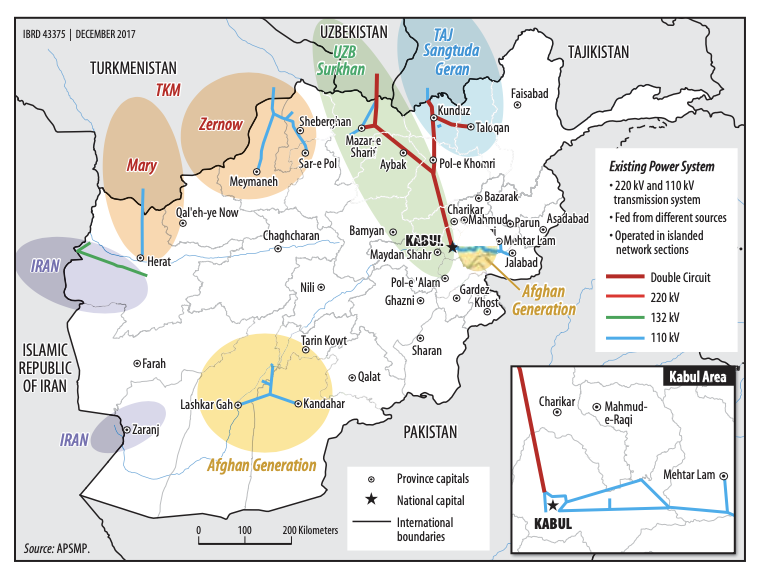
  Figure 1: Afghanistan Grid System & Power Imports (Gencer et al., 2018)

Worth noting that with the collapse of the Ghani-led government and taking over of the country by Taliban, the two independent authorities- NAWARA and ESRA- have been replaced by the Ministry of Energy and Water. 

Despite the progress made during the last two decades where the connection rate was increased from less than 5 percent to over 30 percent, the power sector of Afghanistan continued to suffer from challenges in this area . The main issue, besides the lack of robust and accountable institutions and operational inefficiencies (e.g., up to 45 percent losses[3] ) was the huge dependency of the country on imported electricity from neighboring countries, mainly Tajikistan, Uzbekistan, Turkmenistan, and Iran. According to DABS, still over 75 percent[4]  of the electricity is still imported from neighboring countries, which costs Afghanistan over USD 280 million annually (Jahanmal, 2020). 
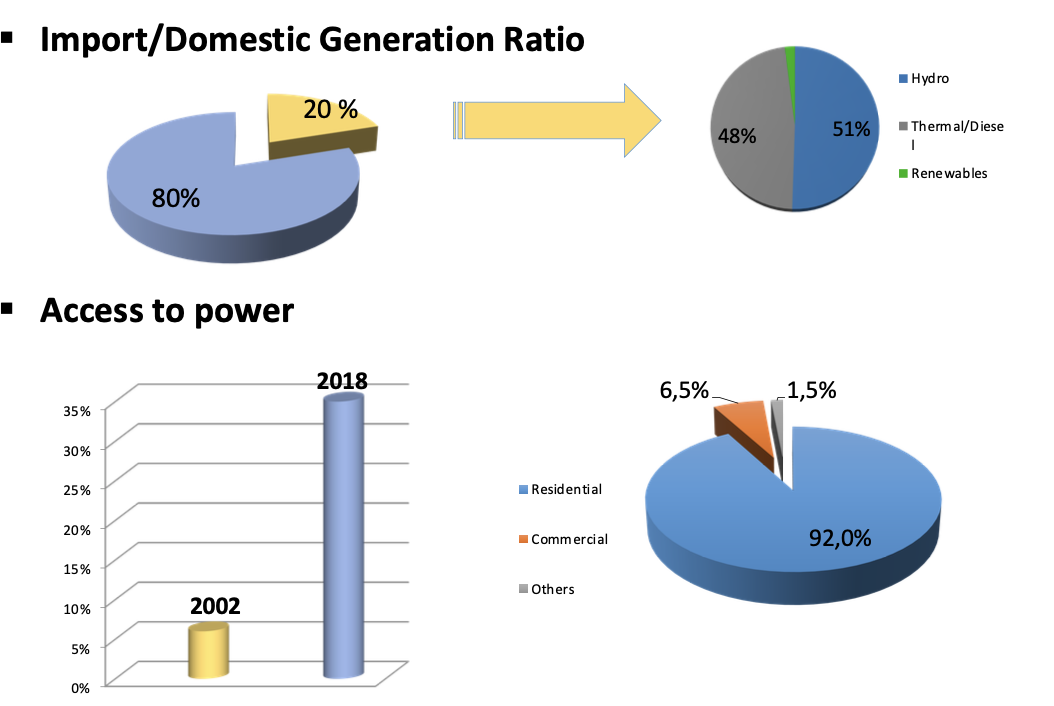
Figure 2: Power Sector- Import/Domestic Ratio & Connection Rate (dated: 2018)

The reasons behind the decision for power imports rather than developing the vast domestic resources of the country go beyond the scope of this brief concept note and, therefore, will not be discussed further. However, one can clearly state that the lack of sufficient domestically generated electricity and the country’s huge dependency on imports was a main impediment to Afghanistan’s economic self-reliance. 

The current situation, in particular in the light of the recent development in the country, has worsened the conditions of the power sector of Afghanistan.
Current situation of the power sector in Afghanistan

According to reliable sources from within DABS, the utility is on the verge of complete collapse if the international community does not provide the required financial means to maintain a basic level of operation of the utility. Current figures indicate that DABS’ due payments are at USD 85 million[5]  whereas the total revenue collection as of 27th September is only USD 49 million- a deficit of USD 36 million. Considering the fact that DABS will not be able to collect any additional revenues in the upcoming months but still has to continue the supply of power, the number of the due payments will further increase.

If DABS cannot pay the power suppliers, the involved countries and the Independent Power Producers (IPPs) will most probably stop the supply of power to DABS and, depending on the contractual conditions, claim even additional compensations and penalties from the utility.

This situation would mean that the power utility has to stop operations due to a lack of financial means to purchase power, pay its personnel and cover its O&M costs. Moreover, the domestic generation of power provided by hydropower will also decrease during the winter months. Emergency operations through diesel generators and utilization of existing thermal power plants will be too costly and, considering the current financial situation of DABS, not a feasible option.

Consequently, not only will the Afghan people remain without light, but critical public services, such as the health and water supply sectors, will not be able to continue operations. If this situation occurs, it will not further deteriorate the catastrophic humanitarian situation but may also lead to an uncontrollable political destabilization of the country. 

To avoid the mentioned collapse of the power sector of Afghanistan, urgent support is required. The focus shall be here on the continuation of power supply to critical public services, such as health and water supply, and the provision of financial support to DABS to pay its bills, personnel and maintain the existing power generation facilities and transmission & distribution networks.

Alternative options during the current emergency situation

Considering the criticality of the situation, it is of utmost importance to assess the acute crisis and provide a viable solution to avoid a complete collapse of the power sector.

To achieve this, it is crucial to prioritize the supply of public facilities, such as hospitals and water supply utilities, to ensure the delivery of these services to the people. This means that DABS has to adjust its operation and focus on providing electricity to critical public infrastructure.

For this, the utility shall also provide a realistic emergency plan that contemplates the emergency operation’s technical and financial/ commercial aspects.

Within the approach mentioned above, the supply of power to private customers shall not be neglected, and alternative supply options must be contemplated. A viable option during the emergency phase could be installing off-grid solar rooftop systems and supplying DC- solar home kits to the people. Whereas installing solar rooftop systems (0.1-1 kW) could be a viable solution for cities such as Kabul, the DC solar home kits could cover semi-urban and rural areas of the country.

Through this two-fold approach, DABS will continue to provide electricity to critical public services institutions , and satisfy its private customers’ electricity needs by providing off-grid solutions. The advantage of the off-grid solutions is that the current burden on DABS will be reduced, and the beneficiaries are also released from paying bills to the utility, which they anyhow cannot afford at the moment.

However, considering the current situation of the banking sector and the financial liabilities of DABS, the plan mentioned above is not implementable without the support of the international community. The international community does not recognize the current administration of the Taliban and, therefore, formal communication on a bilateral and multilateral level between the Taliban and the international community, including international financing institutions and bilateral donor agencies, is not possible at this stage.

Thus, the only viable option remains the pro-active engagement of the United Nations in the process. The United Nations shall commence its direct communication with DABS’ leadership and ask them to provide an emergency plan that considers the aforementioned aspects. Moreover, the United Nations could take the lead to discuss the current financial constraints of Afghanistan with the Central Asian countries and Iran and also the few Independent Power Producers and provide the required guarantees on the due payments to ensure the continuation of the power supply to the DABS’ network.

Furthermore, through its agencies such as UNDP, the UN could draft a distribution plan for the off-grid solutions and make the required arrangements to start the installation and distribution of the systems, respectively. The UNDP could seek cooperation with the World Bank-initiated program- Lighting Global- which has the experience and certified suppliers in Asia who could provide the tools.

Conclusion

The current situation of the power sector in Afghanistan is critical and requires the international community’s urgent attention. A possible collapse of the country’s power sector has enormous consequences for other public services and can also lead to the further deterioration of the volatile situation of the country.

To avoid the disastrous effects of such a collapse, it is therefore of utmost importance to that United Nations take the lead and draft in collaboration with the technical staff of DABS a comprehensive emergency power supply program that ensures the continuation of power supply to critical sectors, such as water supply and health. Moreover, the plan shall foresee the provision of off-grid solutions to private consumers and the provision of required financial guarantees to power suppliers (imports and IPPs) to ensure the continuation of the electricity supply by DABS.


[1] Famine Early Warning Systems Network- https://fews.net/central-asia/afghanistan

[2] In 2020, the Ministry of dissolved and two new independent authorities were established- National Water Regulatory Authority (NAWARA) and Energy Services Regulatory Authority (ESRA)

[3] Technical and commercial losses (Power Sector Masterplan, 2013, p. 3-14)

[4] The figure varies between 75 and 80 percent; Considering the seasonal variations in terms of domestic capacity and demand (summer vs. winter), 80 percent is to be a realistic figure

[5] Imports and Independent Power Producers (IPPs)


Bibliography
Ghalib, A. (2017) ‘Afghanistan’s Energy Sector Development Plans’ [Power Point Presentation]. Available at: https://www.ekonomi.gov.tr/portal/content/conn/UCM/uuid/dDocName:EK-236901;jsessionid=K-M8GZmdX0-bSKpv0O7NR8_CD-VSxKcz_UZZqpyDWSK6Oq9YaU-M!3487174 (Accessed: 20th September 2017).

Gencer, D., Irving, J., Meier, P., Spencer, R. and Wnuk, C. (2018) Islamic Republic of Afghanistan Energy Security Trade-Offs under High Uncertainty: Resolving Afghanistan’s Power Sector Development Dilemma. Available at: http://documents.worldbank.org/curated/en/136801488956292409/Islamic-Republic-of-Afghanistan-energy-security-trade-offs-under-high-uncertainty-resolving-Afghanistans-power-sector-development-dilemma (Accessed: 29th September 2021).

Jahanmal, Z. (2020)’ Afghanistan Annually Pays $280 million for Imported Power, Tolonews, 30th August, Available at: https://tolonews.com/business/afghanistan-annually-pays-280m-imported-power (Accessed: 30th September 2021).

Ministry of Energy and Water (2015) Renewable Energy Policy. Available at: http://www.red-mew.gov.af/wp-content/uploads/2014/11/Afghanistan-Renewable-Energy-Policy-English-and-Dari.pdf (11th June 2017).


Sri Lanka has officially submitted the updated Nationally Determined Contributions (NDC) to the United Nations Framework Convention on Climate Change (UNFCCC). Sri Lanka has updated the initially submitted NDCs under the Paris Agreement in 2016 with higher ambition level.

NDC is the building block of Paris Agreement, which was agreed in 2015 at the 21st Conference of Parties (COP21) of UNFCCC. The Paris Agreement brought a new global climate change regime as it builds on a bottom-up approach allowing the countries to determine the priority climate actions nationally considering the national capabilities and capacities. Accordingly, the parties will progressively update the NDCs once in five years in a transformative pathway towards resilient and net-zero status by 2050.

The bottom-up and nationally driven approach is also expected to facilitate mainstreaming and integrating climate change priorities into development. Prior to the Paris Agreement, the parties were invited to submit their Intended Nationally Determined Contributions (INDCs) under the “Lima call for Climate Action” agreed at the COP20 of UNFCCC in 2014. It allows parties technically a less than a year to submit the INDCs with very little clarity and guidance of it. Sri Lanka, like many other countries, have submitted the INDCs and subsequent first NDC submission in a hurry. It hindered the potential integration and mainstreaming features of NDCs potentially affecting the level of ambition too.

Sri Lanka submitted its first NDC in 2016 under four main areas viz: climate change mitigation, adaptation, loss &damage and means of implementation. It sets a target of reducing GHG emission by 4% unconditionally and 16% conditionally in the energy sector and by 3% unconditionally and 7% conditionally in transport, industry, forests, and waste sectors altogether, by 2030 against the business-as-usual (BAU) trajectories. Energy sector mitigation targets have been detailed out under the first NDC submission largely based on the then Long-term Generation and Expansion Plan (LTGEP) of the monopolistic utility of Sri Lanka, the Ceylon Electricity Board (CEB). Those targets covered addition of renewable energy, demand side management and converting coal power plants to LNG. Transport, industries, waste management and forestry are the other sectors highlighted under the mitigation targets. Unlike the energy sector targets, these were more with qualitative targets and forestry sector showed only a coverage target of increasing the forest cover of the country from 29% to 32% by 2030 without a link to sequestration.

The updated GHG reduction target by 2030 for energy sector has been increased to 25% (5% unconditional and 20% conditional) from its previous target of 20% (4% unconditional and 16% conditional), with increased focus on demand side management, transmission and distribution efficiencies, R & D on new renewables. For the transport sector target is set to reduce 4% of BAU (1% unconditional and 3% conditional), where the proposed strategies more or less remain the same as that of the initial submission.

Updated NDCs has also introduced GHG reduction targets for industry sector; 7% of BAU (4% unconditional and 3% conditional), comparatively to other sectors, a promising target, mainly through fuel-switching, incentivising, setting up eco-industrial parks, and by employing circular economic principles etc. One of the most progressive GHG reduction targets appears in NDC-2020, is in waste sector. It is 8.5% unconditional and 2.5% conditional, a 11% reduction totally. Updated NDCs also includes a carbon sequestration capacity target for the forestry sector; 7% against BAU (2% unconditional and 5% conditional) through increasing of forest coverage. It is also worth to note the introduction of a new candidate for taking up GHG emission reduction challenge, the agriculture & Livestock sector. It is estimated through reduced post-harvest losses, increased crop productivity, and through introduction of renewable energy sources, the reduction will be 7% of BAU (4% unconditional and 3% conditional). Through the measures proposed in all sectors, overall GHG reduction target is 14.5% (4% unconditional and 10.5% conditional), an equivalent of 67,252 Gg of CO2.

The recent NDCs updated by Sri Lanka and submitted to UNFCCC has a higher-level ambition compared to the fist submission. The enhanced ambition is observed in the following aspects.

  • Expanded sectoral targets such as including agriculture and livestock in mitigation actions.
  • Increased ambition in existing targets such as energy sector 
  • Further specification of targets including addition of time frames, quantified emissions reduction and other outcomes such as in the transport sector 
  • Increased transparency in the development of targets with detailed sub-targets.
  • Detail on the financing, monitoring and implementation of actions included in the NDC

However, it is clear that level of local integration and mainstreaming aspects have shown a clear impact through the updated NDCs. The ownership of the NDC targets have been clearly taken by the sector lead organizations in the process. The government also announced that the new NDCs will be linked with a “NDC Implementation Plan” and a “NDC Financing Strategy”. Those will positively reinforce the NDCs and the transitioning process of the country. It is important to see how the pandemic related impacts on the economy and overall financing ambitions of the developed countries will impact on this. The decisions on the UNFCCC COP26 to be held in Glasgow will have a close impact on successful implementation of the NDCs. While accepting that the updated NDCs are a leap towards Sri Lanka’s net carbon zero targets, it is important to pay attention to few factors to be negated and receive positive influence from, in the implementation of NDCs. Policy cohesiveness, financing options, technology and capacity gaps, and implication of governments actions in other sectors, international pressure are some of the surfacing such complexities and externalities.

Sri Lanka has made a steady progress in fulfilling the NDCs, while some recent policy changes drive the process yet there are some policies needs changes in order to fulfil the commitments while harnessing the economic, social and environmental benefits the CC context offers.


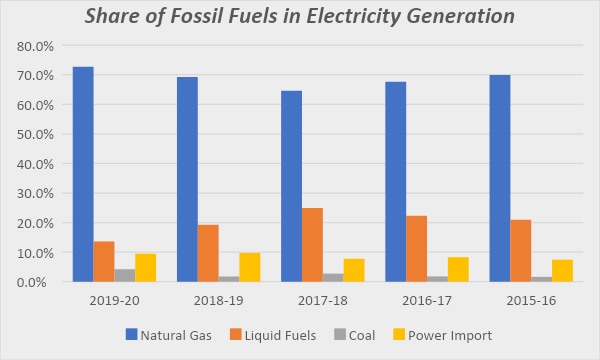
Introduction Global economies faced unprecedented chaos as COVID-19 pandemic spread throughout the world in the early months of 2020. Energy, particularly the use of electricity, is strongly related to the economic activity of any country. However, due to the COVID-19 pandemic, there have been short-term and long-term impacts on the power sector globally. For instance, the International Energy Agency reported that primary energy demand and global energy-related CO2 emissions reduced by 4% and 5.8%, respectively, in 2020; the CO2 emission reduction was 3.3% in the power sector in 2020. In the developing world, the impact of this pandemic has been devastating and has hindered the achievement of sustainable development goals by 2030. Goal-7 is one of the crucial sustainable development goals and is associated with “affordable and clean energy for all,” and developing countries’ energy sector impact assessment is an utmost priority for this pandemic situation. As for Bangladesh, well on its way to becoming a middle-income country by 2024, the outbreak of COVID-19 has wreaked havoc within the nation and caused major setbacks in its development pathways. Current Scenario of Power Sector in Bangladesh The electricity generation system in Bangladesh is dominated by fossil fuel generation. According to the Bangladesh Power Development Board (BPDB) and the Sustainable and Renewable Energy Development Authority (SREDA), fossil fuel and renewable generation capacities are at about 21,902 MW (including power import) and 766.8 MW (including Hydro), respectively (as of September 2021). The total electricity generation from fossil fuel in Bangladesh was 70,532 GWh (including power import) in the financial year 2019-20, of which the share of Natural gas was 72.7%, 13.6% from Liquid fuels (HSD & HFO) and 4.2% from coal. The country has been mainly dependent on domestic natural gas for energy. Over the five years, the share of natural gas in electricity generated from fossil fuel has ranged between 64% to 73%.
 2019-20  2018-19  2017-18  2016-17  2015-16
  Natural Gas   72.7% 69.2% 64.6% 67.6% 69.9%
  Liquid Fuels   13.6% 19.3% 24.9% 22.3% 21.0%
  Coal  4.2% 1.8% 2.7% 1.8% 1.7%
  Power Import  9.5% 9.7% 7.8% 8.3% 7.5%

Bangladesh’s government started undertaking the reform initiatives to ensure necessary energy supplies for its users to support steady socio-economic development. To promote fuel diversification for power generation, while balancing production costs and electricity tariffs, the government of Bangladesh intends to lower its dependence on natural gas and explore other fuel sources. As the energy mix is set for a radical shift, the country’s current policies suggest that the energy demand will be met by a significant expansion of coal-based energy sources and Liquefied Natural Gas (LNG). Plans of replacing domestic gas with imported coal and LNG will have additional costs such as setting import terminals, storage, and regasification facilities. As such, this shift will ultimately lead to an increase in the overall cost of power generation in the long term and place an additional financial stress on government budgets as well as power consumers. While the unsustainability of fossil fuels has been discussed widely among the country’s energy experts, the reality of its risks has now been brought to the forefront by the recent pandemic. It is important that the country explores renewable energy sources more seriously, and it is doing so as well though not at the pace required.

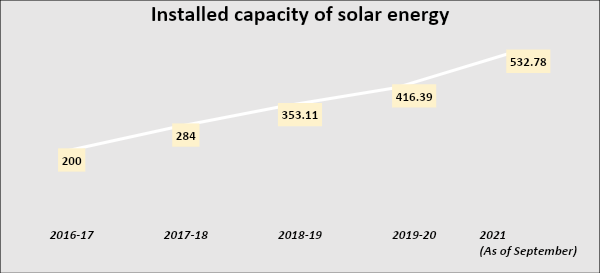
The prospect of renewable energy in Bangladesh is bright, particularly for solar due to the high solar radiation (4.0 to 6.5 kWh/m²/day). Bangladesh is recognized as one of the first countries in the world to implement Solar Home Systems (SHSs) in reaching consumers outside the national grid (Off-grid) or in places where the grid connection is delayed. And throughout the years, the installed capacity of Solar energy has been increased.

*Figures are in MW unit

Achievement in Renewable Energy Sector of Bangladesh in the last five years:

  • Installation of 730 MW capacity power plants/systems from Renewable Energy);
  • Installation of 6 million Solar Home System (SHS);
  • Replacement of 2225 diesel driven pumps by solar irrigation pumps;
  • Implementation of 27 solar mini grid projects;
  • Distribution of 10,000 solar systems among the poor people of Chattagram hill tracts and taking projects to bring about 42,000 another poor people under electrification;
  • Establishing central database system to renewable energy information;
  • Processing 1665.413 MW solar power plant; 
  • Signing of 200 MW wind power station
  • Completion of wind mapping in 13 places;
  • Kick off the establishing 1 MW waste to electricity station in at Keraniganj municipality in Dhaka;
  • Formulation of “Net Metering Guideline” and installation of 24 MW grid tied solar system under this guideline.

Impact of COVID-19 on Bangladesh’s Power Sector

When COVID-19 started to spread in Bangladesh, the country’s economic growth momentum suddenly faced a downturn. The pandemic consequently caused significant reductions in power demand and revenue. The country’s excessive capacity is also a key contributor to the financial losses suffered. COVID-19 has widened the gap between the power demand and the power generation capacity of the existing power plants. To make matters worse, Bangladesh also has numerous coal-fired plant projects in the pipeline. This combined with plans of additional LNG based power, will leave Bangladesh with the power capacity to generate at least fifty-eight percent more power than needed in 2029-30.

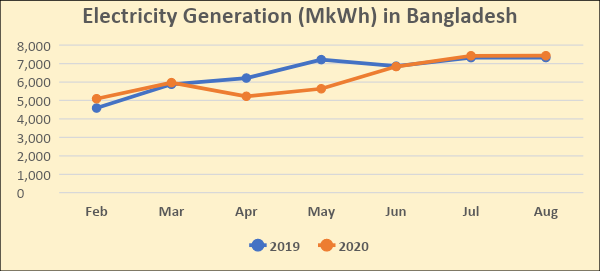
To observe the Covid-19 pandemic effect on Bangladesh’s energy sector, the electricity demand from 2019 and 2020 is shown in the below figure. The electricity demand in March 2020 is found to be higher than in 2019. However, it started declining sharply from April 2020 till June 2020, it is still lower than the 2019 level. This is due to the fact that Bangladesh declared a nationwide general holiday on March 24. However, electricity demand is catching up at a high rate because of the relaxation of general holiday measures in the subsequent period, and in June 2020, it is just below the 2019 level.

Sustainable Renewable Energy: A Way towards COVID Recovery

Compared to fossil fuels, renewable investments are more stable, environmentally friendly, and increasingly cost-effective. Despite the sometimes-high initial costs of infrastructure setup, they offer consistent and predictable returns while delivering greater benefits to the wider economy, society, and environment. Bangladesh’s potential for availing renewable energy options, which has been considered limited due to issues of cost and land availability, is now far more viable than previously anticipated.

As Bangladesh focuses on the long-term gains from availing more flexible renewable energy options, it is important to invest in solutions that overcome some of the existing RE barriers in the country and explore more economically viable opportunities.

Due to the adverse impact on the environment for utilizing fossil fuels, many developed and developing countries are now inclined toward various forms of renewable energy like solar power, wind power, bioenergy, hydropower, etc. More renewable generation options for the electricity generation system in Bangladesh need to be explored. Due to the scarcity of land, it is difficult to achieve a substantial effect through solar generation in the country. There are also other options that require further research, which could be used as potential renewable sources to generate electricity, such as waste to energy schemes. 

Cross-border electricity trading might be another option to reduce demand in a fossil fuel-dominated electricity generation system, along with the security of supply. For instance, Bhutan, Nepal, and India have a total estimated capacity of 263 GW hydropower potential. If these renewable energy potentials can be utilized through cross-border energy trading, a large amount of GHGs from the electricity sectors of Bangladesh could be saved. 

As Bangladesh is a least developed country, research in the energy management and sustainability field is limited due to many constraints, such as inadequate funding. Thus, a lot of research needs to be conducted to identify potential solutions that could help reduce emissions from the electricity sector. One such area could be waste-to-green hydrogen generation and its application in the electricity generation sector.

The energy sector is the most critical driver of the global economy engine that supplies power to all sectors. Ensuring access to clean, affordable, and reliable energy for all, is a pre-requisite for progress on many SDGs linked with health, education, environment, and sustainable cities. Based on both economic and environmental trends, a major energy transition phase has been observed in which many countries have tried to opt for most sustainable energy future. While the trend is largely advocated by moving away from fossil fuel and adoption of renewable energy resources, there are still some questions over the scale and timeline of such a transition, especially considering the fact that the world is now facing a major threat due to restriction posed by a global pandemic, i.e., Covid-19.

The energy sector of Pakistan, known for its slow pace of change, is undergoing a dynamic transition. The imperatives of climate change, energy poverty and energy security to underpin development and industrial strategy have made the widespread adoption of renewables and related technologies an essential solution. Policy drivers, technology developments and international co-operation have moved these technologies from niche to mainstream, especially in the past decade.

Major changes in the energy sector took place after the power policy, 2015. The installed power generation capacity of Pakistan until august 2021 has reached 34,296 megawatts (MW), dominated by the RLNG/Gas/Oil based power plants (45%), followed by large hydro power plants(29%). Before 2017, only 31 megawatt coal power plant was operational, since March 2017, new coal power plants have been added with cumulative installed capacity of 4,520 megawatts (13% share of installed generation capacity of national grid). Renewable energy sector is dominated by, wind power followed by solar PV plants. Large scale new additions in wind and solar have not been witnessed since last year, on contrary distributed solar systems have got great traction and over 30 megawatts net metering licenses have been issued since the pandemic. Until date, renewable share stands at 12% of total installed power generation capacity (including nuclear and small hydro less than 25 MW).
Based on the trend and new policies, investments as well as the interest in renewables in Pakistan has slightly increased in the past. In 2018, the total non-hydro renewable share in total generation was only 4 percent, which is slowly expected to increase. As pointed out in IRENA renewable energy readiness for Pakistan, there is a considerable wind potential in the corridors of Baluchistan and Sindh. The potential of solar is even more than that of wind. A 400 MW project of Quaid-e-Azam solar plant is under way with expansions planned. Other than that, an additional 550 MW of solar projects are under completion in the country. As of biomass, bagasse is currently the only source that is being used at a commercial scale in sugar industries, bagasse plants of around 432 MW are operational in the country.

Despite being currently able to generate electricity in a surplus, major inefficiencies, losses, and theft in the distribution system has made the system very fragile. In recent years, Pakistan has observed some of the worst power blackouts due to poor transmission systems, lack of connectivity and poor reliability. Unlike most developed countries, Pakistan has a very limited fiscal space available and the policies are generally driven by economic priorities. The circular debt of Pakistan has now risen above PKR 2.35 trillion and is being contributed by surplus capacity payments. Consequently, between 2007 and 2020, the power crisis has cost Pakistan approximately $82 billion in loss GDP (Gross Domestic Product).

The power sector suffers from institutional and structural disconnections and fragmentation in the priority of issues, ignoring the holistic view and focus only on the power sector. For instance, the development of coal power plants has observed a two-dimensional debate among various stakeholders in Pakistan where some admire its critical role to enhance energy security and economic advantages while others advocate the adverse environmental impacts of these coal power plants. The government’s objective is to reduce the reliance on fossil fuels imports, increase renewable energy share, diversify the fuel resources, and increase fuel supply security. The planned massive capacity additions on coal-fired power generation projects contradict with all these objectives.

Along with these multifaceted energy crises, the country is ranked among the top ten most affected and the most vulnerable countries to climate change from 2000 to 2019, according to the latest ‘Long Term Climate Risk Index’ report. Historically, an overall share of Pakistan in global carbon emissions (CO2) has remained less than one percent. The energy sector is the main contributor to GHG emissions. Pakistan intends to reduce its expected GHG emissions by up to 20 percent of (equivalent to 1603 MtCO2) by 2030, which amounts to US$ 40B at 2016 prices The climate adaptation costs are projected to be US$ 7–14B/annum, while mitigation costs for Pakistan are ranging between US$ 8 – 17B by 2050 (GoP and UNFCC 2011)

Support Policies & Incentives
The Alternate and Renewable Energy (ARE) policy 2019 is the recent policy, formulated to create a conducive environment for renewable energy growth in the power sector. The policy envisages having 20 percent of the total generation capacity from renewable energy technologies by 2025 and 30 percent by 2030. Further, the policy also aims to increasing the share of hydro power in the power generation mix to 30 percent by 2030. So, as per the plans, Pakistan will be able to generate around 60 percent of its total energy from renewables. Moreover, the policy aims to lower the average price basket of tariff by allowing a competitive bidding for new projects whereas all taxes and duties are waived for the import of machinery required for renewable energy projects.

National Electricity Policy 2020, was formulated to eliminate the inconsistencies in the power sector. The policy aims to bring an optimal development of electricity generation, transmission, and distribution while ending expensive power plants running on imported fuels. The six guiding principles of this policy include, bringing efficiency, competition, economic viability, transparency, and most importantly the environmental stability.

Competitive Trading Bilateral Contract Market (CTBCM) Model by NEPRA was approved in 2020. This model aims transition from a one-buyer electricity market to a multi-buyer model. A multi-buyer model will assist the government to transition towards a competitive market for increasing operation efficiency and decreasing the price of electricity to the consumers.

National Electric Power Regulatory Authority (NEPRA) announced distributed generation and net metering regulations on September 1, 2015. As per these regulations, any customer of the national grid (having three-phase connection) can avail net-metering facility for small-scale (1kW to 1MW) Renewable Energy installations. The power distribution companies (DISCOs) in Pakistan are directed to purchase excess units of electricity produced by the consumers, and net them off against the units consumed from the grid. Recently the cabinet has approved that consumers having RE installations would not require generation license from NEPRA for net metering, the distribution companies can directly provide net metering licenses and connections. NEPRA has asked the DISCOs to formulate the SOPs for the new net metering connections under 25KW of RE installations.

Financial incentives have played an important role in adoption of renewable technologies in Pakistan, both grid connected and off grid systems. Green financing scheme is offered by State Bank of Pakistan at 6% to consumers for 1KW up to 10Megawatt renewable energy systems.

Challenges
Data unavailability for wind and solar PV power projects is the biggest challenge faced by the investors or financing institutions. However, limited feasibility studies have been carried out for project implementations. Around 40+ wind masts are installed in Pakistan for data generation. Although the World Bank studies have identified the 18 theoretical as well as technical potential sites for solar and wind, but the ground realities quickly change with the passage of time and externalities. Another reason behind the impeding growth of renewables is the absence of developed power transmission infrastructure to dispatch the generation from renewable power plants resulting in curtailment issues.

Way Forward
The way forward for Pakistan will demand rapid transition towards decarbonization, decentralization and digitalization of energy production, supply and consumption. This must include:

  • prioritized actions for renewables, such as least-cost generation plan, RE trackers and zoning, developing mini and micro grids
  • technology transfer programs and skill development through soliciting investments in local RE equipment to reduce the costs
  • efficient buildings and green infrastructures for responsible investments,
  • clean cooking solutions
  • regional cooperation to be able to meet the national and international targets of Pakistan
  • creating jobs and employment

Lack of planning and policy mismatch between different departments requires a structured stakeholder involvement and the provinces must come up with power planning development studies for evidence-based policymaking and overcoming the barriers of renewable energy growth in the country. An integrated energy plan considering investments in generation, transmission and distribution, and energy efficiency should set up priorities for technology and scale of renewable energy projects. This would help to ensure a more sound and effective competitive bidding for these projects. It would assist policy makers at all levels to evaluate costs of both demand and supply under a given set of economical, technological, and environmental constraints.

Sustainably transitioning to renewable energy is vitally important for the Maldives survival, with the impacts of COVID-19 and climate change further exacerbating and accelerating the dire need to complete this clean energy transition.

The Maldives is a small island nation of approximately 450,000 people in the Indian Ocean. It is on the frontline of the climate crisis, as 80% of Maldivian islands are less than 1 meter (3 feet) above sea level and consist of porous coral. The country is projected to be underwater due to sea level rise in 50 years unless drastic action is taken immediately[1]. The Maldives is facing a slew of climate change impacts including coastal erosion, flooding and water table salinisation leading to food and water insecurity, threats to human health, settlements, critical infrastructure, livelihoods and economic security. The COVID-19 pandemic has further compounded the climate change impacts besieging the nation.

The pandemic has ravaged the country, not only due to COVID deaths, infections, and overtaxing limited healthcare resources, but by eliminating the economic means to address both the pandemic and climate change. Tourism accounts for approximately ⅓ of GDP, while fisheries comprise another ⅓. Border closures, quarantines, and the halting of imports and exports completely shut down ⅔ of the Maldives economy, crippling livelihoods nation-wide.

“Twenty-eight percent of our GDP is directly related to the tourism industry. Sixty percent of our foreign exchange receipts come from tourism. The pandemic really stopped the source of income for over 30,000 people who are directly employed in the tourism sector and many others who indirectly benefit from the tourism industry. Fishing is the second largest economic activity, and during the pandemic, we had no way of exporting. We really had no money. At the same time, we had to spend so much on health care,” explained Aminath Shauna, the Environment, Climate Change and Technology Minister[2].

Additionally, with fuel imports halted, electricity and transportation were crippled.

The Maldives has long garnered international attention for its innovative and strategic activism against climate change, including a holistic approach to sustainable development that aims for carbon neutrality. While a complete transition to renewable energy is underway, reliance on oil and gas remains a necessity for survival. Seeking healthcare requires boat and/or plane transportation between remote islands; the pandemic made this situation more dire due to limited fuel resources. Water security has also become calamitous, as desalination plants that run on fuel are vital to provide fresh water – especially as climate change rapidly salinates water tables.

The interrelated threats posed by the pandemic and climate change, have highlighted the survival necessity of transitioning to an environmentally sustainable, renewable energy infrastructure. A variety of national legislation and policies have been implemented to enable the renewable energy transition. “Maldives may be small, but we are committed to do our part. Which is why we are focussing on decarbonising our economy and reducing our reliance on fossil fuels starting with our energy sector,” noted Minister Aminath Shauna[3].

Recently, the Majjlis, the Maldives’ parliament, passed the Climate Emergency Act, ratified by President Ibrahim Mohamed Solih in May 2021, which includes allocating funds for renewable energy sources[4]. The Energy Act, ratified September 2021, goes even further by “establishing a legal framework of standards and laws for the provision of energy…that are sustainable and safe for the environment…” that will promote renewable energy technology[5].

Although renewable energy, sustainable development and carbon neutrality have long been national priorities, reflected in policy and legislation, past political instability – following the 2008 democratic transition – has thwarted green energy transition progress[6]. Additionally, the promise of 100 billion dollars annually by developed nations world-wide to address the climate crisis has not been delivered, greatly harming developing nations, such as the Maldives, in reaching their carbon neutral and renewable energy transition goals[7].

As the catastrophic COVID-19 pandemic and climate crisis impacts have demonstrated, the Maldives must complete its transition to renewable energy immediately, with the promised support of developed nations, to ensure not just the well-being, but the survival of its citizens.


[1] https://www.ipcc.ch/sr15/

[2] https://www.imf.org/external/pubs/ft/fandd/2021/09/maldives-climate-change-aminath-shauna-trenches.htm

[3] https://www.environment.gov.mv/v2/en/news/12294

[4] https://presidency.gov.mv/Press/Article/24678

[5] https://presidency.gov.mv/Press/Article/25429
https://majlis.gov.mv/en/19-parliament/parliament-work/432

[6] https://minivannewsarchive.com/politics/participants-identify-political-instability-as-key-concern-at-maldives-renewable-energy-investment-conference-59697/comment-page-1

[7] https://www.un.org/sites/un2.un.org/files/100_billion_climate_finance_report.pdf


Electric mobility is not new to Nepal. In fact, it began in 1975, when an electric trolley bus system was set up in Kathmandu with Chinese assistance. The 13 km trolley bus line, owned and operated by a government corporation, operated from 1979 till 2009, when it permanently shut down because of political and bureaucratic mismanagement[1]. The next major milestone was in 1995. That year, the 12-seater battery powered electrical three-wheelers were introduced on the streets of Kathmandu to replace the highly polluting diesel operated three-wheelers – the “Vikram tempos”. These electric three-wheelers, called “Safa Tempos”, or clean three-wheelers, are locally manufactured. At one point in early 2000, they constituted the largest fleet of battery-powered public transport vehicles in the world[2]. Currently, about 700 safa tempos are still in operation[3]. In addition to ferrying passengers, they are also used for freight and solid waste transport. In addition, the number of suppliers and private users of two-wheeler and four-wheeler electric vehicles is steadily increasing. Of about 15,000 automobiles sold annually in Nepal, about 1,200 are electric[4]. There have also been numerous experimental attempts at converting internal combustion engine (ICE) vehicles to electricity. There is also a transport company, Sundar Yatayat, currently operating 4 public electric buses in Kathmandu[5].

Nepal also has policy strategies for promoting electric vehicles. The National Climate Change Policy of 2019[6] prioritizes switching to electricity for various industries and infrastructure including transportation. The National Transport Policy of 2014, the Environment and the Climate Policies of 2019[7] encourage and promote the use of electric vehicles. The Environment-Friendly Vehicle and Transport Policy of 2014 had set a target of 20% of total vehicle fleet to be “environmentally friendly”. Unfortunately, this target has not been met. This Policy had also set targets for establishing charging stations. The 2018 National Action Plan for Electric Mobility proposes various initiatives to promote electric mobility in Nepal. However, it does not have timelines nor an investment plan. Nepal’s Nationally Determined Contribution of 2020 has a target of 90% of private and 60% of public vehicle sales to be electric by 2030.

The government is ,however, trying to meet its goals through a few policy instruments in place. In 2016, the government reduced electric vehicle (EV) customs duty to 1% for public transport and 10% for private vehicles (both from  30%. It is 80% for ICE vehicles). Furthermore, EV are exempt from excise duty (55-1oo% for ICE vehicles) and pay only 4% road tax (compared to 8-10% for other vehicles). However, in 2020 the government regressively increased the customs duty for private EVs to 40% and levied excise duty ranging from 30-80% depending on the power of the EVs. It also increased the road tax to 5%. Another policy instrument in place is reduced tariff for EV charging stations.

Promoting EVs in Nepal has several benefits. Firstly, Nepal is already beginning to experience electricity surplus, especially during the off-peak hours during the day and night. With suitable electricity pricing, the surplus electricity can be used for charging of EVs. Secondly, petroleum products constitute about 15% of Nepal’s import bill, which is a big drain on Nepal’s foreign currency reserve. Substituting vehicle fuel from petroleum with electricity will reduce this drastically. Thirdly, vehicular emissions contribute significantly to ambient air pollution, especially in cities like Kathmandu. EVs will help to reduce this pollution drastically too. Fourthly, calculations have shown that the life cycle cost of owning and operating an electric vehicle is lower than that for an ICE vehicle. Consequently, there is a growing interest to both purchase EVs and to set up EV based businesses.

However, more needs to be done to meet the national aspirations for electric mobility so that we can realize its benefits. Some of the future steps that need to be taken include the government formulating an integrated and realistic policy strategy that includes specific targets and timelines. The strategy will then need to be operationalized through appropriate policy instruments policies. Since the upfront cost of EVs are generally higher than that for ICE vehicles, there will also be a need for financial institutions to formulate and implement innovative financing instruments. Innovative business models regarding sale of EVs and installation and operation of charging stations will help promote EVs. In the new federal structure of governance in Nepal, partnership between local governments & the private sector to promote public electric mobility will also be important. Finally, Nepal will have to aggressively implement it newly formulated National Distribution Plan to augment the existing electricity distribution system, such that households, businesses and charging stations can be assured of adequate and reliable electricity supply.


[1] https://www.nepalitimes.com/banner/kathmandu-bhaktapur-trolley-bus/

[2] https://www.bloomberg.com/news/articles/2019-08-26/why-nepal-once-led-the-world-in-electric-buses

[3] http://www.mofe.gov.np/downloadfile/E-mobility%20Assmnt%20NDC%202020_1623998131.pdf

[4] https://kathmandupost.com/national/2021/06/21/nepal-to-switch-to-light-electric-vehicles-by-2031-as-fossil-fuel-import-balloons

[5] http://www.newbusinessage.com/Articles/view/13253

[6] https://www.mofe.gov.np/downloadsdetail/8/2018/36366627/

[7] ibid


In a recent press release by the presidential secretariate, Sri Lankan President Gotabaya directed the authorities that Sri Lanka should devise a plan to meet 70% of the country’s electricity demand to be met by renewable sources by 2030[1]. This is a drastic increase in the ambition level, and it has even exceeded the energy sector targets of the recently updated NDC of Sri Lanka. Along with the 2030 RE targets, there were statements issued by the government that Sri Lanka is aiming to achieve net-zero status by 2050.

Many factors will determine how soon the transition to 100% RE will happen , yet one of the most influential facts is the political will. In July 2021, the government of Sri Lanka officially submitted its updated NDC ahead of the 26th Conference of Parties (COP26) of the United Nations Framework Convention on Climate Change (UNFCCCC). According to this Sri Lanka envisioned to reduce the greenhouse gases (GHG) emissions from the energy sector by 25% against the Business-As-Usual (BAU) trajectories (5% unconditionally and 20% conditionally). It is a 5% enhanced target for the energy sector against the first NDCs submitted by Sri Lanka in 2016. In less than 2 months of submitting the updated NDCs, the new policy level target of 70% renewable energy by 2030 has been announced by Sri Lanka which is a significantly high-ambition target for a small developing country.

In the recent past, renewable energy has become one of the most discussed and debated topics within the policymaking circles as well as among the political circles. The signs of moving towards a higher RE mix in the energy sector was apparent since 2006. The then government’s policy proposed to achieve a 38% RE mix target for electricity, comprising of10% non-conventional renewable energy (NCRE); small hydro, wind, solar and biomass sources and 28% large hydro ; conventional renewable energy by 2015[2]. The national energy policy has been introduced in 2008[3] formulated under leadership of the then President. By end of 2015, Sri Lanka exceeded the target by achieving 11% NCRE (including small hydro) generation and 37.5% from conventional hydro generation, making them total share of renewable energy as 48.7% of the total energy generation[4]. However, the first coal power plant was also commissioned during this period by the monopolistic utility of Sri Lanka, the Ceylon Electricity Board (CEB). There were discussions on drawbacks in the renewable energy governance, which led to a major disagreement between the key agencies; Sri Lanka Sustainable Development Authority (SLSEA), Public Utilities Commission of Sri Lanka (PUCSL) and Ceylon Electricity Board (CEB), on the feed-in tariffs for solar and wind. During this period provisional approvals were not issued for new wind and solar development since 2012[5].

Next policy milestone; “Sri Lanka energy sector development plan 2015-2025”[6], was formulated under, “general policy guidelines 2019”[7], which directed optimization of the share of renewable energy, under the new government formed in 2015. A policy level target was set to increase the share of renewable energy-based electricity generation from 50% that of the 2015 to 60% by 2020 and 100% by 2030. This target was not reflected in the Long Term Generation and Expansion Plan (LTGEP) of CEB (utility) as well as in the first NDC (2016) of Sri Lanka. However, the NDC targets included a target of adding over 900 MW of installed RE capacity in the country[8]. By end of 2020, after adding 161 MW RE capacity, the total RE generation in Sri Lanka settled at 36% total electricity generation of which the non-conventional renewable energy share was only 12% (including small hydro and rooftop solar)[9].

Both the presidential and general election manifestoes of the current government, which came to the power in 2019, has not given any targets of RE but a general policy on promoting RE. However, the new government has to face the emergence of the covid19 pandemic which exerted tremendous pressure on the country’s economy. The loss of revenue from tourism and major export sectors forced the government to bring in control on imports, especially the non-essential items. This was later seen gradually encroaching beyond the non-essential imports including fertilizer and agrochemicals. With the dwindling foreign reserves, the government also faced the challenge of spending on imports of fuels and coal. Being a country that imports 100% of its fossil fuel requirements, the exchange drain for non-renewables has an amplified impact on the trade balance. It is potentially a very high push factor for the government to move away from fossils and enhance its RE share in their path of post-pandemic recovery.

On the contrary to the progressive policy measures in setting RE targets, CEB’s Long Term Generation and Expansion Plan (LTGEP) 2025-2039, has predicted only 35% from renewable energy by 2039, which shows the level of ambition of the current policy target. There were some initial (and still are) speculations from the utility (the CEB) and the professionals attached to the CEB on the pragmatism of this high ambition target. The Vice President of PUSL, Prof Janaka Ekanayake have stated that lack of research infrastructure that will feed into a national policy, high investment cost and its short-term implications on the consumer, and negative perceptions of engineers responsible for, may stand on the way of Sri Lanka’s transition efforts[10]. However, now the CEB is revising its long-term generation and expansion plans to harmonize with the policy target of 70% RE by 2030.

Given this continuous commitment by leadership, while appreciating the progress so far, it is worth understanding what other factors are there that may slow down Sri Lanka’s progress from reaching this target.

Eng (Dr.) Vidhura Ralapanawe, an activist and a professional advocating for 100% RE, has lashed at the CEB engineer’s position, identify himself with the vision of being 70 % renewable and the carbon zero within the proposed time frames. In a context where shifting to renewable/net-zero electricity has become a global phenomenon, renewable energy is proven to be the cheapest generating option and expected to reduce further, technological developments are sufficient to handle the technological phobias that kept us in the darkness, global businesses had already started responding to Paris Agreement of 55% reduction GHG emission by 2030 and carbon neutral by 2050, and global trading has already begun internalizing carbon costs which will have major implications Sri Lankan exports, Ralapanawe questions the backwardness of the long-term generation plan[11].

In any case, now the policy decision of 70% RE by 2030 and net-zero by 2050 targets have been taken by Sri Lanka. The long-awaited political will is now in place for the renewable energy transition of the country and the energy plans are now being synchronized with the policy targets. This is a positive and progressive momentum as far as climate change and environmental perspectives are concerned. It is a challenging target, especially after a few horrendous waves of a global pandemic which placed the country on a very rough path of recovery. What is important at this stage is support and encouragement to achieve its ambitious energy transition targets.


[1] https://www.presidentsoffice.gov.lk/index.php/2020/09/14/70-of-electricity-demand-will-be-generated-using-renewable-energy-by-2030/

[2] https://www.thegef.org/sites/default/files/ncsa-documents/MahindaChintanaTenYearDevelopmentPlan.pdf, p69

[3] The Gazette of the Democratic Socialist Republic of Sri Lanka, No. 1553/10 – TUESDAY, JUNE 10, 2008 section 4.2 https://policy.asiapacificenergy.org/sites/default/files/National%20Energy%20Policy%20and%20Strategies%20of%20Sri%20Lanka.pdf

[4] Statistical Digest CEB, 2016, https://ceb.lk/front_img/img_reports/1531991854CEB_Statistical_Digest_Report_2016.pdf

[5] ADB, Sri Lanka Energy Sector Assessment, Strategy, And Road Map, 2019 https://www.adb.org/sites/default/files/institutional-document/547381/sri-lanka-energy-assessment-strategy-road-map.pdf, p 53

[6] CEB Long Term Generation and Expansion Plan 2020-2039, https://ceb.lk/front_img/img_reports/1591174971Revised_LTGEP_2020-2039.pdf

[7] The Gazette of the Democratic Socialist Republic of Sri Lanka, No. 2135/61 – FRIDAY, AUGUST 09, 2019, http://www.energy.gov.lk/images/resources/downloads/national-energy-policy-2019-en.pdf

[8] NDC, 2016, https://www4.unfccc.int/sites/ndcstaging/PublishedDocuments/Sri%20Lanka%20First/NDCs%20of%20Sri%20Lanka.pdf

[9] Statistical Digest CEB, 2020, https://ceb.lk/front_img/img_reports/1626946210CEB-Statistical_Digest-Form-2020-Web_Version.pdf

[10] Aruna (Sinhala News Paper), https://epaper.aruna.lk/Home/ArticleView?eid=1&edate=10/10/2021&pgid=58345 September 26, 2021, p5

[11] Eng. (Dr). Vidhura Ralapanwa, TOWARDS 70% RENEWABLE ELECTRICITY AND MORE BY 2030, The Official E-Newsletter of the Institution of Engineers Sri Lanka, Issue 58 – September 2021, https://iesl.lk/SLEN/58/Renewable_Electricity.php?fbclid=IwAR3nPYCTicK0NQIifT_h9ucOF_Q6M9skSv56uS03Fyab8HC__WSj7SLnKG0


The lockdowns under the COVID-19 pandemic have provided much opportunity for the time-constrained human inhabitant of mother earth to gaze at the empty streets and retrospect life under the so-called normal life – hazy streets packed with humans chasing dreams, traffic jam, thick smokes oozing out of factories, sounds of sirens, hovering helicopters and trails left behind in the sky by passing airplanes. Many have even wondered if the pandemic is Nature’s brake on speeding humanity to nowhere. Some have wondered if normal life should be different – a bit less of everything we see around ourselves. I have wondered about the amount of energy that goes into sustaining this normal human life – the generally not so clean energy that is driving climate change. Thinking about the slow pace of global efforts to combat climate change through emission reductions, switching to cleaner energy sources, one would even wonder if restrained human activity would be the ultimate solution to addressing climate change as the single-most threat to life on earth.

With the above disposition in mind, this article dwells on the subject of energy demand and consumption under restrained human activity during the COVID lock downs. In this case, we look at Bhutan in terms of its energy demand and consumption before, during, and after lockdowns.

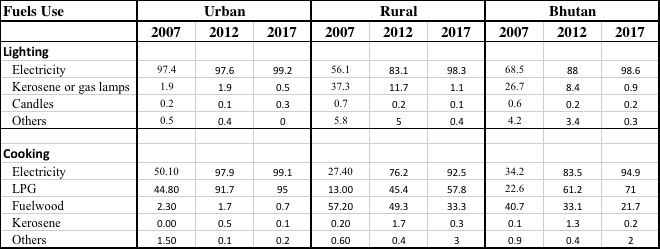
Energy DemandAbout 40% of the country’s energy consumption today is met through electricity, mainly via hydropower plants. Other energy demand is met mostly through fuelwood (traditional biomass), which adds to pressure on the environment, and imported fossil fuels. With rapid economic growth, urbanization and growth in the population, the demand for clean energy is increasing every year.As per the series of Bhutan Living Standard Surveys (BLSS) conducted by National Statistics Bureau, there was rapid increase in the demand/usage of clean energy mainly electricity by both urban and rural households. The BLSS is nation-wide household survey conducted every after 5 years. The change in trend is shown in the table 1.1.

Table 1.1: Proportion of Households using Different Sources of Energy for Lighting and Cooking 2007, 2012 and 2017

Note: For 2012 and 2017 BLSS, the households were asked to report two main sources of energy used for cooking, thus, the total percentage may be more than 100 since most households use multiple sources of energy for cooking.

Energy Production Energy production is defined as the total amount of primary energy produced in the Bhutanese economy measured before consumption and transformation. Domestic energy production in Bhutan includes renewable energies, hydroelectricity and coal. The domestic energy production has increased in 2020 to little more than 1000 KToE from 903 KToE in 2019. The increase in energy production was mainly due to the full commissioning of 720 MW Mangdechhu hydro power plant which started commission in June 2019. The production of renewable energy is further expected to increase in Bhutan with commissioning of 180 KW (installed capacity) solar energy in October 2021 and upcoming hydropower plants.Bhutan imports various energy products, such as fossil fuel (diesel & petrol), aviation turbine fuel, kerosene, furnace oil and LPG. In 2020, Bhutan imported nearly 140 KToE of fossil fuel energy without including electricity and coal. Bhutan mainly exports hydro-electricity and coal to rest of the world (RoW) where Hydro-electricity remains major export with almost 85-97% of the total energy export.

Energy ConsumptionEnergy consumption measures the amount of energy used in the Bhutanese economy. It is equal to indigenous production plus imports minus exports (and changes in stocks). It includes energy consumed in energy conversion activities (such as electricity generation). Although, the domestic energy production has increased by little more than 100 KToE from 2019 to 2020, there was drop in the energy consumption. The overall import of energy decreased by almost 36% in 2020 compared to 2019. The Diesel and Petrol is most widely imported fossil fuels in the country as there is no domestic production. These fossil fuels are mostly used in Transport Sector.

Fossil FuelsThe import of fossil fuel has dropped drastically in 2020. The import of Diesel has dropped by more than 30 percent in 2020 compared to 2019. In absolute term, Bhutan imported only 109.0 thousand Kiloliters of Diesel in 2020 which is least in last five years (2016-2020). Similarly, the import of Petrol has also dropped by almost 30 percent in 2020 compared to 2019. The trend for import of Diesel and Petrol is shown in the figure 1.1.The reason for drop is mainly because of the Covid pandemic. The first Covid case in the country was detected in March 2020. After detection of first Covid cases, there were two nation-wide lockdowns, first one in August and September 2020 and second one in December 2020 and January 2021. There were several lockdowns happened in border towns of Bhutan which has huge impact on the Economic Activities in the country. There was direct effect on Transport sector as the border for tourism remained closed due to Covid pandemic. Most of the industries also remained shut down.

The Gross Domestic Product (GDP) growth rate has decreased by 10.08 percent in 2020. The drop-in GDP growth rate is mainly contributed by secondary sector (Industry sector) and Tertiary sector (Service sector) with drop of 5.04 and 5.50 percent respectively. There was slight increase in primary sector (Agricultural sector) with 0.47 percent. (National Accounts Statistics 2021, NSB).

Figure 1.1: Import of Fossil Fuels (Diesel and Petrol) in thousand KL and import growth rate in percent 2016-2020

Electricity ConsumptionThe Per capita electricity in the country decreased by almost 15 percent in 2020 compared to 2019 from 3162 KWh to 2708 KWh. While the production of electricity has increased by more than 30 percent from 8647.09 MU in 2019 to 11,370.84 Mu in 2020. The primary and secondary sectors (Industry and Service sectors) are affected more by the Covid pandemic in Bhutan. The electricity consumption by the commercial and industrial sector decreased by more than 300 GWh in 2020 compared to 2019. As shown in the Figure 1.2, in recent last four years, the electricity consumption by the commercial and industrial sector is lowest in 2020. However, there is slight increase in the consumption of electricity by the households.

Figure 1.2: Electricity consumption by Commercial and Industrial sector in GWh, 2017-2020

Monthly Electricity Consumption for 2019 and 2020 Observing the monthly electricity consumption for 2019 and 2020 (Covid-pandemic period), there is no much difference in the electricity consumption for Households and Agriculture sector. However, there is observed significant difference in the electricity consumption for commercial and industrial sector and temporary connections (construction sector). There is huge drop in the consumption of electricity in 2020 compared to 2019. This could be mainly because of covid pandemic as the first covid case in Bhutan is detected in March 2020.

As presented in the figure 1.3, comparing month on month consumption, there is little increase in the electricity consumption in February and March 2020 compared to 2019, however, it started dropping from April onwards in 2020. The highest difference is observed in November 2020. There was 35 percent decrease in the electricity consumption in November 2020 compared to November 2019. In August and September 2020 (First Lockdown period), the consumption has dropped by more than 20 percent compared to the same months in 2019.A similar trend is also observed for the temporary connections that are usually found at the construction and mining sites. It indicates that the covid-pandemic has reduced the construction activities in the country. This could be due to banning the import of construction workers and closure of border gates effecting the import of construction materials.

Figure 1.3 Monthly Electricity Consumption in GWh by Commercial and Industrial Sectors, 2019 & 2020.

Figure1.4 Monthly Electricity Consumption in GWh for Temporary Connections, 2019 & 2020

From the above, the lockdowns under the COVID pandemic have perfectly demonstrated restrained human activity as one option to explore for reduction in energy demand and consumption. While this example is for a small national with low population with significant proportion of energy consumption coming from renewable sources, one can imagine the extent of cumulative emission reduction that would have occurred from retrained human activity under lockdowns worldwide. This situation of forced emission reduction paves the way for thinking out of the box to innovate development pathways that address human activity to optimize energy consumption.

South Asia and Vulnerability to Climate Change
Paris Agreement concurs that the world must stop emitting GHG emissions to ensure that the temperature does not rise beyond 2 degree Celsius. Climate change is one of the greatest challenges facing humanity at the moment. The impacts, however, are not uniformly felt across the world. South Asia is one of the important areas where climate change impacts will be felt. According to the recent Climate Change Vulnerability Index (CCVI, 2020), a survey of 170 countries produced by the global risks advisory firm Maplecroft, South Asia and Africa are the ‘most climate-vulnerable’ areas of the globe. Many of the countries therein are designated by the index as being at ‘extreme’ risk over the next 30 years due to sea-level rise, burgeoning populations, and the increasing frequency and intensity of climatic events such as droughts, storms, and floods. Maplecroft’s Fiona Place notes that “[t]he most serious vulnerabilities to climate change are found in a group of developing countries with socio-economic systems ill-equipped to address development challenges such as food and water security, in addition to being burdened by unstable economies and weak institutions.” Very minor changes to temperature can have major impacts on the human environment, including changes to water availability and crop productivity, the loss of land due to sea-level rise, and the spread of disease.

South Asia – Poverty and Calamity
South Asia home to 1.5 million poor people is one of the poorest regions in the world. Besides poverty and inequality, the region is also prone to disasters and calamities. Floods, cyclones, storms, earthquakes, landslides, arsenic poisoning, erosion of soil are some of the common disasters South Asia regularly faces. Climate change and its adverse impacts are also being felt most devastatingly in South Asia(ADB, ND). Both geo climatic conditions, and the all-pervasive poverty and inequality of resources that render people incapable of recovering from the aftermath of the climate impacts makes climate change a serious threat.

Manifestations of Climate Change in South Asia
Climate impacts in South Asia are manifesting in various ways, including extreme events, and changes in climate variables. Cyclones, flooding, and droughts are becoming more intense and frequent, and at the same time climate variables such as temperature means, precipitation patterns are changing in a manner adverse to the historical forms adversely affecting the traditional sectors of livelihood such as agriculture, forestry, fisheries (MPRA, 2009). This makes people lose their livelihood and push millions into ever more acute poverty. It is important, therefore that adaptation actions are undertaken, which will far outweigh the consequences of not doing anything. India and Pakistan are particularly prone to droughts in the arid and semi-arid regions.

Extreme events such as cyclones, and storms are becoming extremely common. They were always persistent, but while now they have become less common, and their intensity has increased causing damage and destruction to the lives of the poor and the vulnerable, destroying their homes, livelihoods and other essential infrastructure such as health centres, water supply and communication infrastructure. The people are mostly poor and unable to recover from the shock of these extreme events.
In 15 November 2007, the notorious SIDR Cyclone(MPRA, 2009) hit more than 22 south and south-western districts of Bangladesh. It killed over three thousand innocent human-beings, beside thousands of animals, cattle, livestock. 2007 of Bangladesh partially destroyed world’s largest mangrove ecosystems of the Sundarbans. Thousands of Sundari tress were uprooted and damaged by the mighty cyclone and the natural coastal fencing for Bangladesh is now really under serious threat. Recently, Amid the second wave of the COVID-19 pandemic, India witnessed two cyclones, Tauktae and Yaas, leaving behind a trail of destruction across several Indian states. The year 2020 marked the first pre-monsoon cyclone in a century– Cyclone Amphan. Another Cyclone, Nisarga, hit the financial capital of India and was the second pre-monsoon cyclone after Amphan. As per IMD, India could witness many other pre-monsoon cyclones in the coming years.
Another very important impact is the rise of sea levels. The recession of Himalayan glaciers has led to reduction in the water provided by it to several rivers in the region(ADB, ND). These rivers are the life blood of these regions, water being provided by them being extremely crucial for the nearby areas. For instance, it impacts agriculture, fisheries and even production of hydropower in Nepal and Bhutan. Another impact of the very same phenomenon is rising sea levels. Cities such as Dhaka, Mumbai, Colombo and countries such as Maldives, Bangladesh and Srilanka face serious threat from sea level rise, so much so that their very existence can be threatened. Sea level rise leads to salt water intrusion into the river making it unfit for agriculture or drinking purposes. Even a marginal change in the global warming may cause a destructive situation for these regions due to sea level rise. Besides damaging economic interests for millions the other worst effect will be the influx of ‘climate refugees’ to other over-burdened areas of South Asia which will also jeopardize the economic, cultural and ecological balance of the region. The future of many areas of South Asia, particularly Maldives, southern coastal districts of Bangladesh and islands and coastal areas of India and Sri Lanka are uncertain.

According to the World Bank, Climate change may increase the possibility of epidemics like malaria by 12-27%, dengue 31-47% and schistosomiasis by 11-17%. Diseases like malaria, dengue, cholera, and hepatitis are some of the commonly found diseases in both urban and rural South Asia and the main reason for such diseases are floods, water poisoning, water logging, among others.

The change in climate means also impacts the biodiversity and ecosystem of the region, which leads us to a devastation and damage of the native ecosystem of the regions causing more problems for people than expected. The damage caused by cyclones and storms did a lot of damage to Sundarbans and also the lives of the people living in the nearby area, impacting the biodiversity of the area.
South Asia’s vulnerability is not just a product of the geo-climatic conditions, but also of the low human development indicators in the region. People poor in resources, with little in terms of savings and alternative livelihoods, live in poor housing conditions in mostly disaster-prone areas, in hugely dense populations. These factors amplify the shock caused by the disasters, or extreme events. The poor have little to recover from in terms of savings or alternative livelihoods. Function of poor socio-economic conditions and geo climate conditions makes the region one of the most vulnerable in the world and impacts not only the extent of the event but also number of people impacted.

South Asian Countries – National Adaptation Plans
It is important therefore that South Asian countries have robust – context specific adaptation strategies. Most nations have drawn up national adaptation plans, which help them deal with crucial climate issues of the region (ADB, ND). India has a National Action Plan on Climate Change , which covers several aspects of sustainable coastal protection and sustainable urban development, which include water and sanitation drainage solid waste management , and road and transport. Nepal completed its national adaptation plan in 2010, which emphasizes improving environmental management and sustainable natural resource use. In Srilanka, Mahindra Chintana 10 year plan recognizes importance of adaptation and emphasizes waste management, infrastructure protection zoning, rain water harvesting and adaptation measures to improve diseases and food security measures.
In Bangladesh, National Adaptation Plan was adopted in 2005 and updated in 2009. Bangladesh is also preparing strategic plans for improving resilience through measures such as fortifying embankments, raising coastlines, improving drainage, connectivity, improving climate water management and food security. Bhutan completed it National Plan of Action in 2006 and largely constituted integrated water resource management, and renewable energy access to the poor. Maldives prepared its Adaptation Plan in 2006, identifying 11 priority areas such as coral reef protection, protection in agriculture, fishery, aquaculture, food security and health. Adaptation to impacts of climate change is a vast area of untapped opportunities in Pakistan due to its multisector nature of economy; huge infrastructure needs; distinct climatic zones, ecological systems, and administrative arrangements. Afghanistan’s INDCs include Development and adoption of the Afghanistan Climate Change Strategy and Action Plan for Adaptation and Development of a system to monitor and assess vulnerability and adaptation to climate change

SAARC regional cooperation as a solution to the problem
South Asian Regional Cooperation can also play a very important role in the process. In the last meeting SAARC held, climate change and its impact on South Asia were discussed among the heads of states who stressed the role of regional cooperation and trade in fighting the problem together. Adaptation, mitigation, climate finance and technology were among many themes discussed. South Asian region needs to fight climate change together was asserted by the countries. Post Covid with economic recession striking many countries, the need to consolidate their economic and political power becomes an imperative but the geo political alignments at present leave this to be something to be desired. The help can especially be in the form of transfer of finance and technology, that can really help poorer countries in the region to not only develop state of the art adaptive technologies but have finance to do so. The money can be given in the form of low interest loans, grants, market rate loans etc. this will help the countries build climate adaptive infrastructure. Another way it can be done is by promoting regional trade in energy. This will help the countries not adapt but prevent further emissions of green house gases in the region, protecting the future from further warming and its implications. India is by far the largest economy of the South Asia region, one of the largest CO2 emitters in the world, and therefore has a crucial role to play in global climate action. South Asia has vast renewable energy potential and utilisation of solar and wind only could satisfy the growing electricity needs of almost all the countries in the regions many times over. Moreover, an energy system transformation towards renewables would have multiple benefits for sustainable development through increased energy security and access to modern energy for all, avoided air pollution damages and reduced or avoided water use, land contamination and environmental degradation.

References

    1. Asian Development Bank, ND, Climate Change in South Asia: Strong Responses for Building a Sustainable Future.
    2. Maplecroft, 2020, Climate Change Vulnerability Index. 
    3. Munich Personal RePec Archive (2009), Climate Change and South Asia: What makes the region vulnerable.

Transportation sector is one of the largest sources of emission (14%) that consumes 27% of energy in Bangladesh. In Bangladesh environmental pollution especially, air pollution is increasing amidst rapid urbanization and industrialization. Air pollution is one of the culprits that intensifies toxic particulates & GHGs in the atmosphere. Bangladesh has been named the world’s most polluted country for PM2.5 exposure while Dhaka has emerged as the second most polluted city in the 2019 World Air Quality Report. Combustible engines’ carbon emission is excessive and one of the culprits of global warming. However, in Bangladesh a silent revolution in energy transition is taking place through Electric Mobility, mostly in the form of electric three-wheelers (e-3Ws).

The global electric vehicle market promises significant growth as concerns for sustainable growth rise around the world. Globally, the mandate for Zero Emission Vehicle dictates that the vehicle should make up 10% of total sales by 2025. According to the International Renewable Energy Agency (IRENA) Electric two- and three-wheeled vehicles could outnumber four-wheeled vehicles, with as many as 900 million on the roads by 2030. As per the International Energy Agency (IEA), electric vehicles will make 40% of all passenger vehicles by 2040. The global auto market is witnessing a held-back demand from many consumers as the horizon clearly points towards the adoption of electric vehicles by 2025. Bangladesh’s growing population and an increasing purchasing power coupled with the government’s concern regarding environmental issues makes it a viable for                                                                                                                         

for booming Electric Mobility.
Micro-mobility, consisting of, but not limited to two- and three-wheelers, is the fastest growing form of transport in emerging markets due to its small size and relative affordability (UNEP, 2021). These e-3Ws have created jobs for 1,500,000 people and carry nearly 10,000,000 people every day.   This growing market has drawn the attention of the Bangladesh government as well and a draft Automobile Industry Development Policy has been drafted  in 2020. Core concerns for the Bangladesh government are sustainable energy consumption, environmental impact and stakeholder benefits to sustain the market. A Local automobile company Bangladesh Auto Industries Ltd (BAIL) is eyeing on setting up EV manufacturing facility in the country.   BAIL envisions to annually deliver 2,00,000 units to EV in the local and international market

Along with the flourishing of e-3Ws,  over the last few years the demand for hybrid vehicles has also gone up. In terms of volume, the figure had been rising sharply up until the COVID-19 pandemic in 2020.

Credit: LightCastle Partner, Bangladesh

Considering the socio-economic context of the country, these e-3Ws are an ideal mode of transportation due to their inexpensive nature and faster means of transportation considering paddled Rickshaws. Moreover, sharing rides is one of the distinctive features that make this transport more popular as it reduces fare. Also, as a consequence of COVID-19, low income generating people who are lost jobs are inclined to run e-3Ws for earning, resulting in an increase in e-3Ws.

In the context of Bangladesh, Electric Mobility holds the answer to solving the power overcapacity conundrum, which can be mitigated through the adoption of electric and hybrid vehicles. According to the Bangladesh Power Development Board, only 40% of the power generation capacity is currently being utilized in Bangladesh. As per the records, over the last several years power utilization has remained below 50% of the generation capacity and  in the last decade the government has paid a massive US$ 7,000 million as capacity payment penalty to the power producers for simply keeping their plants idle. Introducing EVs and hybrid vehicles in the country can optimize the power generation scenario resulting in more revenue for the government and reduced operational cost for vehicle owners, which is basically a win-win for all.

Even though the source to powering the EVs are conventional fossil fuel-based energy mostly and so far, the country implemented only 14 EV charging stations with a total capacity of 278 kW, powered by solar.  Still, Transition to EVs reduces net carbon emissions and lowers air pollution as compared to fossil fuel powered Internal Combustion Engine (ICE) based vehicles.

Poor charging infrastructure is one of the biggest bottlenecks for the growth of e-3Ws. It takes 8-10 hours to charge a e-3Ws and due to unstable grid electricity, in most of the cases only 30-40% of the battery capacity can be charged.  To facilitate the adoption of greener and cost-efficient EVs in Bangladesh, accessible and robust charging infrastructure is a prerequisite. Technological development and introduction of fast charging technology can be a groundbreaking solution for sustainable Electric Mobility. In this context and having net metering in practice, using the surplus energy of the Solar Irrigation pumps (SIP) for charging EVs can be a great combination. So far Bangladesh has installed 2,240 nos of SIPs with installed capacity of nearly 50MWp and in the current practice more than 70% of generation capacity of the SIPs are utilized.

The possibilities in the field of Electric Mobility in Bangladesh is immense. Developing industrially while taking care of the environment is essential, and electric vehicles provide that exact opportunity. In parallel to this increasing flux of Electric vehicles,  injecting more renewable energy sources in the energy mix would ensure cleaner means of transportation in future and net GHG reduction.