
Taxonomies have become one of the latest policy measures that are being onboarded on the bandwagon of accelerating energy transitions across the world. Essentially, these are policy documents in the form of a framework that lay out a defining criterion for an economic activity or investment to be labelled as ‘sustainable’ or ‘green’.

The landmark taxonomy document which acted as a benchmark for various other countries and regions was the European Union’s Taxonomy for Sustainable Activities which was released in 2021. Lately, in 2023, the European Commission passed a legislation to implement the taxonomy report. Since the EU Taxonomy came out in the public domain, various other nations have followed suit including Indonesia, China, Singapore, Malaysia, amongst a few others. A similar taxonomy is in consultation stage in Australia and a common framework for Sustainable Finance Taxonomy was also drafted for the region of Latin America and Caribbean countries by the financial support of the European Union.

The Government of India has also taken initial steps in this regard. As per the Economic Survey of India of the year 2021-22, a Task Force on Sustainable Finance was created by the Department of Economic Affairs, Ministry of Finance, Government of India which was mandated to suggest a draft taxonomy for India, amongst other sustainability-related mandates. However, the draft taxonomy is yet to see the light of the day.

As India maneuvers to put in place a Sustainable Finance Taxonomy of its own, it is highly pertinent to analyse some of the existing taxonomies and put forth a vision that should guide a fair, effective and just taxonomy for India. This blog attempts to provide a very broad framework for doing so.

Relevance of a Taxonomy

The rationale for institutionalizing such a framework in the form of a taxonomy is multifold.

First, it places a system of safeguards, indicators and other relevant screening criteria that can be used to differentiate between a ‘green’ activity and other economic activities. While some activities like coal-based power generation are outrightly non-green, such a system also acts as a check on certain types of activities being passed on as ‘green’ which might still have a substantial carbon-footprint. Commonly known as ‘green-washing’ in the circle of climate enthusiasts, it is widely believed to be a phenomenon which hurts a country’s efforts on sustainability.

Second, this provides a platform for harmonizing the various ways in which different countries define sustainability and preparing a ‘common but context-conscious’ framework through which can be used as a lens to monitor green economic activities and green investments.

Third, a taxonomy can be used as a market-based tool to provide a positive market signal to domestic as well as global investors that seek to expand their green portfolio, by providing a clear framework of defining a sustainable economic activity.

How will a taxonomy work?

A taxonomy is essentially a policy tool which enables investors, governments and other players to assess whether an investment into any type of an economic activity is sustainable or not. For this, a taxonomy has to define what it means by sustainability. This would include a clear set of objectives that an economic activity must accomplish, in order to be labelled as taxonomy-aligned activity, and in turn, the investment can be labelled as a green investment.

The existing taxonomies usually cover environmental objectives of climate change mitigation and climate change adaptation for defining sustainability. However, in a significant development, European Union also released a draft social taxonomy separately, which talked about social objectives as well. It might be worth to embrace a more open and holistic definition of sustainability, one that takes into account social, cultural, environmental, ecological and other relevant aspects of sustainability. Therefore, a taxonomy should clearly lay out the objectives which any economic activity aspires to accomplish.

The next element which is crucial in a taxonomy is providing the knowhow of indicators or parameters that can be used to assess any economic activity. For climate change mitigation, lifecycle emissions of any activity can be directly used as a parameter to adjudge whether an activity is sustainable or not. For example, in the EU taxonomy, any clean power generation technology including solar, or wind power, is only labelled as ‘sustainable’ as per its Taxonomy if the projected lifecycle emissions of that power generation facility are less than 100gCO2e/kWh. This technical minimum of emissions per unit of electricity generated were scientifically computed by experts in the EU.

Similarly, in Indian context, for various economic activities across a range of sectors including agriculture, manufacturing, power generation, transport, services, amongst others, a technical minimum of lifecycle emissions can be computed, in order to place a defining framework of sustainability for that economic activity. Vasudha Foundation is actively working with NITI Aayog to come out with updated lifecycle emissions from the power generation sector, across multiple technologies.

While laying out parameters and quantitative technical indicators for emissions could be relatively straightforward, it will be a highly complex task to determine the indicators and parameters for social, cultural, ecological and other such aspects which would require a blend of quantitative and qualitative indicators. For instance, if an economic activity of electric vehicle manufacturing facility claims that it aims to meet social objectives of providing employment opportunities, in addition to the obvious objective of reducing transport sector emissions, the technical indicators for measuring whether the social objectives are effectively met will have to take into account not just the number of jobs, but also quality of jobs, levels of occupational hazard, opportunities for skill development, collective bargaining power of workers, and other such metrics.

Another critical element of the way in which a taxonomy works, is that the economic activity under assessment must clearly indicate which one of the objectives of sustainability does it primarily aims at achieving. When it does it, the taxonomy also assesses the activity on the ground that it must not be doing harm in case of other objectives. For instance, while a polluting industry may be adhering to social objectives of providing local employment opportunities, it cannot be labelled as ‘sustainable’ because it will be causing significant harm to the environmental objectives.

The following table provides a quick glance at some of the existing taxonomies that have been released:

NameObjectivesEconomic Activities CoveredLink
EU Sustainable Finance TaxonomyEnvironmental objectives -sustainable use and protection of water and marine resources, the transition to a circular economy, pollution prevention and control, and the protection and restoration of biodiversity and ecosystems,Energy, Manufacturing, Buildings, Disaster Risk Management, Water Supply and Sewarage, Transport, Services, Forestry, ICT & Professional ActivitiesClick
SDG Finance Taxonomy ChinaAll the SDGsManufacture of energy efficient equipment; Clean production industry; Clean energy industry; Industry of ecology and environment; Green upgrade of infrastructure; Green servicesClick
Principles-based Sustainable and Responsible Investment Taxonomy – Malaysia

Environmental Objectives – Climate change mitigation, Climate Change Adaptation, Protection of Healthy Ecosystems and Biodiversity, Promotion of Resource Resilience and Transition to Circular Economy;

Social Objectives – Enhanced Conduct towards Workers, Enhanced Conduct towards Consumers and End-users, Enhanced Conduct towards Affected Community and Wider Society

Non-exhaustive List – Consumer Goods and Manufacturing, Construction and Real Estate, Utilities and Infrastructure, Financial Services, Technology and Telecommunications, Education, Healthcare, Plantations and AgricultureClick
Singapore-Asia TaxonomyClimate change mitigation; Climate change adaptation; Protect healthy ecosystems and biodiversity; Promote resource resilience and circular economy; Pollution prevention and controlEnergy, Transport, Real estate and Construction, Industry, Forestry, Carbon capture and Storage, ICT, Waste, Water, AgricultureClick

Finally, a taxonomy must be used as a market-based tool only, and should not be imposed legally because such an imposition will be counter-productive, i.e. instead of attracting green investment, it might be scaring investors away. A safety clause may be inserted in the taxonomy that all economic activities that claim to be taxonomy-aligned, and hence ‘sustainable’ should follow all the prevailing regulations and laws of the land, including laws for environmental protection, social protection, labour rights, ecological regulations, amongst others. Furthermore, a taxonomy should not be seen as a replacement to domestic ESG regulations, but merely as a tool that further strengthens it and seeks to expedite inflow of climate finance in the country.

Way forward

India must endeavor to create a taxonomy which derives itself from the indigenous principles of justice, equality and prosperity. ‘Vasudeva Kutumbakam’ – the tagline for the recently concluded G-20 meet in New Delhi can also act as a source of deriving the principles of a taxonomy, especially in defining what ‘sustainability’ would mean.

Safeguarding national interests, promoting ecological and environmental justice, not accepting a western cannotation of sustainability and charting out an indigenous taxonomy of India, which represents the voices from the ground, and not from the Global North, is a good way to go about it. This implies that a highly deliberative process that takes opinions from a large section of population, especially the marginal and vulnerable groups, will go a far way in defining ‘sustainability’, and how can a sustainable economic activity be identified.

In doing so, India’s taxonomy could be a path-breaking development and another accord for the nation’s efforts on sustainability – a fair and ‘just taxonomy’, instead of just another taxonomy.

A truly Indian taxonomy will include best practices from existing taxonomies but should derive itself on Indian ideas of sustainability. This resonates well with the Indian philosophical idea of ‘Vasudeva Kutumbakam’ which goes like this:

अयं बन्धुरयं नेति गणना लघुचेतसाम् ।
उदारचरितानां तु वसुधैव कुटुम्बकम् ॥

English Translation
This one is a relative, friend and brother;
this other one is a outlander” is for the mean-minded.
For those who’re known as magnanimous,
the entire world constitutes but a family.
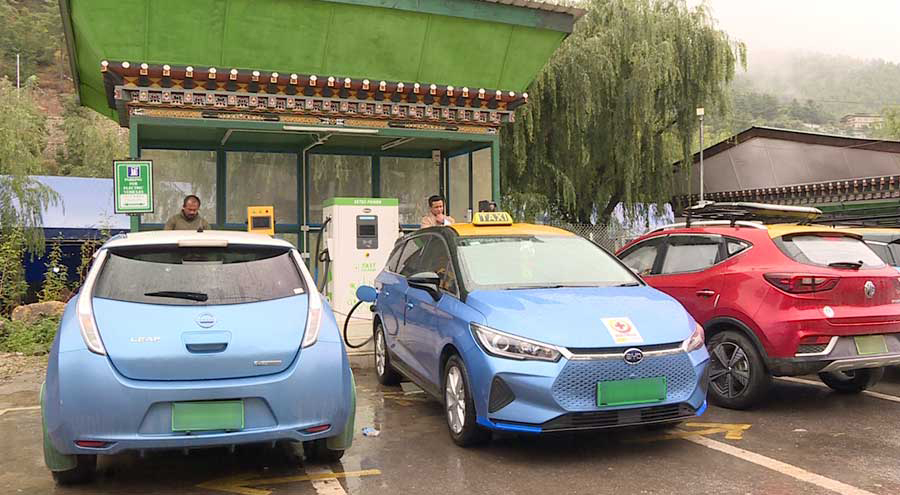

In terms of electric vehicle (EV) adoption within a country, Bhutan is rapidly transitioning its transport sector by promoting and incentivizing ownership of electric vehicles. From a mere 16 EVs in 2019, the number has grown to 401 electric vehicles in 2023 (See Figure 1). This represents a significant step towards sustainable transport, in line with global initiatives to reduce carbon emissions and mitigate the effects of climate change. Significant portions of these EVs are allocated to various sectors, emphasizing a diversified strategy for electrifying the nation’s transportation system.
Figure 1: Growth of electric vehicles in Bhutan

The above growth in EVs is spread across government as well as private sector (Table 1). This government sector plays a vital role in promoting the transition to electric mobility, with 52 electric vehicles designated for official use. This suggests a government initiative to lead by example and establish a sustainable transportation practice standard. The adoption of EVs by the government demonstrates a commitment to reducing the carbon footprint of its fleet operations, contributing to the larger objective of achieving environmental sustainability.

Table 1. Electric vehicles in Bhutan by ownership

EV TypeOWNERSHIP
GovernmentPrivateTaxiTOTAL
2019
016016
2020
428133
2021
1180899
2022
2614879253
2023*
52186163401

There are 186 electric vehicles in the private sector, constituting a sizeable presence. This indicates a growing interest in and adoption of electric vehicles among individuals and non-government organizations. Although private ownership of electric vehicles demonstrates shared concern and responsibility for a cleaner environment, the an openness to adopting healthier alternatives may primarily be attributed to the tax incentive provided.

One of the priorities of the government has been to promote cleaner and more efficient public transport options. Through a subsidy program in conjunction with the UNDP, the taxi industry has grown to 163 EVs in 2023. The transition of taxis to electric power considerably reduces urban air pollution and promotes sustainable urban mobility. Initiatives are now underway to modernize public transport by replacing diesel buses with electric buses. The city of Thimphu recently added an electric bus to the transportation system bolstering the comprehensive approach to achieving sustainable public transportation. The introduction of an electric bus represents a concerted effort to,

This country’s composition of electric vehicles represents a multidimensional approach to sustainable transportation. The government, private sector, taxi industry, diplomatic entities, and the incorporation of electric vehicles demonstrate a collective commitment to reducing carbon emissions and fostering a greener, more sustainable transportation future. Table 2 summarizes the composition of EVs in the country.

Table 2: Composition of EVs in the country as of October 2023

Types of EVsNos.Percentage
Government5212.96%
Private18646.38%
Taxis16340.64%
Total401 
Recent data received from the Ministry of Information and Communication, (MoIC) maps out the number and location of EV charging stations in the country as given in Table 3.
Ministry of Information and Communication

To create a low carbon pathway that will make domestic industries rich, prosperous and socially relevant in global markets, industrial sector decarbonization is essential. In Bangladesh, industry sector is the second largest contributor to GDP (approximately 29.54%), after the service sector contributing 53.4%. The major contributor within the industrial sector is the RMG segment which has seen an increase in labor-intensive and export-oriented manufacturing, transforming the economy. Other industrial sub-sectors include construction industries, jute, sugar, tea, leather, telecommunications, pharmaceuticals, cement, ceramics, shipbuilding, steel, fertilizer, food processing, paper newsprint, light engineering, and other categories.

The importance of developing low carbon and energy efficiency solutions is underlined by this important role played by the industry sector with regards to expected total emissions. Therefore, while industry continues to increase productivity and exports, a more strategic industrial policy is needed to reduce emissions from industrial activities. In each country, policies are playing a significant role in the implementation and realization of industrial decarbonization.
Decarbonization Policies can reduce emissions and increase green jobs through a variety of economic routes. These include input substitution (use of low-carbon energy or input materials), process changes (energy efficiency, novel process development, use of recycled materials, carbon capture), demand reduction (material efficiency, material substitution, circular economy, etc.), skillset trainings (training need identification, creating green jobs and skilling the existing and potential workforce).

The shift to a more sustainable low-carbon economy necessitates the expansion of industry sectors generating ecologically sound products, creating new employment and offering people new skills. According to International Labour Organization (ILO), Green jobs are decent jobs that contribute to preserve or restore the environment, be they in traditional sectors such as manufacturing and construction, or in new, emerging green sectors such as renewable energy and energy efficiency.

The ‘Green Jobs Initiative in Bangladesh’ was formally launched on December 4, 2008, by the Ministry of Labour and Employment and the International Labor Organization. Green employment is found in many areas of the economy, including energy supply and waste recycling, as well as agriculture, construction, and transportation. In Bangladesh the project is being implemented in collaboration with the tripartite constituents; the Government, Bangladesh Employers Federation, National Coordination Committee for Workers Education, and private partners such as Grameen Shakti and Waste Concern.

Among the established national policies of Bangladesh, ICF, with the support of Bangladesh Centre for Advanced Studies (BCAS), identified few policy gaps towards green jobs.
Environmental concerns and skills for green jobs are lightly considered in the draft version of National Skill Development Policy (NSDP), 2020. No skills response solutions are included in a larger framework of climate change and/or sustainability policy. No labor market information (LMI) service exists to collect data on re-training requirements for green jobs. No institutional authority or structure is in place to identify the present and future skill requirements for green jobs.

Major factors accounting for green skill shortages are inadequate institutional support, supply driven TVET system leading to skill mismatch, no green component in the current TVET reform, shortage of green jobs trainers, and inadequate job placement mechanism. Green skills, to adapt products, services, and processes to climate change, environmental requirements and regulations, will be needed by ‘all sectors and at all levels of the workforce.

The national policies and training primarily focus on employment generation and good working conditions, hence there is a dearth of green jobs and skills-related competence standards such as curricula, training, and programs. No criteria for designing new competence “green” standards have been developed yet, owing to a lack of a national green skills development policy. Existing education and training system including general schooling does not follow a strategy of “mainstreaming” sustainability and environment protection issues within the education and training system.

To overcome these policy gaps and challenges, a country-specific and sector-wise future of green jobs report will help in understanding the roles required for reaching the climate change mitigation and adaptation goals. Green skills development must be integrated into wider training and skills development policy, rather than being seen as additional to or separate from other forms of skills. Technical and Vocational Education and Training (TVET) institutions can engage in greening through a comprehensive framework that aims to improve awareness, expertise, and behavior that can contribute to a more productive workplace. Greening a TVET institution will make young people active members of the green economy, resulting in increased human well-being and social justice, while reducing environmental risks and ecological scarcity. This process needs to be a part of the National Youth Policy for aligning the youth towards low carbon transition.

Sri Lanka ratified the United Nations Framework Convention on Climate Change (UNFCCC) in November 1993 being among the first 50 countries to ratify it. As part of its obligations, Sri Lanka released its first national communication on climate change in 2000, and the subsequent national communication in 2011. After the submission of Intended Nationally Determined Contributions (INDCs) as per the Paris agreement in 2015, Sri Lanka officially submitted the updated Nationally Determined Contributions (NDCs) to the UNFCCC in 2016. Since then, Sri Lanka has been communicating through various means its intentions to become net zero country by 2050. Most recently, Sri Lanka released The Third National Communication of Climate Change dated October 2022, and it is seen that this report has placed a major emphasize on the need for structural and policy changes in order to increase the effectiveness of its climate action.

In Sri Lanka the subject of climate change is coming under the purview of ministry of environment, under which the Climate Change Secretariate (CCS) is placed, and the ministry is acting as the national focal point for the UNFCCC. While CCS plays the coordination role with other line ministries, Department of Meteorology (DoM), Disaster Management Centre (DMC), and National Building Research Orgnisation (NBRO) are the other ministries and agencies that plays significant roles in their respective areas. It is also important to note the role of the Sustainable Development Council (SDC); the nodal government institution with the responsibilities for coordination, facilitation, monitoring, evaluation and reporting on the implementation of 2030 Agenda for Sustainable Development in the country. Given this context, the report emphasizes on the need for a complex institutional mechanism in order to tackle the issue of climate change, as it is required to coordinate actions of several line ministries and agencies.

According to the third national communication, the national policies, programs, and institutional arrangements of climate change are being developed at a fast pace. The report while identifying the formulation of the National Climate Change Policy (NCCP) in 2012 as a major milestone of the national agenda, it highlights the need for updating it to deal with the emerging trends such as measurement reporting and verification of greenhouse gases(MRV), carbon trading and offsetting, data management, and climate finance, etc. The report further highlights the need for putting in place a coordinating mechanism for the preparation of National Communications through a multi-sectoral approach as well as a mechanism for data sharing between climate action institutions at national, provincial, and district levels.

One of the important aspect the report gives emphasis on is the need of a dedicated legal provision through a parliament act to deal with climate change issues, as the general provisions provided by the National Environment Act is in sufficient. Further, it highlights that the CCS should have legal mandate through a parliament act for long-term inter ministry and inter-institutional coordination with clear roles and functions for each stakeholder. This mandate will facilitate smooth implementation of climate change laws and policies, activities under sectoral processors, and activities at national, provincial and district levels. However, the report reveals that the Climate Change Commission Act for Sri Lanka is being drafted at present and looking forward to the act to have clear mandate and power vested on it which will strengthen effective ground level climate actions. It also looking forward the act to facilitate establishing a coordinating mechanism to implement the laws and policies of the act, while giving it the power to take actions against those who violate the provisions of the act.

References:
The Third National Communication of Climate Change in Sri Lanka https://unfccc.int/sites/default/files/resource/Third%20National%20Communication%20of%20Sri%20Lanka.pdf, p 65, 135
Sri Lanka Sustainable Development Act, No. 19 of 2017- https://sdc.gov.lk/en/about

Pakistan’s Electric Vehicle Landscape
Ayesha Majid & Mome Saleem

With a share of around 78.5 percent of the country’s total demand, the transport sector is a major consumer of petroleum products in Pakistan. Consequently, the sector accounts for 23 percent of the country’s total GHG emissions. Drastically cutting down the use of fossil-based fuels to meet the climate goals will, therefore, be impossible without decarbonizing transportation in the country.

Electrification of vehicles can play a crucial role in this regard as EVs have a lower energy requirement than Internal Combustion Engine (ICE) based vehicles thus reducing the demand for oil. Moreover, projections suggest that even a high market penetration rate will not lead to significant rise in the country’s power or fuel till 2030. Thus, electrification of vehicles will not create major challenge for electricity grid network in Pakistan in the near future. In fact, it is estimated to reduce the overall oil import bill if penetration is high. However, to truly decarbonize the sector, electrification needs to be aligned with production of clean energy. Leveraging the Alternative and Renewable Energy (ARE) Policy 2020, which aims to increase the share of ARE in total power supply to 20% by 2025 and 30% by 2030, thus presents a potential to transition towards renewable energy sources and simultaneously reduce the country’s overall carbon footprint.

Pakistan’s National Electric Vehicle Policy aims at capturing 50 percent of all the new sales of 02 & 03 wheelers (electric motorcycles, scooties, rickshaws, scooters, and loaders), and 30 percent of all new sales of cars and trucks by 2030. According to Engineering Development Board (EDB) of Pakistan, between 2021 and Oct 2023, around 25,736 two & three wheelers were produced whereas 1,663 four wheelers were produced. Currently, there are around 34 EDB-approved manufactures of 02 & 03 wheelers in Pakistan.

The EV policy is more ambitious vis a vis the 02 & 03 wheelers as compared to cars because:

  • The 02 & 03 wheelers form a major segment of the vehicle fleet, especially in cities, as there is a lack of integrated public transport, and the huge price differential as compared to cars makes them a cost-effective alternative. The average annual growth rate of 02 & 03 wheelers in Pakistan is around 8.3 percent, and it is projected to grow at a similar rate in future. Motorcycles alone consume around 40 percent of the total gasoline requirement. Thus, electrification of this segment has the potential to reduce the demand for fossil-based fuels and the resultant emissions.
    1. https://www.finance.gov.pk/survey/chapters_23/14_Energy.pdf
    2. https://www.pc.gov.pk/uploads/downloads/policy.pdf
    3. https://www.undp.org/sites/g/files/zskgke326/files/migration/pk/Scaling-Up-Electric-Mobility-in-Pakistan.pdf
    4. https://www.mocc.gov.pk/SiteImage/Policy/EV%20Policy%20Final.pdf
    5. https://nepra.org.pk/Policies/ARE_Policy_2019_-_Gazette_Notified.pdf
    6. https://www.mocc.gov.pk/SiteImage/Policy/EV%20Policy%20Final.pdf
  • Almost all the 02 & 03 wheelers are manufactured in Pakistan as opposed to the ICE-based cars which are dominated by international companies. The availability of parts is also quite reliable and cost-effective for 02 & 03 wheelers because of the scale of the existing local industry. To this end, the potential for replacement and conversion of existing fleet is also easier and less expensive as compared to cars. The use of swappable batteries to avoid long charging time is thus being explored as a low hanging fruit as it can be more easily adopted for 02 & 03 wheelers as compared to cars. Charging stations for swappable batteries are being set up in Lahore.

Factors for Long-term Success in the EV Sector
To accelerate the transition towards EVs in all the segments, especially the public transport facilities which have a lower footprint than individual vehicles, the following aspects need to be prioritized:

  1. Policy: There is still a lot of uncertainty regarding licensing, taxation, duties, operation of charging stations etc. It is important to have a consistent and proper regulatory framework which ensures stability to investors and other market players. The government should also focus on encouraging indeginous manufacturing and after sales services for all types of EVs instead relying on import-based models as that would simply add to trade deficit. The policies should also make it attractive for consumers to change their preference and opt for EVs instead of ICE based vehicles. In addition, electrocution of mass transit facilities should be prioritized.
  2. Infrastructure Development: It is imperative that the required infrastructure to facilitate adoption of electric vehicles is developed. This includes a robust network of charging stations and battery-swapping facilities for short and long routes. It also entails strengthening the electricity distribution network to ensure smooth and uninterrupted electricity supply o encourage potential EV owners hesitant to make the switch from conventional vehicles. Policy around installing charging infrastructure at homes, offices, etc. also need to be explored.
  3. Partnerships: To encourage development of indeginous EVs and charging infrastructure, the government will need to encourage entrepreneurship and public private partnerships in the sector. This would entail favorable terms for financing and taxing, transfer of knowledge and technology, and operations.
  4. Research & Development: To maximize the benefits of EVs, research and development facilities are required to explore indigenous development of technologies for EVs and the associated services in the short, medium and long term. The findings should be used to encourage enterprise development and expanding the export potential in the sector.

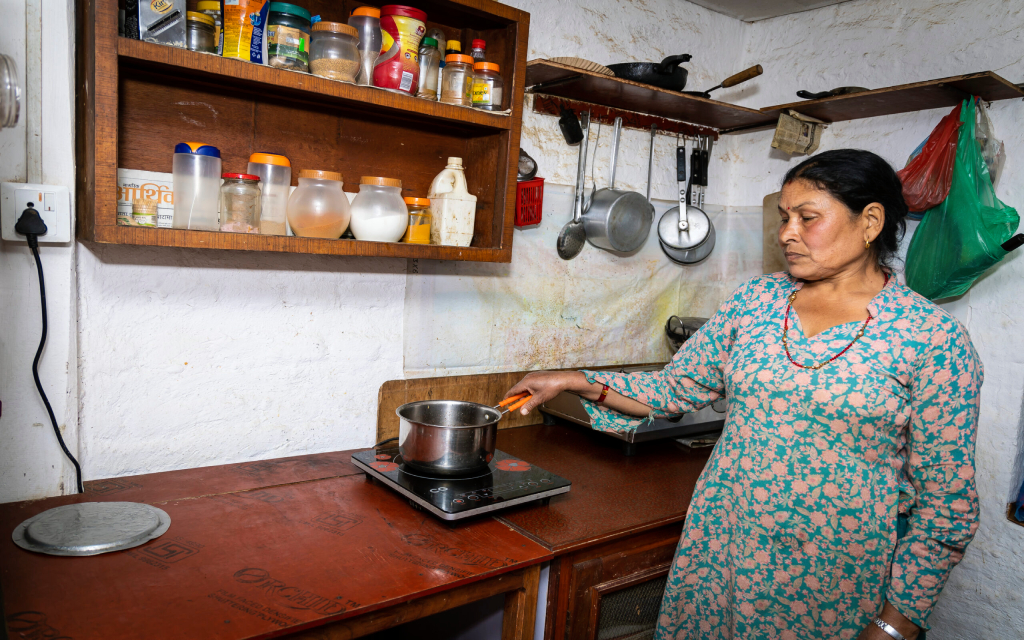
Newfound Avenue to Increase Electricity Consumption in Nepal In the recent past, eCooking in the residential sector has taken great strides towards market-based adoption. Several favorable national policies, mass awareness and capacity building campaigns for eCooking organized by civil societies, development organizations, continuous research works supported by various development organizations and surplus production of the electricity can be attributed to the promotion of eCooking in Nepal. Recent growth in generation of electricity is encouraging in Nepal. Nepal is gradually transitioning from energy deficit country to energy importing country. The electricity generation over the past decade has been demonstrating significant growth to an extent where there is surplus energy to be exported especially in the wet season. In FY 2022/23, the Nepal Electricity Authority (NEA) increased its export substantially compared to last FY. In 2022/23, NEA was able to export 1,346 GWh compared to 493 GWh in last FY. Over a period of decade, the availability of electricity has increased substantially as shown in Figure 1.

The extent of electricity generation is overwhelming with many hydro projects approaching its commissioning date. With plethora of hydro projects waiting in line for commissioning in the coming years, the electricity generation scenario is encouraging for Nepal to certainly fulfil the national demand. The concerned authority and stakeholders are anxious about risk of wasting the production during wet season. Even during festive season, especially during Tihar also known to be“ festival of light”, the electricity generation was comfortable in handling the peak demand. Moreover, during that time, NEA was able to export excess supply to India. At times,

    1. NEA_Annual_Report_2023
    2. https://english.onlinekhabar.com/nepal-likely-to-waste-up-to-900-mw-of-electricity-this-monsoon.html
    3. https://www.onlinekhabar.com/2023/11/1392390

Contributed by: Niraj Shrestha, Practical Action Consulting Barsha Parajuli, Clean Energy Nepal Nepal has faced challenge to export excess electricity to India as NEA needs to wait for approval from the Indian counterpart. In such circumstances, risk of spilling excess electricity and associated financial loss is imposed on NEA. Overall, the current electricity demand and supply scenario clearly indicated that there is a need of alternative plan to ensure that excess generation of electricity is consumed as much as possible within the country. Conflicts around globe has indicated that dependence on imported fossil fuels such as LPG is detrimental to the national economy from the point of energy security and sustainable energy development. The current circumstance clearly calls for energy services that can rely on locally generated energy source to reduce the impact on national economy by reducing the trade deficit contributed by import of LPG and petroleum products while increasing the demand for electricity within the country. At this moment, eCooking within the commercial and enterprise sector and eMobility are potential two energy services that has the potential to contribute to escalating the daily demand for electricity. Increasing the consumption of electricity is in the best interest of the nation from economic, and environmental standpoint. eCooking Potential in Commercial sector The commercial and/or enterprise sector is associated with economic activities. The choice of fuel for cooking at most enterprise and commercial sector is mostly LPG. However, biomass, coal and electricity are also part of the energy mix for cooking at commercial level. The energy sector synopsis report (2022) indicates that the energy consumption by commercial sector have increased to 7% in 2021 from a low share of 1.3% in 2009. This makes it obvious that energy demand in the commercial sector is rising at a high rate. On the other hand, if looked at energy demand by type in commercial sector alone, 53% of energy comes from wood, 25% from LPG, 7% from coal and charcoal in 2021 respectively. These fuels are primarily used for thermal energy – one of which is cooking and water boiling. With more than 80% of energy coming from solid biomass fuels, it is evident that there is a strong need and an opportunity for cleaner fuel usage. The “Energy Consumption and Supply Situation in Federal System for Koshi and Madhesh Province” and that for Bagmati Province by WECS have provided the energy consumption details from primary survey. Although these reports may not be exact representation of the country, it does provide representative evidence regarding the energy consumption patterns in the commercial sector of the country for cooking. Table 1 below shows the energy consumption status and choice of fuels for cooking in the commercial sector in three provinces (Koshi, Madhesh Pradhesh and Bagmati) of Nepal. The commercial sector of the country is grouped into trade and retail, accommodation and food, financial service, social service, and other services in the energy sector analysis reports. Understandably, being associated with hospitality, accommodation and food service sub-sectors are mainly responsible for higher consumption of energy in cooking. This sub-sector comprises restaurants, hotels, and similar service sectors.

Table 1: Energy consumption status and choice of fuel for cooking in the commercial sector
    1. https://www.onlinekhabar.com/2023/10/1384663
    2. Commercial sector comprises of trade and retails (shops, manufacturing units, etc), accommodation and food (hotels and restaurants), financial service (banks, cooperatives, etc), social service (schools and hospitals) and other services (police station, IT, etc).
Contributed by: Niraj Shrestha, Practical Action Consulting Barsha Parajuli, Clean Energy Nepal
Province Energy Consumption in Cooking (TJ) Fuel Source
Firewood LPG Electricity
Koshi 1,504 59% 41% 0.5%
Madhesh Pradesh 324 2% 93% 5%
Bagmati Pradesh6 3,858 3% 89% 0.4%
The energy consumed by the accommodation and food sub-sector in Koshi and Madhesh Province is shown in Table 2. This is the sector which needs to be targeted to increase the share of electricity while reduce the share of LPG for cooking. Table 2: Energy consumed by accommodation and food sub-sector by fuel type
Province Fuel Source for Commercial Sector (Accommodation and Food Sub-Sector) in TJ
Wood Coal LPG Electricity
Koshi
445 320 145
Madhesh Pradesh
0.07 0.48 128.12 83.61

Source: (WECS, 2019)

Furthermore, the consumer category for NEA is dominated by domestic customers. Approx. 92 percent consumer for the NEA belongs to the domestic category followed by other category (temple, transportation, water supply, irrigation, commercial, etc) and industrial category. As justified by the electricity sales revenue from different sectors, the domestic sector contributes to approx. 38 percent of the total revenue of the NEA which is matched only by industrial sector. As of now, the commercial sector’s contribution on the NEA revenue stream in minimum. Any effort that contributes to increase in the revenue stream is likely to be welcomed by the NEA who is solely responsible for generation, transmission, and distribution of electricity in Nepal.

Transportation Sector Status in Nepal
The crisis arising due to climate change and pollution is posing urgent challenges globally. Though Nepal’s contribution to global climate change is negligible with low per capita emission (0.1 percent of total global GHG emissions, 2019 ), the GHG emissions are rising at an annual rate of 2.3%. Petroleum products, the largest imported commodity (17.4% of the total import bill) and fossil fuel-based motor vehicles (motor vehicle and their spare parts together come up as second most imported commodity after petroleum product and accounting for 6.5% of total imports) are the major contributors.
The energy consumption by the transport sector has been on rise due to the changing demography and economy. According to Water and Energy Commission Secretariat (WECS)


  1. The remaining percentage comprise of fuels like charcoal and coal.
  2. Water and Energy Commission Secretariat. (2019). Energy Consumption and Supply Situation in Federal System of Nepal (Province No. 1 and Province No. 2) Final Report-Province 1 CMS-CES JV i Executive Summary Global Energy Outlook and Current National Energy Overview.
  3. WECS. (2022b). Energy Sector Synopsis Report 2021/2022.
  4. https://kathmandupost.com/money/2023/04/30/nepal-undermining-hydropower-as-it-seeks-to-ease-fuel-imports-experts-say#:~:text=According%20to%20the%20Department%20of,in%20the%20last%20fiscal%20year.

Contributed by:
Niraj Shrestha, Practical Action Consulting
Barsha Parajuli, Clean Energy Nepal
2023, the transport sector alone in Nepal demands 67.1 PJ of energy i.e. 10.3% of national total (i.e. 3rd in terms of energy consumption). Petroleum products is the primary source of energy and electricity usage by this sector is just 0.02%. Diesel fuel holds the largest share in this sector (60.34%), primarily used by freight and heavy passenger vehicles, while petrol is mainly consumed by small private vehicles (31.6%). Additionally, aviation fuel accounts for 8.04% of this sector. The vehicle registration status (as of 2018) shows that 78.6 % of the total registered vehicles are motorcycles, 7.4% cars/jeeps/vans, 4.8% tractors and trucks, 1.7% pickups, 1.5% buses, and others remaining. These trends of preference for private over public transport (3% public vehicles, 14% private vehicles and 78% motorcycle) is alarming as it is unsustainable and pose the risk of ultimate contribution for higher emissions.
Recently, while Nepal is witnessing gradual increase in its electricity generation and the nation is transitioning from energy deficit country to energy surplus, there is a huge potential to increment in per capita electricity consumption (Government of Nepal plans to increase annual per capita electricity consumption to 400 kilowatts per hour) through adoption of EVs. Government of Nepal (GoN) has also been prioritizing the transport sector in its periodic and annual plans. Further, Nepal has also set a vision to achieve net zero GHG emission by 2045, transport sector being the major target sector and its NDC actions are aimed at lowering carbon emissions by transitioning to zero emission transportation for intercity, intra-city and freight travel across public and private modes.
What Next with eCooking for Commercial Sector in Nepal?
NEA is also trying to address the major bottleneck that is hindering them to ensure quality and reliable supply, upgrading transmission and distribution infrastructure. NEA is massively focusing on upgrading transmission, distribution systems, and other infrastructure in its corporate development plan to ensure quality and reliable supply of electricity to the end users. NEA is also expediting transmission and distribution system by addition of sub-station, upgrading the transformers, and improving the service delivery mechanism. Upgradation in transmission and distribution is something that cannot happen overnight but intentions from NEA indicate that the transmission and distribution system upgradation is seen as a major priority for NEA. Recently, NEA announced to set up 8 high-capacity sub-station to improve transmission and distribution system within Kathmandu valley. Upgrading their transmission and distribution infrastructure with major city like Kathmandu demonstrate their intent to improve their supply system. Moreover, NEA is likely to get support from international development agencies like ADB and the World Bank to upgrade the transmission and distribution system.


    1. WECS. (2022b). Energy Sector Synopsis Report 2021/2022.
    2. DoTM. (2019). Total number of vehicles registered till fiscal year 2018/19. Department of Transport Management (DoTM), Kathmandu.
    3. https://kathmandupost.com/money/2023/02/23/nepalis-turning-to-electric-vehicles-evs-in-tactical-shift-imports-jump-61-percent
    4. https://myrepublica.nagariknetwork.com/news/nea-to-construct-eight-high-capacity-substations-in-kathmandu-valley-to-meet-electricity-demand-till-2050/

Contributed by:
Niraj Shrestha, Practical Action Consulting
Barsha Parajuli, Clean Energy Nepal
From the development perspective, initiatives have started in Nepal regarding exploring potential to promote eCooking in enterprise and commercial sector. Development agencies like Modern Energy Cooking Service (MECS) program supported by FCDO and the World Bank has started to support development agencies in Nepal to explore potential and feasibility to promote eCooking in commercial sector. Recently Practical Action Consulting (PAC) Pvt. Ltd has been involved in two research to assess potential to introduce eCooking in commercial sector. These two research are on the verge of completion and the findings from this research will probably shed light on energy use pattern in commercial sector, financial viability of transitioning to eCooking, barriers and challenges to promote eCooking in commercial sector. The research was conducted in Kathmandu valley and in the tourist area within Kaski, Chitwan, Mustang and Dhading district. The findings from these research could prove to be stepping stone to garner powerful interest among the stakeholders and policy makers that can drive them to contemplate about integrating eCooking in the commercial and enterprise sector.
What Next with Electric Vehicle (EV) or eMobility in Nepal?
Regarding Electric Vehicle (EV), Nepal intends to transition to EVs and for that numerous charging stations will be needed to meet the demand that will arise. Realizing this, NEA (51 charging stations across 7 provinces of Nepal) along with many car companies including TATA (+150 fast and slow charging stations), BYD (14 Charging stations), Hyundai(43 charging stations), MG (17 charging stations) have set up charging stations all over Nepal. Despite the setup of all these charging stations, the ratio of EVs to charging station is still low. Installation of new charging stations with all types of dedicated chargers capable of charging different types (brands) of EVs backed up with a proper planning will be needed. Further it is crucial to ensure consistent and stable electric supply for the existing charging stations to prevent any potential damage to the EVs. Additionally, it is important to ensure smooth and convenient charging experience for users.
Besides, Nepali transport sector primarily depends on vehicle imports so the import tax and import duties plays a significant role in defining the cost of the vehicle in the local market. The tax rate depends on the transport types and their engine capacity (cc). The customs subsidies on the import of EVs have shown positive impacts on the adoption of EVs. Last April, government announced a complete ban on the import of fossil based vehicles including motorcycles with a capacity of over 250cc. This shortage of fossil fuel powered vehicles coupled with easy bank finance services and ever soaring prices of petroleum products, sales of EVs has boosted. However, this ban was again lifted in December.16
The government through the budget of the current fiscal year had announced plans to convert both the private and public petroleum-based vehicles into electric vehicles in the Kathmandu


  1. Unlocking the potential for enterprise level electric cooking in Nepal funded by MECS and Identifying eh electric cooking in the small and medium scale enterprise and businesses funded by the World Bank-Nepal
  2. https://english.onlinekhabar.com/charging-stations-in-nepal.html
  3. https://kathmandupost.com/money/2023/02/23/nepalis-turning-to-electric-vehicles-evs-in-tactical-shift-imports-jump-61-percent

Contributed by:
Niraj Shrestha, Practical Action Consulting
Barsha Parajuli, Clean Energy Nepal
Valley. This will potentially have positive impacts towards the decarbonizing the transport sector of Nepal and just energy transitions.
The changing import tax, import duties and policies again discourages the adoption of cleaner modes. Consistent and stable electric supply, consistent enabling policies, sufficient charging infrastructures, smooth and convenient charging experience for users, subsidies on tariffs and the import of EVs, easy bank finance services will play crucial roles in the adoption of EVs, that poses the potential of future means of transport.