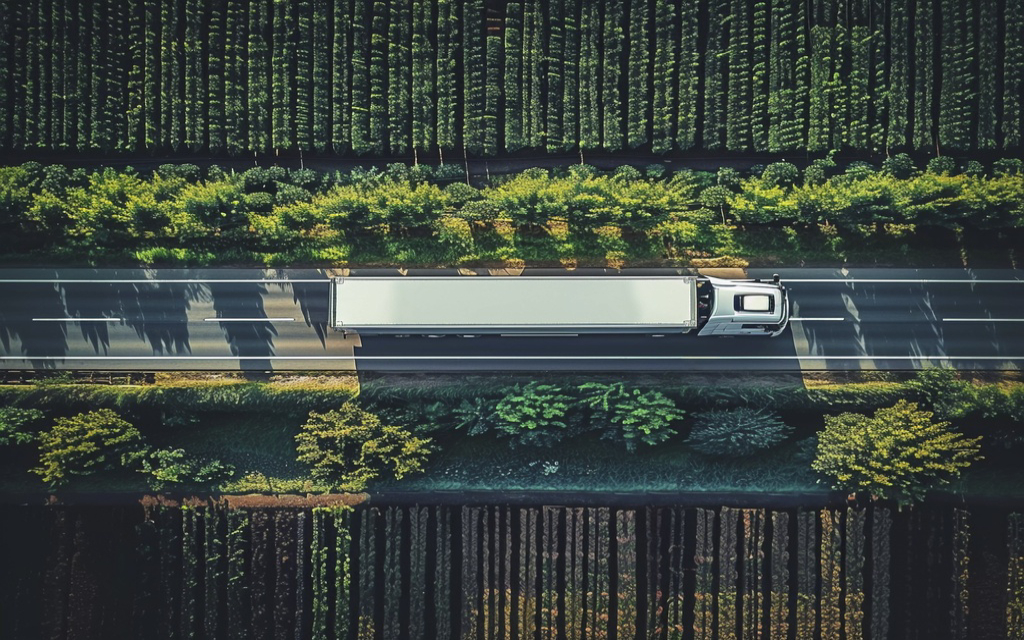
India’s trucking industry, integral to the nation’s economic framework, underpins logistics and goods transportation across the country. This sector accounts for a significant share of domestic freight movement, supporting industries from agriculture to e-commerce. However, it also shoulders a heavy environmental burden. Diesel-powered trucks contribute significantly to greenhouse gas emissions and air pollution, aggravating public health crises and environmental degradation. Moreover, the sector’s reliance on fossil fuels makes it economically vulnerable. India’s dependency on oil imports not only exposes trucking operations to volatile fuel prices but also undermines energy security. Transitioning to Zero Emission Trucks (ZETs)—including battery-electric and hydrogen-powered trucks—offers a plethora of advantages: reducing emissions, strengthening resilience against fluctuating fuel costs, enhancing national energy security, and more. The shift to ZETs, while essential, is a complex process, especially for the small and medium fleet (SMF) operators who dominate the industry.

Key Challenges of Transition

The move to ZETs requires a phased approach, with timelines varying across use cases such as long-haul freight, drayage, regional return-to-base, and non-return-to-base operations. Fleet operators face numerous challenges in this transition:

  • High Upfront Cost of ZETs: One of the most significant barriers for SMF operators is the high upfront cost of ZETs, which are 2.5 to 4 times more expensive than their diesel counterparts. This substantial price disparity makes procurement challenging, especially for smaller operators with limited financial flexibility. Adding to the burden, financial institutions often impose higher interest rates on ZET loans, citing the risks associated with relatively new technology and the need to hedge against uncertainties.
  • Infrastructure Scarcity: A lack of publicly available charging infrastructure remains a critical barrier. Operators express concerns about the availability of sites and whether sufficient charging facilities will be developed in the future.
  • Access and Utilization Concerns: There is uncertainty about access to charging stations, especially around high site utilization, or congestion at peak times. Operators fear disruptions to their schedules if charging stations are overburdened.
  • Grid Capacity Constraints: Insufficient grid readiness, including capacity limitations and peak demand challenges, casts uncertainty on the reliability of charging infrastructure. This not only risks complete disruptions but may also result in reduced power capacity at charging stations, significantly affecting delivery schedules by increasing charging and transportation times.
  • Time Efficiency: For most operators, a charging duration of 60–90 minutes is unrealistic, as it would lead to significant productivity losses, compounded by delays at toll booths, check posts, and other transfer sites.
  • Hybrid Charging Solutions: Semi-public or shared private charging sites often restrict access based on pre-existing agreements or membership, leaving many SMF operators without reliable options.
  • High Power Charging Challenges: Emerging technologies like the Megawatt Charging System (MCS) promise rapid charging solutions. However, the large footprint of MW+ charging infrastructure, real estate requirements, and grid demands present logistical hurdles. Moreover, most truck models today lack the capability to utilize 1 MW+ charging power, constrained by battery chemistry and thermal management systems.

Solutions to Facilitate the Transition

In October 2024, the Center for Zero Emission Truck Transition Support (CZETTS) was inaugurated by the Additional Secretary, Ministry of Road Transport and Highways, under the aegis of the All India Motor Transport Congress (AIMTC) and with Vasudha Foundation as the secretariat. CZETTS aims to serve as a pivotal platform to support fleet operators, offering guidance, capacity-building programs, and assistance in accessing incentives for ZET adoption.

To create a dynamic ecosystem that adapts to the evolving needs of the trucking sector, several strategies must be facilitated by the Center:

  • Innovative Business Models: To address the high upfront costs of ZETs, innovative business models such as the Multi-Life Multi-Purpose (MLMP) model and performance-based interest subvention strategies will be explored.
  • Tailored Charging Infrastructure Development: Initiating the transition with drayage trucks by proposing strategies to deploy charging stations at high-traffic hubs like loading and unloading sites. The Center will also explore raising awareness of measures such as reservation-based refueling arrangements to mitigate site congestion and enhance the reliability of public charging stations.
  • Hybrid Charging Solutions: Conducting a charging needs assessment tailored to trucking operations to determine the type and optimal placement of charging stations, with a focus on prioritizing public charging stations in high-traffic areas for equitable access.
  • Advances in High-Power Charging: Unlocking the potential of MCS technology, which can deliver 125 kWh of charge in 7.5 minutes, aligned with driver break schedules. The Center will also focus on bringing OEMs and EVSE manufacturers onto a platform to finalize standards and operational details for seamless industry integration.
  • Grid and Site Readiness: Collaborating with utilities, policymakers, and infrastructure providers to address grid capacity constraints and the real estate requirements for MW+ charging systems, ensuring smooth implementation.

Way Forward

India’s transition to ZETs demands a collaborative and phased approach, where challenges are addressed holistically. This includes providing financial incentives and tailored loan products to ease the high upfront costs, expanding and modernizing the charging infrastructure, and upgrading the power grid to meet increased demand. Additionally, fostering innovation through advancements in battery and charging technologies, while ensuring standardization across the industry, will be crucial. Capacity-building and knowledge sharing platforms like the Center for Zero Emission Truck Transition Support (CZETTS), and targeted government policies will further support fleet operators. By fostering collaboration between government, industry, and financial institutions, India can address key challenges and accelerate the adoption of ZETs, creating a more sustainable and resilient trucking ecosystem.

Carbon neutrality or net-zero carbon dioxide emissions entails balancing emissions of carbon dioxide with its removal or by eliminating emissions from society. While 2020 was a bleak year, owing to the Covid crisis, it ended with some hope for the planet when a group of developed countries – USA, Canada, Japan declared their resolve to achieve net zero emissions by 2050. China declared that it would be able to achieve the same by 2060. There is a growing pressure on India too to declare this as such but Indian Government has stated clearly that it cannot possibly do it alone, and without jettisoning the project of pulling millions living in poverty in the country.
The declarations of the developed country is being seen as a timely declaration coming along with Special Report on 1.5 degree Celsius. There are several cities, municipalities, and businesses world over which are declaring net zero targets in 2050.These numbers are climbing quickly, particularly because the U.N. Secretary General asked countries to come forward with net-zero targets. The U.N. High Level Climate Champions’ Race to Zero campaign also calls on regions, cities, businesses, investors and civil society to submit plans to reach net-zero emissions by 2050 in advance of the United Nations climate negotiations (COP 26) in Glasgow in November 2021. The Special Report on Global Warming of 1.5˚C, from “the Intergovernmental Panel on Climate Change (IPCC), finds that if the world reaches net-zero emissions by 2040, the chance of limiting warming to 1.5 degrees C is considerably higher. All in all, the world must try to reach net zero targets as soon as may be. The chances of limiting warming to 1.5 degrees C, however, depend significantly on how soon the highest emitters reach net-zero emissions

Differential Capacity to achieve the net zero target

This does not, however, suggest that all countries need to or can reach net-zero emissions at the same time. WRI (2019) argues that “Equity-related considerations — including responsibility for past emissions, equality in per-capita emissions and capacity to act — suggest earlier dates for wealthier, higher-emitting countries. Policy, technology and behaviour need to shift across the board”. In pathways to 1.5 degrees C, renewables are projected to supply 70-85% of electricity by 2050, which is one of the most important mechanisms through which the goal can be achieved.
India is in a dilemma. It cannot possibly commit to net zero by 2050 without abdicating its responsibility towards its citizens of providing affordable, clean energy, employment, proper infrastructure etc. India has done more than most countries with its level of development and its poverty profile and is trying very hard to reduce its GHG emissions as quickly as possible. This is reflective in India investing heavily in its renewable energy programme and has reiterated its 450 GW target of installled RE capacity by 2030. But is indecisive about announcing its net zero target by 2050. This is because net zero target would require a multi sector, multi-level action, something India sees unlikely to be able to do by 2050. Changes in patterns of energy production and consumption, industrial production and consumption, transport – would all require fundamental changes in which , and while India taking relevant steps, it’s not happening fast enough. India and other nations, through their INDCs has outlined its post-2020 climate actions to contribute toward the 2°C global warming limit. For most countries steps to reach net zero target through decarbonization cover greenhouse gas (GHG) emission reduction targets in energy, industry, agriculture, waste, land use and forestry, and transport—the sectoral focus varying from country to country. These have been laid down in their respective INDCS.

South Asia and Net Zero

Mitigation targets in the INDCs of various countries are reflective of their efforts and alignment with the 1.5 to 2 degree Celsius target. Where is South Asia at the moment in terms of alignment of its mitigation efforts (expressed in INDCs) to the 1.5 – 2 degree temperature limit? Except for Bhutan and Nepal, South Asian countries provided intended mitigation contribution in terms of percentage reduction in GHG emissions or emission intensity. Bangladesh, the Maldives, and Sri Lanka aim at GHG emission/ carbon intensity reduction ranging from 5% to 24% by 2030, from BAU, with components conditional on international assistance. India commits to reduce emission intensity by 33% to 35% by 2030 compared with 2005. While not providing a specific GHG emission reduction commitment, Bhutan stated intention to remain carbon neutral where GHG emissions will not exceed carbon sequestration by the forests. On the other hand, Nepal’s stated commitments were in terms of reduction in fossil fuel dependency, appropriate mix of renewable energy in energy mix, and maintained forest cover.

We will look at these for all South Asian countries in some detail through perusal of their INDCs to first enumerate their mitigation targets and then assess their alignment with the 1.5to 2 degree Celsius target. These INDCS are either based on conditional or unconditional international support. Afghanistan in its INDC has committed to 13.6% reduction in greenhouse gas (GHG) emissions by 2030 compared with Business-as-Usual (BAU), conditional on external support. These would require financial assistance from the developed countries for its achievement. Bhutan on the other hand seeks to remain carbon neutral where GHG emissions will not exceed carbon sequestration by forests (approximately 6 million tons of CO2).

India has both conditional and unconditional targets, which include  – Reduce emission intensity of its gross domestic product (GDP) by 33%–35% by 2030 compared with 2005 (no bind on any sector-specific mitigation obligation/action) • Achieve 40% cumulative electric power installed capacity from non – fossil fuel-based energy resources by 2030 (with transfer of technology and low-cost international finance) • Create an additional carbon sink of 2.5–3 billion tons of CO2 equivalent through additional forest and tree cover by 2030.  Nepal’s conditional INDCs include – • Achieve 80% electrification through renewable energy sources having appropriate energy mix by 2050. • Reduce dependency on fossil fuels by 50% by 2050 • Maintain 40% of total area of country forest cover • Sustainable Forest management to increase forest productivity and products. 

Srilanka’s conditional and unconditioanal targets include – Reduce GHG emissions by 20% (approximately 36,010.2 gigagram [Gg]) in energy sector by 2030 against the BAU scenario – 4% unconditionally (approximately 7,202.04 Gg) and 16% conditionally (approximately28,808.16 Gg). • Reduce GHG emissions by 10% from transport, waste, industries, and forest – 3% unconditionally and 7% conditionally against BAU scenarios

Pakistan’s conditional target is reduce emissions after reaching peak levels (subject to affordability, provision of international climate finance, transfer of technology and capacity building). The conditional and unconditional target of Bangladesh include : Reduce greenhouse gas (GHG) emissions by 5% (12 million metric tons of carbon dioxide equivalent [MtCO2e]) from BAU levels by 2030 in the power, transport, and industry sectors, based on existing resources • Reduce GHG emissions by 15% (36 MtCO2e) from BAU levels (by 2030 in the power, transport, and industry sectors (subject to appropriate international support on finance, investment, technology development and transfer, and capacity building). 

Net Zero for South Asia is a long route

These are the mitigation targets submitted as a part of the INDCs by the South Asian countries to the UNFCCC as a vision they seek and would achieve given financial and technological support they get. These are plans that the countries seek to pursue to contribute to the prevention of climate change. But most of these are not 1.5 – 2 degree Celsius aligned. Its only Nepal, Bhutan and India whose INDCs if pursued rigorously is 2-degree Celsius compatible. The rest are either not or have not submitted sufficient information to be able to infer combability.

The Climate Action Tracker (CAT) has assessed the fair sharing of the proposed contributions of selected countries on efforts to move global emissions downward through 2030. It provided ratings on intended nationally determined contributions (INDCs), pledges, and current policies, specifically on whether they are consistent with a country’s fair share effort to holding warming to below 2°C.The assessment included six developing member countries of ADB: Bhutan, India, the People’s Republic of China, Kazakhstan, the Philippines, and Nepal.
Bhutan’s pledge was rated “sufficient” for 2025, and it is the only country ever rated “Role Model.” This rating is based on emissions excluding land use, land-use change, and forestry (LULUCF) and takes into consideration that, as a developing country with currently very low emissions per capita, Bhutan’s emissions are expected to grow over this time period. Gradual reductions will be needed afterward.
India’s pledges were rated “medium.” The pledges are in line with effort sharing approaches that focus on equal cumulative per capita emissions. A “medium” rating indicates that commitments are not consistent with limiting warming below 2°C and greater effort or deeper reductions from other countries are required. Approaches that focus on historical responsibility and capability would require more stringent emission reductions. The “medium” rating indicates that India’s climate commitments are at the least ambitious end of what would be a fair contribution. This means it is not consistent with limiting warming to below 2°C unless other countries make much deeper reductions and comparably greater effort.
Nepal has not made any emissions reduction pledge, hence no rating was provided. Its own emissions make up less than 0.1% of global emissions. With its current policies, Nepal’s greenhouse gas emissions are expected to increase by 62% by 2030 compared with 2010 levels. Nepal’s projected emission levels in 2020, 2025, and 2030 are in the “sufficient” range. CAT analysis determined an upper end of the “medium” range for Nepal using effort-sharing approaches based on quality principles. To be in line with approaches that focus on responsibility and capability, Nepal would need to reduce its emissions from its current policy projected levels. Apart from the three countries most have not been assessed.Source: Climate Action Tracke

Potential for Decarbonisation through Renewable Power Generation in South Asia 

A lack in the INDCs of the South Asian Countries is largely due to the fact that lack of finance and technology has prevented RE potential from being sufficiently exploited. We will now assess the progress and potential of the countries towards their mitigation targets, especially their RE targets. India has set an objective of 450 GW by 2030. India has tremendous potential for solar energy and is also expanding wind energy. By July 2020, India had reached a total RE installed capacity of 86 GW. 

In 2019, Bangladesh had 2.1 percent and 1.2 percent of solar and hydro in the total installed capacity respectively. In Pakistan in 2019, of total installed capacity, 29.4 percent and 4.97 percent were constituted by hydro and solar respectively. According to WB Pakistan has tremendous potential to generate solar and wind power. According to the WB, utilizing just 0.071 percent of the country’s area for solar photovoltaic (solar PV) power generation would meet Pakistan’s current electricity demand. Wind is also an abundant resource. Pakistan has several well-known wind corridors. 

As a developing country, Sri Lanka’s demand for electricity is going to increase in the future. It is imperative therefore, for Sri Lanka to secure its energy future by focusing on the development and adoption of indigenous, renewable sources of energy to meet this growing demand and reduce the economic burden of imports. Acknowledging this need, Sri Lanka saw an increase in the share of renewable energy (RE) in the electricity mix, when in 2014, the country met its target of generating at least 10 percent of its electricity using renewable energy. Subsequently, in 2015, the contribution of fossil fuels to the electricity mix decreased, at the same time as a rise in the contribution of both renewable energy and large hydro. In 2019 Srilanka, of the total installed capacity, 34 percent was constituted by wind and 3.6 percent by solar. 

Maldives is Infact totally dependent upon fossil fuels and, in 2019 had only 4.9 percent of solar in the total installed capacity. Maldives is located in the Equator and receives abundant solar energy. Maldives Receives about 400 Million MW of Solar Energy Per Annum and tremendous potential for wind energy. Other forms of RE need to be exploited as well but lack of financing, technical capacity and infrastructure has so far prevented it from happening. Nepal and Bhutan almost completely rely on hydropower, and other forms of RE need to be explored. In 2019, Nepal of the total installed capacity, 70.7 and 24.9 percent were constituted by large and small hydro respectively. And Bhutan had 99.93 percent of hydro of the total capacity. Afghanistan as of now depends upon imported diesel but has tremendous solar potential, which can be exploited in future. In 2019, Afghanistan had established of the total installed capacity, 53.1 percent of hydro. More needs to be done to decarbonize power sector in South Asia by involving RE in the fuel mix. This however requires climate finance which is not available to these largely poor developing countries. (The information on installed capacity for various countries has been drawn from Energy Transition Platform hosted by the Vasudha Foundation). 

Can SAARC provide the answer?

There is tremendous potential for regional cooperation among SAARC countries to promote the promote the process of decarbonization in the various countries. There is also an argument that India will not be able to achieve this target without energy trade with the surrounding countries. CPR argues “Beyond the well documented roadblocks to such a radical systemic change, a politically thorny aspect has been overlooked – one that could make or break India’s efforts towards a just energy transition. According to Aditya Valiathan-Pillai from the CPR: “People have long talked about expanded grids as a way of adding large amounts of renewable energy to your energy mix. And that’s simply because renewables are intermittent. The idea of having a pan-continental grid, or a multi-country grid at the very least, has existed for a very long time, and has only been amplified and gained traction with the rise of modern renewable technologies. It has a lot of political salience in the sense that it creates interdependencies between countries and is seen as a way of actually preventing conflict. The reason why this idea doesn’t always take the top spot in the debate is because of the huge political costs involved in creating something like this”. A long term net zero target for South Asia , will require installation of expensive balancing technologies [to solve the intermittency problem], such as large batteries, or pumped hydro storage. Those things are hard to build and are expensive. Through grid expansion further out to countries like Nepal and Bhutan, who naturally have a lot of hydropower, or say Bangladesh, which seems to be investing in natural gas, also a good balancing technology. But there are challenges that prevent this from becoming a reality – geopolitical dynamics between countries, their failure to find support in home constituencies, their inability to follow through their own commitment made at multilateral forums such as SAARC are to name a few. Even if these challenges are addressed, India is looking at a 2060 – 70 timeline, and that too if geopolitics aligns itself well. 

References

  1. ADB, 2016. Assessing the Intended nationally Determined Contributions of Developing Members. 
  2. WRI, 2019, What does net zero mean and 8 most common asked questions, answered
  3. The Wire, 2015, Why cant India meet its net zero targets alone?

South Asia and Vulnerability to Climate Change
Paris Agreement concurs that the world must stop emitting GHG emissions to ensure that the temperature does not rise beyond 2 degree Celsius. Climate change is one of the greatest challenges facing humanity at the moment. The impacts, however, are not uniformly felt across the world. South Asia is one of the important areas where climate change impacts will be felt. According to the recent Climate Change Vulnerability Index (CCVI, 2020), a survey of 170 countries produced by the global risks advisory firm Maplecroft, South Asia and Africa are the ‘most climate-vulnerable’ areas of the globe. Many of the countries therein are designated by the index as being at ‘extreme’ risk over the next 30 years due to sea-level rise, burgeoning populations, and the increasing frequency and intensity of climatic events such as droughts, storms, and floods. Maplecroft’s Fiona Place notes that “[t]he most serious vulnerabilities to climate change are found in a group of developing countries with socio-economic systems ill-equipped to address development challenges such as food and water security, in addition to being burdened by unstable economies and weak institutions.” Very minor changes to temperature can have major impacts on the human environment, including changes to water availability and crop productivity, the loss of land due to sea-level rise, and the spread of disease.

South Asia – Poverty and Calamity
South Asia home to 1.5 million poor people is one of the poorest regions in the world. Besides poverty and inequality, the region is also prone to disasters and calamities. Floods, cyclones, storms, earthquakes, landslides, arsenic poisoning, erosion of soil are some of the common disasters South Asia regularly faces. Climate change and its adverse impacts are also being felt most devastatingly in South Asia(ADB, ND). Both geo climatic conditions, and the all-pervasive poverty and inequality of resources that render people incapable of recovering from the aftermath of the climate impacts makes climate change a serious threat.

Manifestations of Climate Change in South Asia
Climate impacts in South Asia are manifesting in various ways, including extreme events, and changes in climate variables. Cyclones, flooding, and droughts are becoming more intense and frequent, and at the same time climate variables such as temperature means, precipitation patterns are changing in a manner adverse to the historical forms adversely affecting the traditional sectors of livelihood such as agriculture, forestry, fisheries (MPRA, 2009). This makes people lose their livelihood and push millions into ever more acute poverty. It is important, therefore that adaptation actions are undertaken, which will far outweigh the consequences of not doing anything. India and Pakistan are particularly prone to droughts in the arid and semi-arid regions.

Extreme events such as cyclones, and storms are becoming extremely common. They were always persistent, but while now they have become less common, and their intensity has increased causing damage and destruction to the lives of the poor and the vulnerable, destroying their homes, livelihoods and other essential infrastructure such as health centres, water supply and communication infrastructure. The people are mostly poor and unable to recover from the shock of these extreme events.
In 15 November 2007, the notorious SIDR Cyclone(MPRA, 2009) hit more than 22 south and south-western districts of Bangladesh. It killed over three thousand innocent human-beings, beside thousands of animals, cattle, livestock. 2007 of Bangladesh partially destroyed world’s largest mangrove ecosystems of the Sundarbans. Thousands of Sundari tress were uprooted and damaged by the mighty cyclone and the natural coastal fencing for Bangladesh is now really under serious threat. Recently, Amid the second wave of the COVID-19 pandemic, India witnessed two cyclones, Tauktae and Yaas, leaving behind a trail of destruction across several Indian states. The year 2020 marked the first pre-monsoon cyclone in a century– Cyclone Amphan. Another Cyclone, Nisarga, hit the financial capital of India and was the second pre-monsoon cyclone after Amphan. As per IMD, India could witness many other pre-monsoon cyclones in the coming years.
Another very important impact is the rise of sea levels. The recession of Himalayan glaciers has led to reduction in the water provided by it to several rivers in the region(ADB, ND). These rivers are the life blood of these regions, water being provided by them being extremely crucial for the nearby areas. For instance, it impacts agriculture, fisheries and even production of hydropower in Nepal and Bhutan. Another impact of the very same phenomenon is rising sea levels. Cities such as Dhaka, Mumbai, Colombo and countries such as Maldives, Bangladesh and Srilanka face serious threat from sea level rise, so much so that their very existence can be threatened. Sea level rise leads to salt water intrusion into the river making it unfit for agriculture or drinking purposes. Even a marginal change in the global warming may cause a destructive situation for these regions due to sea level rise. Besides damaging economic interests for millions the other worst effect will be the influx of ‘climate refugees’ to other over-burdened areas of South Asia which will also jeopardize the economic, cultural and ecological balance of the region. The future of many areas of South Asia, particularly Maldives, southern coastal districts of Bangladesh and islands and coastal areas of India and Sri Lanka are uncertain.

According to the World Bank, Climate change may increase the possibility of epidemics like malaria by 12-27%, dengue 31-47% and schistosomiasis by 11-17%. Diseases like malaria, dengue, cholera, and hepatitis are some of the commonly found diseases in both urban and rural South Asia and the main reason for such diseases are floods, water poisoning, water logging, among others.

The change in climate means also impacts the biodiversity and ecosystem of the region, which leads us to a devastation and damage of the native ecosystem of the regions causing more problems for people than expected. The damage caused by cyclones and storms did a lot of damage to Sundarbans and also the lives of the people living in the nearby area, impacting the biodiversity of the area.
South Asia’s vulnerability is not just a product of the geo-climatic conditions, but also of the low human development indicators in the region. People poor in resources, with little in terms of savings and alternative livelihoods, live in poor housing conditions in mostly disaster-prone areas, in hugely dense populations. These factors amplify the shock caused by the disasters, or extreme events. The poor have little to recover from in terms of savings or alternative livelihoods. Function of poor socio-economic conditions and geo climate conditions makes the region one of the most vulnerable in the world and impacts not only the extent of the event but also number of people impacted.

South Asian Countries – National Adaptation Plans
It is important therefore that South Asian countries have robust – context specific adaptation strategies. Most nations have drawn up national adaptation plans, which help them deal with crucial climate issues of the region (ADB, ND). India has a National Action Plan on Climate Change , which covers several aspects of sustainable coastal protection and sustainable urban development, which include water and sanitation drainage solid waste management , and road and transport. Nepal completed its national adaptation plan in 2010, which emphasizes improving environmental management and sustainable natural resource use. In Srilanka, Mahindra Chintana 10 year plan recognizes importance of adaptation and emphasizes waste management, infrastructure protection zoning, rain water harvesting and adaptation measures to improve diseases and food security measures.
In Bangladesh, National Adaptation Plan was adopted in 2005 and updated in 2009. Bangladesh is also preparing strategic plans for improving resilience through measures such as fortifying embankments, raising coastlines, improving drainage, connectivity, improving climate water management and food security. Bhutan completed it National Plan of Action in 2006 and largely constituted integrated water resource management, and renewable energy access to the poor. Maldives prepared its Adaptation Plan in 2006, identifying 11 priority areas such as coral reef protection, protection in agriculture, fishery, aquaculture, food security and health. Adaptation to impacts of climate change is a vast area of untapped opportunities in Pakistan due to its multisector nature of economy; huge infrastructure needs; distinct climatic zones, ecological systems, and administrative arrangements. Afghanistan’s INDCs include Development and adoption of the Afghanistan Climate Change Strategy and Action Plan for Adaptation and Development of a system to monitor and assess vulnerability and adaptation to climate change

SAARC regional cooperation as a solution to the problem
South Asian Regional Cooperation can also play a very important role in the process. In the last meeting SAARC held, climate change and its impact on South Asia were discussed among the heads of states who stressed the role of regional cooperation and trade in fighting the problem together. Adaptation, mitigation, climate finance and technology were among many themes discussed. South Asian region needs to fight climate change together was asserted by the countries. Post Covid with economic recession striking many countries, the need to consolidate their economic and political power becomes an imperative but the geo political alignments at present leave this to be something to be desired. The help can especially be in the form of transfer of finance and technology, that can really help poorer countries in the region to not only develop state of the art adaptive technologies but have finance to do so. The money can be given in the form of low interest loans, grants, market rate loans etc. this will help the countries build climate adaptive infrastructure. Another way it can be done is by promoting regional trade in energy. This will help the countries not adapt but prevent further emissions of green house gases in the region, protecting the future from further warming and its implications. India is by far the largest economy of the South Asia region, one of the largest CO2 emitters in the world, and therefore has a crucial role to play in global climate action. South Asia has vast renewable energy potential and utilisation of solar and wind only could satisfy the growing electricity needs of almost all the countries in the regions many times over. Moreover, an energy system transformation towards renewables would have multiple benefits for sustainable development through increased energy security and access to modern energy for all, avoided air pollution damages and reduced or avoided water use, land contamination and environmental degradation.

References

    1. Asian Development Bank, ND, Climate Change in South Asia: Strong Responses for Building a Sustainable Future.
    2. Maplecroft, 2020, Climate Change Vulnerability Index. 
    3. Munich Personal RePec Archive (2009), Climate Change and South Asia: What makes the region vulnerable.