Energy sources like electricity and LPG along with other renewables are recognized as modern forms of energy which unfortunately is used sparsely in developing countries (ESMAP, 2003, p.7; Day et al., 2016, p.257). Improving the availability of reliable and affordable energy carriers for the realization of modern energy services has been the essence of achieving global energy access. Access to energy supply in accordance with Bhatia & Angelou (2015), is “ability of end user to utilize energy supply that can be used for desired energy service” (p.viii). Access to modern energy sources possess undeniable nexus with socio-economic development of developing nation. Since, access to modern forms of energy is closely associated with overall development of nations, there needs to be a clear understanding of existing energy access situation, level of energy access and energy services. Baseline data with reflection of the modern energy access situation can therefore be helpful in strengthening the nexus between energy and socio-economic development. Regardless of electricity supplying technology, in the past electricity access has been measured through binary variables “Yes” or “No” or “have access” or “don’t have access” (Jain et al., 2015). Binary approach is ineffective in capturing true scale of electricity deprivation at certain village or household level due to its inability to address multi-dimensional aspect of electricity access. The binary definition of measuring electricity access is not able to capture difference in quality and quantity of electricity supplying technologies (Practical Action, 2013, p.28). With a binary approach of measuring electricity access, a household with electricity supply from 20 Wp SHS or solar lantern and another household with electricity supply from national grid, both will be viewed as households having similar type and level of electricity access which is not true. There exists a big difference in terms of electricity services that a household can derive from electricity produced by SHS and national grid. The binary approach fails to capture other dimensions of electricity supply which includes ability of supply system to support all kinds of electrical appliances (low power to very high power), erratic nature of supply system and duration of supply. Nepal as of now is following binary approach to measure electricity access. Household are categorized as having access to electricity if there is presence of electricity either from national grid or off-grid electricity supply system. But in recent time, Government of Nepal has adopted MTF to measure the electricity access to keep track of universal target set by SE4ALL and SDG (Goal: 7) (NPC, 2018, p.2). The stark disparity between rural and urban areas can be better scrutinized following a multi-dimensional approach to measure electricity rather than binary approach. The electricity access disparity share between rural and urban areas might be different to that of disparity figure given by binary approach (World Bank, 2017, p.24). A village in India was said to be electrified if 10 percent households had access to electricity. As a result, 96.7 percent of Indian villages were found to be electrified which was not the real case (Jain et al., 2015, p.31). Such binary approach yields spurious statistics regarding share of households having electricity services. Due to presence of anomalies in binary approaches, multi-dimensional access measuring metric; Multi-Tier Framework (MTF) is gaining popularity in measuring electricity access.

Multi-Tier Framework (MTF): Planning for Electricity Access

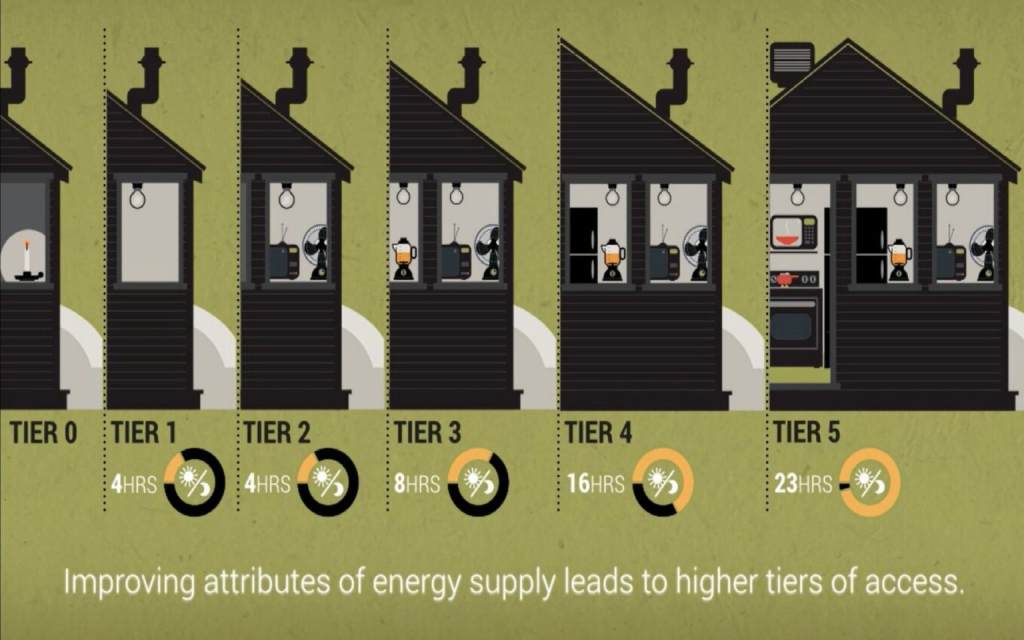
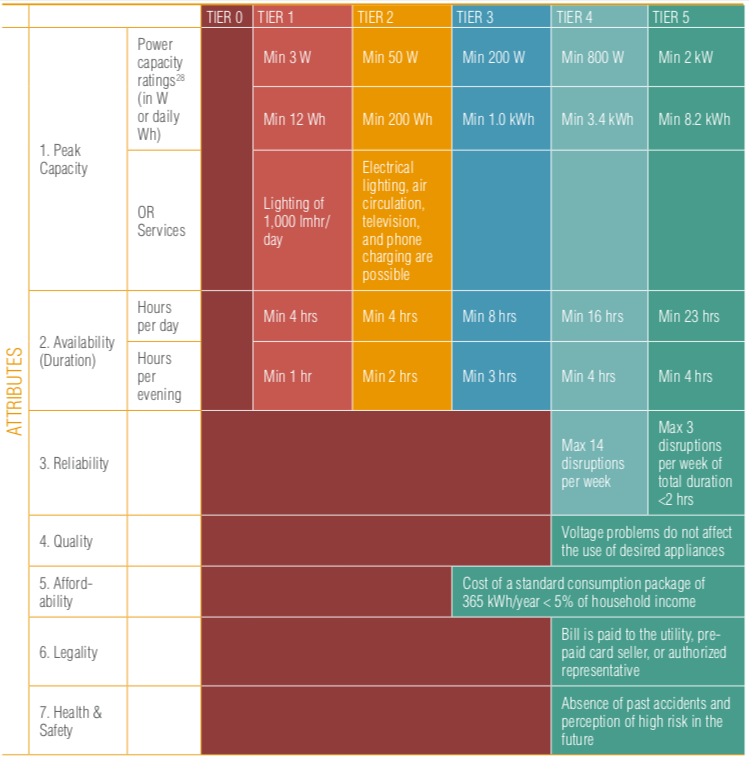
Under SE4ALL, the Global Tracking Framework (GTF) 2013 introduced Multi-Tier Framework (MTF) to measure energy access (Bhatia & Angelou, 2015, p.1). The MTF has provided number of attributes and dimensions, based on which electricity access is measured. There are seven attributes; capacity, duration, reliability, quality, affordability, legality, and health & safety; each of which defines various dimension of electricity supply system. Electricity access is measured with respect to seven different attributes across which electricity supply situation for a household is analyzed. Each attribute is analyzed, and results are expressed in terms of tier; Tier 0 being the worst level of access while Tier 5 is best access level at household level. According to the decision rule of MTF, final tier of electricity supply is determined by the lowest tier obtained across all seven attributes of electricity supply (Bhatia & Angelou, 2015, p.5). The MTF attributes for electricity access measurement are shown in Figure 2-1. Figure 2-1: MTF Matrix for Measuring Electricity Access for Households Source: (Bhatia & Angelou, 2015, p.6).

MTF approach to measure electricity access enables energy planners and policy/decision makers to identify appropriate level of electricity in the form of tier and amount of investment required to reach the target tier (World Bank, 2017, p.xv). Defining energy access with respect to attributes will be helpful in identifying interventions such as technology implementation, policy development or capacity building endeavor required to improve electricity access level. Scrutinizing every electricity access attribute is useful in identifying major challenges that is impeding improvement in energy access. For a country or region, MTF can elucidate the reason for them being unable to upgrade electricity access tier (World Bank, 2017, p.24). According to Bhatia & Angelou (2014), “multi-tier measurement of energy access allows government to set their own target by choosing any tier above tier 0” (p.7). Based on available resources, timeframe and geographical challenges, local government may decide which tier they would like to aim for based on baseline information of household tier.

Source: (Bhatia & Angelou, 2015)

The MTF has already been experimented as tool to devise energy access plan in Bangladesh, Kenya, and Togo (Practical Action, 2014, p.2). Classification of households into tiers gives wider perspective of type of energy access prevalent in certain area/village/location of interest. This helps to visualize challenges and factors that are impeding to improve the energy access situation of households in areas affected by poor supply of energy. As emphasized by Jain et al., (2015), the advantage of using MTF is the identification of variation involved in energy supply and access situation in certain region. Moreover, MTF has been used to enunciate country action agenda to meet SE4ALL objectives (Pelz et al., 2018a).

On a global scale, the level of electricity access is desired at Tier 3, but MTF provides flexibility to member states to set up plans to reach the global target as much as possible (NPC, 2018, p.3). Kenya in its SE4ALL action agenda has planned to improve its energy access situation according to the MTF-tier concept. By 2030, Kenya plans to secure 35 percent household to be at tier 3, 15 % at tier 4 and 10 percent at tier 5 while 40 percent below tier 3 (Practical Action, 2014, p.64). For the member states of United Nation agreeing to comply SE4ALL and SDG (Goal: 7) initiatives, tools such as MTF should not only be able to measure the progress but also assist member state governments and concerned organization to devise concrete plan and policies by providing noticeable evidence (Pelz et al., 2018b).

Multi-Tier Framework Critique

The MTF provides a tool that can be used to measure energy access across the globe. Although MTF can address shortcomings of binary metrics to measure energy access, there exists argument regarding generalization of MTF approach to measure energy access (Pelz et al., 2018; Tait, 2017; Groh et al., 2016). Generalization of MTF to measure energy access in different countries across the world reduces its usefulness as a tool for national energy planning. MTF requires certain level of national adaptation to obtain tangible results regarding energy access situation with respect to diversity existing between different regions and countries (Groh et.al., 2016; Tait, 2017). Nevertheless, the classification of tiers to evaluate access to energy services is necessary and valuable to understand the baseline status of energy access for a particular region and develop plan for improvement in future. Generalization of the global energy access measuring metrics falls short in addressing gaps existing between the developed, developing and least developed country. There exist country specific factors such as geography, culture and socio-economic status of the nation and its citizen which may not be addressed by generic tools such as MTF (Tait, 2017). Furthermore, the energy service need may vary from one household to another due to their preference of appliances or culture (Pelz et. al., 2018, p.3). The way of living, cultural behavior, the quality of energy services that the end user is receiving, desire to climb up the energy ladder and use of modern appliances also impacts the result of electricity access measurement. The measurement of energy access based on MTF attributes might need adjustment as per country specific context due to existence of diverse energy needs and factor affecting those needs. The MTF approach has been adapted in the past to measure electricity access level. Tait (2017) analyzed energy access status in South Africa using just four attributes: fuel consumption, affordability, safety, and reliability without categorizing household into MTF tiers. According to the assessment made by Tait (2017), the indicators used for the measurement of electricity access were analyzed based on the score such that 1 being better access and 0 being the worst. Jain et al., (2015) made use of MTF and adapted it to Indian context by using four tiers instead of six tiers to visualize level of energy access. Furthermore, the availability attribute has also been analyzed over a period of a day which is slightly different from availability attribute mentioned in MTF that considers electricity supply in evening hours. There exists argument over maintaining simplicity and uniformity in use of availability attribute across the world (Jain et al., 2015; Pelz et al., 2018). The development status gap between global north (developing and least develop country) and global south (developed country) and global south represented by developing and least develop country pose challenges in generalizing MTF around the world. Global south is more inclined towards commissioning modern energy infrastructure to fulfil energy needs of their population with priority on energy efficiency while global north is more focused on improving energy efficiency and thereby reducing their share of carbon footprints (Day et al., 2016). The challenge of generalizing further exacerbates as the MTF in its current state is not able to address impact of energy efficiency endeavors on requirement of capacity of energy supply system (Pelz et al., 2018). Establishing a common threshold value for energy access measuring attributes has been subject of argument. There have been several examples where the threshold value to determine level of electricity access has been altered by researchers. In Indian context, the legality attribute has been emphasized while in South African context legality attribute has not been considered with an argument of illegal connection for electricity being better source for lighting compared to primitive alternative like candle. Similarly, health and safety attribute were not captured citing in Indian context in absence of comprehensive data that could address health and safety attribute (Jain et al., 2015; Tait, 2017). Depending upon the context and situation one may decide what kind of information is required to compute MTF attributes with less complexity.

The MTF tier approach to measure electricity access clearly defines the kind of electricity service that can be derived from different tier of electricity access. The electricity access tier in these households needs gradation. But from planning perspective knowing a target tier for rural households is inevitable. Understanding appropriate target tier for electricity access is essential as it provides strong basis to develop electricity access vision and subsequently vision driven interventions in the form of plan and policies.

References:

  1. Bhatia, M., & Angelou, N. (2014). Capturing the Multi-Dimensionality of Energy Access. Livewire, 1–8.
  2. Bhatia, M., & Angelou, N. (2015). BEYOND CONNECTIONS Energy Access Redefined
  3. Day, R., Walker, G., & Simcock, N. (2016). Conceptualizing energy use and energy poverty using a capabilities framework. Energy Policy, 93, 255–264. https://doi.org/10.1016/j.enpol.2016.03.019
  4. ESMAP. (2003). Household Energy Use in Developing Countries – A Multicounty Study, (October)
  5. Groh, S., Pachauri, S., & Narasimha, R. (2016). What are we measuring? An empirical analysis of household electricity access metrics in rural Bangladesh. Energy for Sustainable Development, 30, 21–31. https://doi.org/10.1016/j.esd.2015.10.007
  6. Jain, A., Ray, S., Ganesan, K., Aklin, M., Cheng, C., & Urpelainen, J. (2015). Access to Clean Cooking Energy and Electricity. ACEESS – Survey of States, 1–98. https://doi.org/10.7910/DVN/0NV9LF 93 Javadi, F. S., Rismanchi, B., Sarraf, M., Afshar, O., Saidur, R., Ping, H. W., & Rahim, N. A. (2013). Global policy of rural electrification. Renewable and Sustainable Energy Reviews, 19, 402–416. https://doi.org/10.1016/j.rser.2012.11.053
  7. National Planning Commission. (NPC). (2018). Universalizing Clean Energy in Nepal. Retrieved from https://www.npc.gov.np/images/category/SUDIGGAA_final_version.pdf
  8. Pelz, S. (2018). Inclusive Energy Access Planning. Retrieved from https://reiner-lemoineinstitut.de/en/inclusive-energy-access-planning/
  9. Practical Action. (2013). Poor People’s Energy Outlook 2013. Retrieved from http://cdn1.practicalaction.org/5/1/5130c9c5-7a0c-44c9-877f-21b41661b3dc.pdf
  10. Practical Action. (2014). Poor people’ s energy outlook 2014. https://doi.org/10.1017/CBO9781107415324.004
  11. Tait, L. (2017). Towards a multidimensional framework for measuring household energy access: Application to South Africa. Energy for Sustainable Development, 38, 1–9. https://doi.org/10.1016/j.esd.2017.01.007
  12. The World Bank. (2017). State of Electricity Access Report 2017. Retrieved from https://openknowledge.worldbank.org/bitstream/handle/10986/26646/114841-WP-v2- FINALSEARwebopt.pdf?sequence=6&isAllowed=y
  • 1. Background

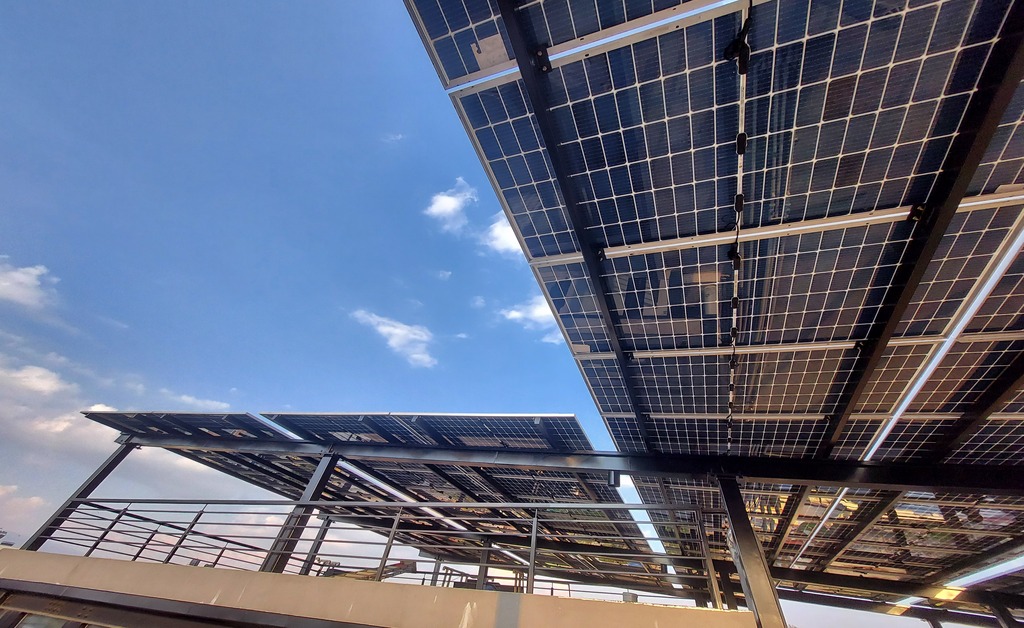
Electricity supply in Nepal is largely dominated by hydropower plants. Over 96% population has access to electricity in Nepal. Hydropower is the primary source of electricity, contributing 92.1% of the total supply. The remaining share is derived from solar energy (4.7%), other renewables (1.2%), bagasse (0.2%), and thermal power plants (1.7%). These figures indicate that Nepal is heavily reliant on hydropower plants for electricity generation. Recent flooding events in the country has wreaked havoc in many development sectors and infrastructures withing energy sector. The Ministry of Energy, Water Resources, and Irrigation (MoEWRI) reports that recent flooding has resulted in losses and damages totaling 3 billion Nepalese Rupees in the energy sector, affecting electricity production from 11 hydropower projects with a combined capacity of 625.96 MW. Lesson from the recent flooding is that there is a dire need for diversifying energy mix in the country. Furthermore, in a country where centralized transmission and distribution systems continue to struggle to supply reliable and quality electricity, decentralization, and diversification of national energy mix with energy sources like solar is essential to improve the reliability of the power supply system.


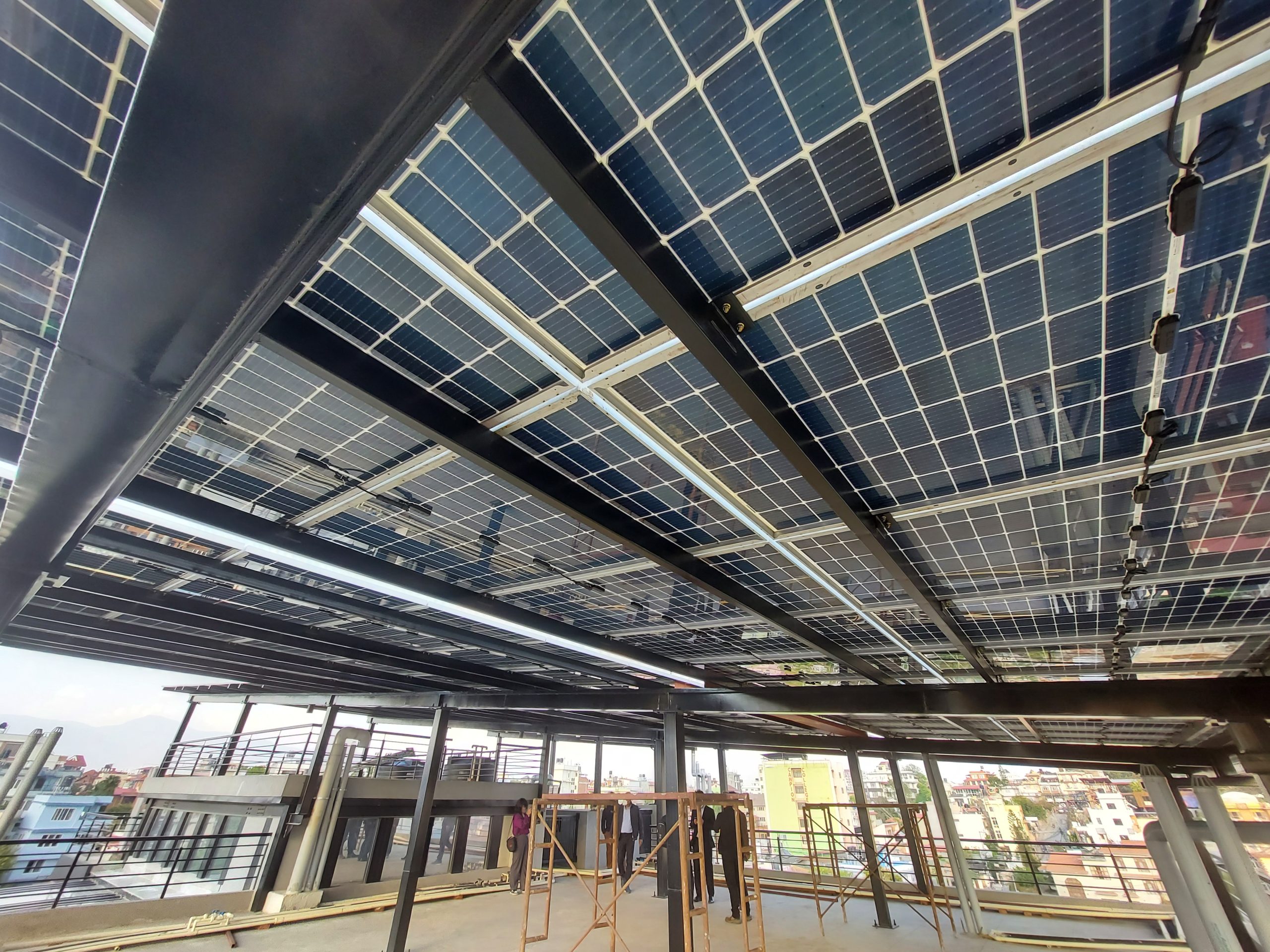
Bifacial Solar PV panel installed at Sanepa Apartment

Photo Courtesy: Gham Power Pvt. Ltd

Nepal has a significant potential for solar energy, as indicated by Solar GIS, offering a path to diversify its electricity sources. Recently, innovative solar technologies have emerged, such as the one piloted by the 2022 Grid Resilience through Intelligent Photovoltaics and Storage (GRIPS) project. Funded by the UK’s Foreign, Commonwealth and Development Office through the Innovate UK Programme – Energy Catalyst, GRIPS was implemented by a consortium including Swanbarton UK, Gham Power Nepal, Practical Action Consulting, Scene Connect UK, and Hit Power UK. The project piloted a 57 kWp smart solar-storage system in a commercial apartment in Lalitpur to enhance energy reliability and demonstrate its benefits for utilities, consumers, and energy providers. Practical Action Consulting contributed to assessing societal impact and promoting GESI integration within the solar PV sector and energy access market.

With the successful conclusion of the GRIPS project, this blog highlights key learnings and findings, emphasizing Practical Action Consulting’s project objectives. As a pilot initiative, the insights gained is expected to inspire energy professionals, development practitioners, and stakeholders to drive the energy transition while incorporating GESI within the renewable energy sector.

  • 2. Gender in Solar PV Market Systems of Nepal

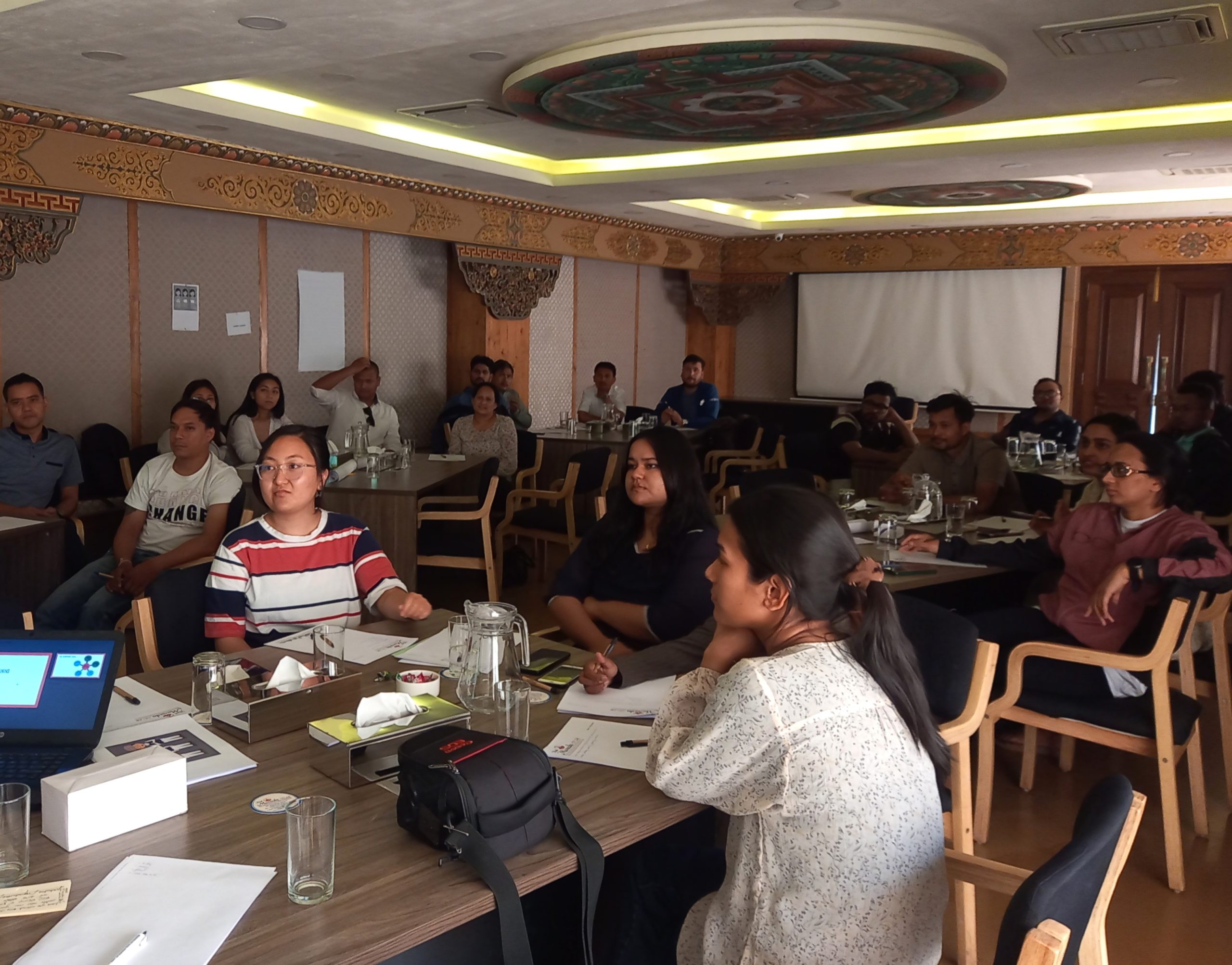
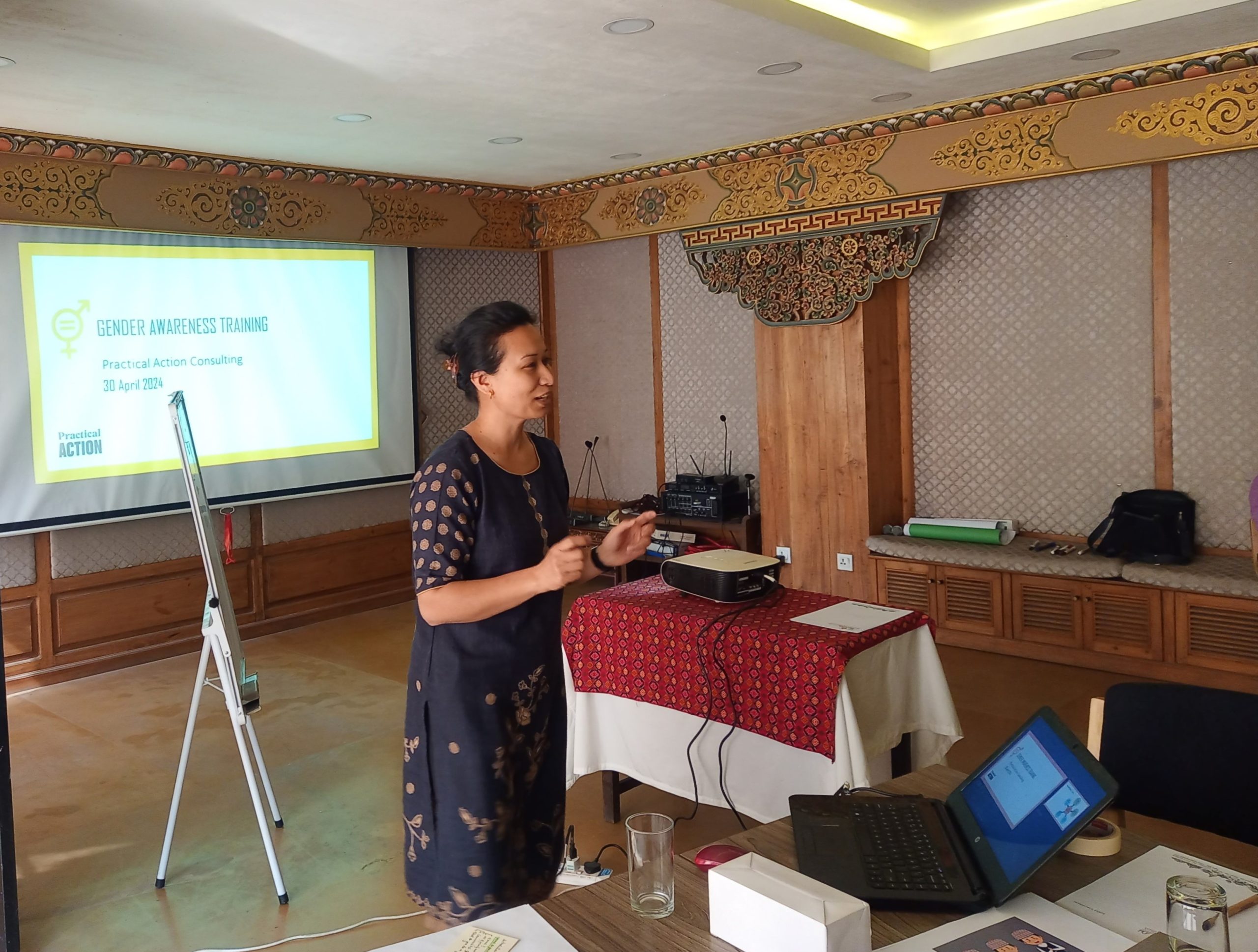
Achieving gender equality, empowering women, and ensuring universal access to affordable, reliable, sustainable, and modern energy by 2030 are interconnected Sustainable Development Goals (SDGs) with numerous cross-cutting benefits. Growing evidence shows that integrating gender considerations throughout the energy value chain and power sector brings multi-level benefits, significantly enhancing socio-economic conditions in any society. However, gender disparities in energy access and the power sector workforce impact critical sectors like health, education, food security, transportation, agriculture, water, sanitation, and entrepreneurship. Drawing on Practical Action Consulting’s 2023 gender assessment of Nepal’s solar PV market (involving 11 solar companies), stakeholder consultations, and literature reviews on the gender-energy nexus, this blog examines the status of women and marginalized groups in Nepal’s energy sector. It also highlights key entry points for development partners to contribute to advancing women’s empowerment and participation within Nepal’s solar PV market.


Stakeholder Consultation Meetings

  • 3. Rationale to Gender Considerations in the Energy Discourse

Limited access to clean, modern energy and reliance on traditional fuels have significant consequences, including drudgery, adverse health effects from exposure to air pollution, deforestation, time poverty, and missed opportunities for economic and personal growth (see Box 1). At the household level, women are disproportionately affected by the lack of modern energy access due to their primary role in household tasks such as cooking, farming, collecting firewood, and gathering water. Gender norms and varying responsibilities mean that women and men often have different energy needs and unequal access to energy services and technologies. To ensure equitable access and benefits from energy services for both women and men, it is essential to make the energy sector gender-responsive and gender-transformative through supportive policies, inclusive projects, and gender-sensitive services. Additionally, encouraging women’s active participation in the energy sector as decision-makers, entrepreneurs, business owners, and employees is crucial. Research shows that gender diversity, especially in leadership roles, can enhance the sector’s performance and drive greater social and economic gains.

Box 1. Social Implication of access to clean and modern energy solutions:

  • Social Capital/Empowerment-Access to energy can offer access to modern communication and networking opportunities.
  • Livelihood – Enhanced livelihood and improved income through productive end uses of energy
  • Reduced use of fossil fuels and trade deficit – Reduced dependence on imported fossil fuel
  • Environment – Reduced air pollution and greenhouse gas emissions (from traditional and fossil fuels), hence improvement in human well-being and environmental protection.
  • Health – Access to power for operating modern health equipment and hence increasing possibilities of better health services.
  • Gender equality – Reduced drudgery and time saving, hence increased opportunities for education, personal growth and income generating activities especially for women.
  • Security – Light provides safer working environment and security for mobility into the late hours.
    • 4. Current Status of Women in the Solar PV and the Energy Sector at Large
      • a.Energy sector employments and energy value chain

Women remain significantly underrepresented in Nepal’s energy sector. At the Nepal Electricity Authority (nodal agency responsible for electricity supply), for instance, only 12.6% of the total 8,884 employees and 6.2% of the 5,664 technical staff are women. Practical Action Consulting’s 2023 Gender Audit Study, conducted at 11 solar PV companies, revealed that women make up only 19% of the workforce in the solar PV sector, and predominantly hold non-technical roles. Only one company employed women in technical roles, where two out of six technical staff were women, while women held just 22% of senior positions across the companies studied.

In terms of economic participation and educational attainment, Nepal ranks low globally, placing it at 136th rank in the 2023 Gender Gap Index with a 47.6% gender gap in economic opportunity, and 127th for gender disparity in education. Despite efforts by solar PV companies to encourage women to apply for technical roles, they reported that they receive only few female applicants. This may be partly attributable to low enrollment rates of women in science, technology, engineering, and mathematics (STEM) fields. According to the 2021 National Population Census, only 15% of engineering graduates and 34% of science and technology graduates were women, with similarly low participation in technical training programs.

  • b. Energy sector employments and energy value chain

A comprehensive review of Nepalese energy and solar PV policies reveals they are largely gender-aware, acknowledging gender in policy frameworks and programs. However, these policies often lack in-depth strategies to integrate gender considerations effectively into energy initiatives,7. While Nepal has set SDG 5 targets, aiming for 30.3% women’s representation in decision-making roles in the private sector and 28% in professional and technical roles, there is no specific energy policy to ensure equal opportunities for women in the private energy sector. Current energy policies focus heavily on production and supply, with minimal emphasis on social inclusion, women’s empowerment, gender equity, equality, and intersectionality. Some policies, like the Renewable Energy Subsidy Policy 2022 and the National Energy Strategy of Nepal 2013, include provisions for marginalized groups but lack robust gender-responsive measures to achieve GESI objectives. Significant efforts are still needed across various levels to enhance the participation of women and marginalized groups in managing, planning, designing, and implementing energy policies and programs.

  • c. Common barriers to women’s participation in the energy sectors
        • Gender biases and stereotypes often hinder women from pursuing challenging roles outside the home. Technical jobs are typically seen as men’s work, while women are associated with roles in the care economy and support work. This is reflected in the power sector, where women employees are largely concentrated in administrative rather than technical positions.
        • Household chores and unpaid work are often seen as women’s responsibility, regardless of employment status. This additional burden can discourage women from pursuing demanding roles or leadership positions outside the home.
          Limited access to resources, particularly finances, poses a major challenge for female entrepreneurs in energy businesses and for women consumers seeking energy technologies and services.
        • A lack of gender considerations in energy project and product designs has been cited by many studies as one of the reasons why women are disproportionately affected by a lack of access to clean and reliable energy sources.
        • Wage discrimination and unequal distribution of resources/services (appropriate size safety gears, toilet, water and sanitation, and childcare services, etc.) between men and women are also seen as factors discouraging women to seek power sector jobs7.
          Absence of gender and social safeguarding policies and transparent hiring processes can also affect the employment and retention of women staff in any company.
        • A lack of capacity building, leadership development, technical training opportunities and mentoring support also affect women employees’ self-confidence, sense of security and belonging in the technical fields within the energy sector.
        • Limited access to information and professional networks impedes professional growth of women and marginalized groups.

The absence of gender-disaggregated data and the limited ability of energy professionals to incorporate gender into policies and programs hinder the creation of gender-responsive energy plans and market systems. Socio-cultural contexts create informal barriers to the empowerment and participation of women and marginalized groups, while formal barriers, such as gender-blind policies and practices, reinforce the status quo. This brief will not cover all barriers but will highlight gender considerations and best practices, focusing on gender equality and social inclusion in the energy workforce and access to energy solutions.

  • 5. Way Forward – Policy Implications
        • The development and implementation of GESI policies and strategies (e.g., Nepal Electricity Authority GESI Strategy and Operational Guidelines 2020; Alternative Energy Promotion Centre GESI Policy 2018) are essential first steps toward removing barriers to the participation of women and marginalized communities in the energy sector. However, changing organizational culture requires internalizing these policies by i) building the capacity of both managerial and implementation staff to integrate GESI considerations into energy-related activities, and ii) incorporating GESI policies into the key performance indicators of all departments and projects. Effective policies must be supported by institutional capacity and robust monitoring systems.
        • It is important to acknowledge that women and marginalized groups are not just energy users, but they can also become employees, social change agents, entrepreneurs and participants in the energy value chain, and decision makers in energy project planning and implementation. Nevertheless, a very low participation of women in the technical education and employment is a frequently cited challenge in achieving gender equality across the energy sector and the energy value chain. Several measures can be adopted to increase women’s participation in the STEM education and employment – targeted scholarships in STEM programs; internship opportunities for female STEM graduates; targeted recruitment of women staff; addressing gender pay gaps; adopting transparent hiring and promotion processes; setting organizational gender equality goals; compulsory courses on Sexual Harassment, Exploitation and Abuse (SHEA) and Gender Equality and Social Inclusion (GESI) at workplace for new recruits and Human Resource team of the organization; mentoring and leadership programs for women staff alongside their male counterparts; reorientation programs for mothers returning from maternity leave; and flexible work hours for parents of young children.
        • To create a gender-inclusive business model for energy products and services, it is vital to consider the needs and aspirations of women and marginalized communities in project design and delivery. Each component of a business model—goals (economic and social), products/services, target demographics, and delivery methods—offers opportunities to foster a gender-responsive energy value chain system.
          • Business goal: While profit-making is crucial, to create social impacts and set gender equality goals are as crucial for a solar company or any energy company to improve its gender profile and to be able to tap into opportunities created by development programs (such as Green Climate Fund, Energy Catalyst Program, etc.)
          • Products and services: Energy interventions, technologies, energy services and other support services (financing, repair, and maintenance, etc.) are more likely to address gender equality and energy poverty issues when women and marginalized groups’ needs and purchasing power are considered in their designs.
          • Demand or target group: Social impacts of energy solutions can be maximized when they are delivered to the population for whom the energy solutions have the greatest marginal utility – at household and community level, it is often women and low-income families.
          • Delivery model: Engaging women in the energy value chain, enabling women and low-income households to access energy services (which may not necessarily mean the ownership of the energy system), using women networks/organizations and gender-responsive mechanisms to deliver energy products and services, and relevant information to last mile markets are some of the tested and proven strategies to make delivery model of energy solutions gender-inclusive.
        • Evidence shows that if training contents and tools are adapted to match the needs of women, they (regardless of their educational qualifications) can effectively learn skills and take on technical roles and responsibilities such as installing and operating renewable energy technologies (see box 2. for an example). While experts suggest that women’s participation in technical trainings is usually low, practitioners suggest that targeted trainings and quota systems can increase their participation in such trainings enabling them to become a change agents and value chain actors.

Box 2. Case story – ‘Solar Mamas’ lighting a remote village of Nepal

In 2018, three women from a remote village in Humla region of Nepal, with no formal education, were trained by Barefoot College International (BCI), India with support from various non-governmental organizations. The six-month training enabled them to assemble, install, operate, and repair Solar PV Home Systems such as solar lanterns, lamps, solar water heaters and parabolic cookers all by themselves. The training program at BCI is tailored to accommodate rural women from different age-groups and countries regardless of their educational backgrounds and uses tools and techniques that address any challenges with language barriers. In addition to learning technical skills, they also learned about entrepreneurial skills, women’s rights, health, and safety, how to use mobile phones, English language, and environmental stewardships. The trained women, or ‘Solar Mamas’ after returning home, have made electricity services accessible in their village. Their village, otherwise, has no access to the central grid or any other source of modern energy. As of 2021, the ‘Solar Mamas’ from Humla had electrified 220 households and had benefitted over 2100 people.

      • Availability of gender-disaggregated data on the impacts of energy projects and the energy workforce, and the analysis of these data and GESI performance indicators in impact reports are important to track progress of the sector towards gender equality and social impacts, and to inform actions and strategies towards gender-equality goals and a gender-responsive energy sector.

Electric mobility is not new to Nepal. In fact, it began in 1975, when an electric trolley bus system was set up in Kathmandu with Chinese assistance. The 13 km trolley bus line, owned and operated by a government corporation, operated from 1979 till 2009, when it permanently shut down because of political and bureaucratic mismanagement[1]. The next major milestone was in 1995. That year, the 12-seater battery powered electrical three-wheelers were introduced on the streets of Kathmandu to replace the highly polluting diesel operated three-wheelers – the “Vikram tempos”. These electric three-wheelers, called “Safa Tempos”, or clean three-wheelers, are locally manufactured. At one point in early 2000, they constituted the largest fleet of battery-powered public transport vehicles in the world[2]. Currently, about 700 safa tempos are still in operation[3]. In addition to ferrying passengers, they are also used for freight and solid waste transport. In addition, the number of suppliers and private users of two-wheeler and four-wheeler electric vehicles is steadily increasing. Of about 15,000 automobiles sold annually in Nepal, about 1,200 are electric[4]. There have also been numerous experimental attempts at converting internal combustion engine (ICE) vehicles to electricity. There is also a transport company, Sundar Yatayat, currently operating 4 public electric buses in Kathmandu[5].

Nepal also has policy strategies for promoting electric vehicles. The National Climate Change Policy of 2019[6] prioritizes switching to electricity for various industries and infrastructure including transportation. The National Transport Policy of 2014, the Environment and the Climate Policies of 2019[7] encourage and promote the use of electric vehicles. The Environment-Friendly Vehicle and Transport Policy of 2014 had set a target of 20% of total vehicle fleet to be “environmentally friendly”. Unfortunately, this target has not been met. This Policy had also set targets for establishing charging stations. The 2018 National Action Plan for Electric Mobility proposes various initiatives to promote electric mobility in Nepal. However, it does not have timelines nor an investment plan. Nepal’s Nationally Determined Contribution of 2020 has a target of 90% of private and 60% of public vehicle sales to be electric by 2030.

The government is ,however, trying to meet its goals through a few policy instruments in place. In 2016, the government reduced electric vehicle (EV) customs duty to 1% for public transport and 10% for private vehicles (both from  30%. It is 80% for ICE vehicles). Furthermore, EV are exempt from excise duty (55-1oo% for ICE vehicles) and pay only 4% road tax (compared to 8-10% for other vehicles). However, in 2020 the government regressively increased the customs duty for private EVs to 40% and levied excise duty ranging from 30-80% depending on the power of the EVs. It also increased the road tax to 5%. Another policy instrument in place is reduced tariff for EV charging stations.

Promoting EVs in Nepal has several benefits. Firstly, Nepal is already beginning to experience electricity surplus, especially during the off-peak hours during the day and night. With suitable electricity pricing, the surplus electricity can be used for charging of EVs. Secondly, petroleum products constitute about 15% of Nepal’s import bill, which is a big drain on Nepal’s foreign currency reserve. Substituting vehicle fuel from petroleum with electricity will reduce this drastically. Thirdly, vehicular emissions contribute significantly to ambient air pollution, especially in cities like Kathmandu. EVs will help to reduce this pollution drastically too. Fourthly, calculations have shown that the life cycle cost of owning and operating an electric vehicle is lower than that for an ICE vehicle. Consequently, there is a growing interest to both purchase EVs and to set up EV based businesses.

However, more needs to be done to meet the national aspirations for electric mobility so that we can realize its benefits. Some of the future steps that need to be taken include the government formulating an integrated and realistic policy strategy that includes specific targets and timelines. The strategy will then need to be operationalized through appropriate policy instruments policies. Since the upfront cost of EVs are generally higher than that for ICE vehicles, there will also be a need for financial institutions to formulate and implement innovative financing instruments. Innovative business models regarding sale of EVs and installation and operation of charging stations will help promote EVs. In the new federal structure of governance in Nepal, partnership between local governments & the private sector to promote public electric mobility will also be important. Finally, Nepal will have to aggressively implement it newly formulated National Distribution Plan to augment the existing electricity distribution system, such that households, businesses and charging stations can be assured of adequate and reliable electricity supply.


[1] https://www.nepalitimes.com/banner/kathmandu-bhaktapur-trolley-bus/

[2] https://www.bloomberg.com/news/articles/2019-08-26/why-nepal-once-led-the-world-in-electric-buses

[3] http://www.mofe.gov.np/downloadfile/E-mobility%20Assmnt%20NDC%202020_1623998131.pdf

[4] https://kathmandupost.com/national/2021/06/21/nepal-to-switch-to-light-electric-vehicles-by-2031-as-fossil-fuel-import-balloons

[5] http://www.newbusinessage.com/Articles/view/13253

[6] https://www.mofe.gov.np/downloadsdetail/8/2018/36366627/

[7] ibid


Nepal, a country that struggled with power shortage and experienced almost 16 hours a day load shedding in 2015, has not only become self-sufficient in electricity, but also possesses around 400 MW of surplus electricity unconsumed in the night. The power generated from Upper Tamakoshi Hydro Power Project in Central Nepal’s Dolakha District with maximum output of 456 MW contributes to this surplus. The project was connected to the national grid recently.

Nepal has also made significant progress on per capita electricity consumption rates. The per capita electricity consumption per year has reached to 260 kWh[1]  as of March 2020 against 80 kWh in 2015. The government aims to provide electricity to every household by 2022 and increase electricity consumption to 700 kWh per person within four years (from 2021?). To implement the government’s policy to increase electricity consumption within national market, Nepal Electricity Authority (NEA) is encouraging the use of electric stoves and vehicles, for which NEA is strengthening, upgrading and expanding its infrastructure to accommodate these desired loads. Further, the government has exempted value added tax (VAT) to support e-cooking sector. This would address problems of majority of the households (71.6%) in Nepal that still use solid biomass, mainly firewood for cooking.

However, various barriers prevent wider adoption for electric cooking in Nepal. Private sectors are not yet confident about contextual understanding, especially in terms of food preferences, cooking practices, fuel / stove stacking, capacity to pay, etc. Therefore, there is an urgent need to establish bold policy action facilitating a faster penetration of private sector to support transition to more accessible, affordable and sustainable electric cooking for all.
The needs are presented below based on our engagement in research, studies and a demonstration project. The year 2020 was a year of electric cooking not only for us but for the entire cooking sector, where evidence generation through research, studies, demonstration projects were implemented (seems repetitive based on the first line of this para). Encouraging households to use electricity for cooking is on strategic priority of many civil societies, private sectors, media and academicians.

Dev Laxmi Shrestha, one of the participant households of a research carried out by Practical Action for Modern Energy Cooking Services (MECS) in Kavre, is very happy with the induction cook top. Further, “market assessment of e-cooking appliances” conducted by Practical Action found that liquefied petroleum gas (LPG) users would be the first ones to transit to electric cooking. However, a critical hurdle in the shift from traditional biomass to electric cooking has been price. Electricity tariff and supply reliability are crucial in transitioning to electric cooking. Therefore, if we want biomass users to shift to electric cooking, targeted incentives have to be introduced for very poor and disadvantaged group. It is also found that stacking of stoves will continue for years. As such, our aim should be to replace all dirty fuels with clean fuels, clean stacking should be ok.

While there has been good progress in the last decade regarding knowledge dissemination of the negative impact of inefficient cooking practices, households are not readily moving towards cleaner form of cooking energy. Affordability is one of the key reasons behind this. Low-income households often have firewood as the only affordable choice when it comes to cooking. Therefore, relying on electricity for it is an expensive choice for the households. Further, it has been observed that managing peak electricity demand is going to be challenging for utility and local electricity service providers. Demand side management, corresponding tariffs and incentives to encourage demand side management will play a significant role to make this shift happen promptly. We have seen that households struggle to receive standard quality voltage during peak time in rural areas.

A multi-pronged approach is needed for faster transition. Making a rapid transition to clean cooking for all will have an enormous impact on women’s life. While external support can help to strengthen the market of electric cook stoves by ensuring guarantees, after sales services, training, awareness on benefits, incentives to create last mile distribution chain; there is an urgent need from NEA to ensure Tier 5 electricity access in all parts of the country very soon. To address the affordability issue, linking with local financing institutions, making affordable credits accessible to all, lowering the cost of products through VAT exemption and most importantly, integrating income generating activities (IGA) in electric cooking initiative or tying up with some other such IGAs would be beneficial for electric cooking wider update. This requires a buy-in of and contribution from multiple stakeholders beyond energy sector stakeholders. It also calls for establishment of an effective framework of planning and coordination. We are expecting that the national clean cooking strategy currently being developed will support to facilitate coherent planning and investment, clarify the roles of different tiers of government, and facilitate multiple stakeholder coordination.

Although Nepal has made significant progress towards achievement of electricity access for all, well ahead of 2030 target, current efforts for clean cooking development remain well below 2030 target. Therefore, we must act very quickly and decisively now!


[1] SDG Progress Assessment Report 2016-19