
Pakistan’s energy sector is heavily reliant on imported fossil fuels, which heightens its exposure to rising costs and supply chain disruptions, directly affecting financial sustainability. This dependency also amplifies Pakistan’s vulnerability to climate-related risks, as fossil fuels dominate the energy mix with a share of 59.4 percent. Ranked among the most climate-vulnerable nations globally, Pakistan faces urgent pressure to transition toward an indigenous renewable energy source such as solar, wind, biomass, and micro-hydro projects that could enhance energy security and offer Pakistan a more resilient and low-carbon future. Recognizing this, the government has set ambitious goals to transition the country towards clean energy. Pakistan’s ‘Alternative and Renewable Energy Policy 2019’ aims to shift the energy mix to 30% renewable sources by 2030. The policy encourages both local and international investment, setting the stage for innovation and a shift towards greener, more sustainable energy production. Currently renewable sources contribute 6.8 percent of the energy mix, while hydel and nuclear energy adding 25.4 percent and 8.4 percent, respectively.
On-Grid Renewable Potential: Pioneering Projects and Policy Actions
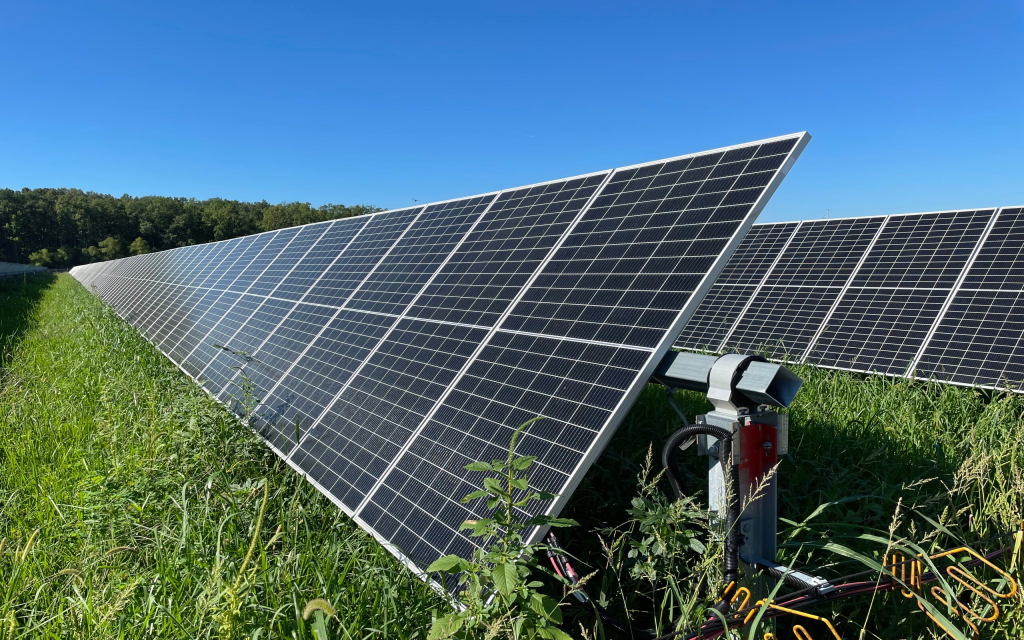
Pakistan is taking several decisive steps to develop its on-grid renewable energy potential. In 2023, the country launched its first round of competitive bidding for the ‘Solar Fast Track’ program, aiming to install 10,000 MW of solar power. Solar energy potential is significant across the country, with Western Pakistan enjoying an average annual Global Horizontal Irradiance (GHI) of 2330 kWh/m², among the highest globally. The government is currently establishing three solar power projects (each 50 MW) in Sukkur. In addition, as of March 2024, net metering based solar installations stand at 117,807 with a cumulative capacity of 1,822 MW. The number of active certified installers has surpassed 400. The government is also working on solarization of public sector buildings. To make sure that Pakistan has enough human resource to install and maintain solar projects, the government is training 500 technicians at various training centers.
In addition to solar, Pakistan’s wind energy potential is notable, with an estimated 346 GW capacity. The government has already established a wind energy corridor along the southern coastal regions of Sindh and Balochistan. The Gharo-Jhimpir wind corridor in Sindh alone could provide 11 GW of energy. The country’s latest Integrated Generation Capacity Expansion Plan (IGCEP) 2022-2031 outlines a target of 4,928 MW of wind capacity by 2031 which would an increase the percentage of wind energy from 4 percent to 10 percent in the total energy mix. Considering rapidly falling equipment costs and improved procurement strategies, wind tariffs have dropped to as low as 3.5 US cents/kWh, encouraging further development in this area. Currently, three projects with a cumulative generation capacity of 108 MW are under process.
Biomass also offers considerable potential, particularly in the agricultural sector. The country’s sugar mills, for example, could generate up to 1,844 MW annually from bagasse. By harnessing bio-waste from both agricultural and municipal sources, Pakistan could further enhance its renewable energy portfolio, reduce waste, and contribute to a circular economy.
Off-Grid Renewable Solutions: Powering the Remote and Rural
While on-grid projects are gaining momentum, the need for off-grid solutions is equally pressing, especially in rural and underserved areas. In many remote regions, grid access remains limited, and reliability issues are common. For such areas, off-grid solutions offer an immediate path to electrification and improved quality of life. The deployment of Solar Home Systems (SHS), mini-grids, Micro Hydel Power Projects (MHPP), and small-scale biogas plants are already providing renewable power to areas beyond the reach of the national grid. However, these are mostly at a nascent stage.
Micro hydropower, in particular, has been effective in reaching remote areas, especially in the northern regions where up to 30 percent of the population lacks grid access. These systems offer a reliable, cost-effective solution, with minimal land requirements and ease of community-based operation and maintenance. Solar mini-grids are also gaining traction as viable off-grid solutions, with an estimated 1,015 potential mini-grid sites across the country. A World Bank study projects that connecting approximately 4 million consumers to mini-grids by 2030 could bring Pakistan closer to universal electrification at a low cost. Similarly, the development sector is promoting the use of small-scale biogas plants in underserved rural communities. However, it is important to quantify the exact potential of off-grid solutions, implement a fair licensing system, build expertise of communities and technicians in installing and maintaining off-grid solutions, and encourage private sector to provide cost-effective and efficient solutions.
The Way Forward: Scaling Renewables for a Sustainable Energy Future
Transitioning to a renewable energy future for Pakistan requires a comprehensive, multi-pronged approach. Prioritizing investment in solar, wind, and biomass infrastructure while expanding off-grid renewable solutions will be essential. The government’s focus on competitive bidding, transparent policies, and international partnerships can support sustainable growth in this sector. Additionally, enhancing information dissemination and public-private cooperation for off-grid projects will attract further investment and expertise. The development sector too can play a vital role in supporting small-scale off-grid solutions in underserved areas. Some progress is already being made support small-scale farmers and rural communities.
Pakistan has great potential for installing renewable power sources. By capitalizing on its solar irradiance, wind corridors, and biomass potential, the country can create an energy system that supports economic growth, social development, and environmental sustainability. Embracing this renewable pathway promises not only to decarbonize the power sector but also to shape a future where energy security, economic resilience, and climate responsibility go hand in hand.